Fiji does not recognise same-sex marriage, and it does not recognise civil unions either. Section 15 of the Marriage Act defines marriage as the voluntary union of one man to one woman, and there is no exception for visiting couples. What Fiji can offer a same-sex couple is a commitment ceremony with no legal effect — held alongside, or after, a legal marriage at home.
We would rather write that in the first paragraph than let you find it out from a resort three months into planning. What follows is the full position, including the constitutional contradiction sitting underneath it.
Guideline only. This is a publication, not legal advice. Confirm the current position with the Registrar-General, Births, Deaths and Marriages Registry, Ministry of Justice (Level 1, Suvavou House, Victoria Parade, Suva) and, for rights questions, the Fiji Human Rights and Anti-Discrimination Commission. Last reviewed 12 September 2026.
What does the law actually say?
Section 15 of the Marriage Act provides that "marriage in Fiji shall be the voluntary union of one man to one woman to the exclusion of all others."
That wording does the whole job. The Registrar-General cannot issue a licence for a marriage that does not fit the statutory definition, and a registered marriage officer cannot solemnise one. There is no discretionary route, no special licence variant, and no different answer for foreign nationals.
Fiji also has no civil union, registered partnership or de facto registration scheme that would create a lesser legal status. The position is binary.
The constitutional contradiction
Here is the part that surprises people, and it deserves to be stated properly rather than skipped.
Section 26(3) of Fiji's 2013 Constitution prohibits unfair discrimination on grounds that expressly include sexual orientation, gender identity and expression. Fiji was among the earliest countries in the world to write sexual orientation into constitutional anti-discrimination protection — a distinction it shares with South Africa and Ecuador, dating to the late 1990s.
So Fiji simultaneously prohibits discrimination on the basis of sexual orientation and restricts marriage to opposite-sex couples. Those two provisions sit in obvious tension, and that tension has been publicly noted in Fiji. In 2022 a former director of the Fiji Human Rights Commission publicly called on same-sex couples to test the Marriage Act in court, arguing the restriction may be inconsistent with the constitutional guarantee.
No such challenge has changed the law. Successive prime ministers have stated opposition to recognising same-sex marriage, and as of 2022 the major political parties had no published position either way.
What this means practically: the constitutional protection is real and it matters in other contexts, but it does not currently give a same-sex couple a route to marry in Fiji. Do not plan on the basis that it might.
Is same-sex sexual activity legal in Fiji?
Yes. Fiji decriminalised same-sex sexual activity through the Crimes Decree 2009, which came into force in 2010 and repealed the earlier provisions.
This is a different question from marriage recognition, and the two are constantly conflated in travel content — usually to Fiji's disadvantage. A couple travelling to Fiji is not doing anything unlawful. They simply cannot marry there.
So what actually works?
The two-ceremony route, and it works well.
- Marry legally at home. New Zealand has recognised same-sex marriage since 2013; Australia since 2017. A marriage validly performed there is a marriage, and neither country requires an overseas registration step.
- Hold the ceremony in Fiji as a commitment ceremony, blessing or vow exchange. Everything a wedding contains is available: vows, rings, readings, a walk down an aisle, a salusalu, a choir, a lovo, a first dance on the sand.
The two-ceremony route explained sets out the mechanics for any couple using it, including the New Zealand and Australian notice periods and what it removes from the Fiji side.
One important caution. A ceremony with no legal effect is entirely lawful to hold. Presenting it as a legal marriage is not — section 35 of the Marriage Act makes falsely acting as a marriage officer an offence punishable by up to seven years' imprisonment. If any supplier offers you something that sounds like a legal Fijian marriage, that is a reason to walk away, not a discovery.
What the route removes, and what it does not
| Element of a Fiji wedding | Available to a same-sex couple? |
|---|---|
| Beach, chapel, garden, lawn or island ceremony setting | Yes |
| Celebrant or officiant leading vows | Yes, as a commitment ceremony |
| Fijian traditional elements — warrior escort, choir, meke, salusalu | Yes |
| Reception, lovo, entertainment, styling, photography | Yes |
| Legal solemnisation by a Fiji-registered marriage officer | No |
| Fiji marriage licence and certificate | No |
| Two witnesses aged 21 and over | Not required — nothing is being registered |
| Single status certificate and document folder | Not required |
The practical effect is that a same-sex couple's Fiji planning is simpler than an opposite-sex couple's, not harder. There is no registry visit, no arrival window driven by government office hours, and no certified-document folder to assemble.
How to approach a property
Ask directly, in writing, at first contact. The three questions worth putting in the first email:
- Does the property host same-sex commitment ceremonies?
- Who would officiate, and are they comfortable leading a commitment ceremony rather than a legal solemnisation?
- Does the package price change when no marriage licence and no registered marriage officer are required?
That third question is worth real money. Several Fiji ceremony packages bundle the licence and the marriage officer into the headline price, and you should not pay for components you are not using.
We are not going to publish a list of properties as "same-sex friendly", because no Fiji property in our directory publishes a policy on this and we will not invent one on their behalf. Ask, get the answer by email, and keep it. A property that answers clearly and warmly has told you what you need to know. One that is evasive has also told you something.
On social attitudes
We are not going to offer a confident summary of how 900,000 people feel about anything. What can be said honestly is that Fiji is a religiously observant country — Fijian culture and custom covers that in detail — and that its international resort sector is professionally run and used to serving visitors from markets where same-sex marriage is ordinary.
Couples wanting a considered view of what to expect socially should ask their property, ask their coordinator, and speak to couples who have done it. That is better information than a generalisation from us.
The verdict
- Fiji does not permit same-sex marriage, and no route around section 15 exists. Anyone who suggests otherwise is wrong or selling something.
- The constitution protects sexual orientation. That contradiction is real, it has been publicly raised, and it has not changed the marriage law.
- Same-sex sexual activity is legal in Fiji. The two questions are separate.
- Marry at home, celebrate in Fiji. Every part of a Fiji wedding except the paperwork is available.
- Ask properties directly, and get the answer in writing.
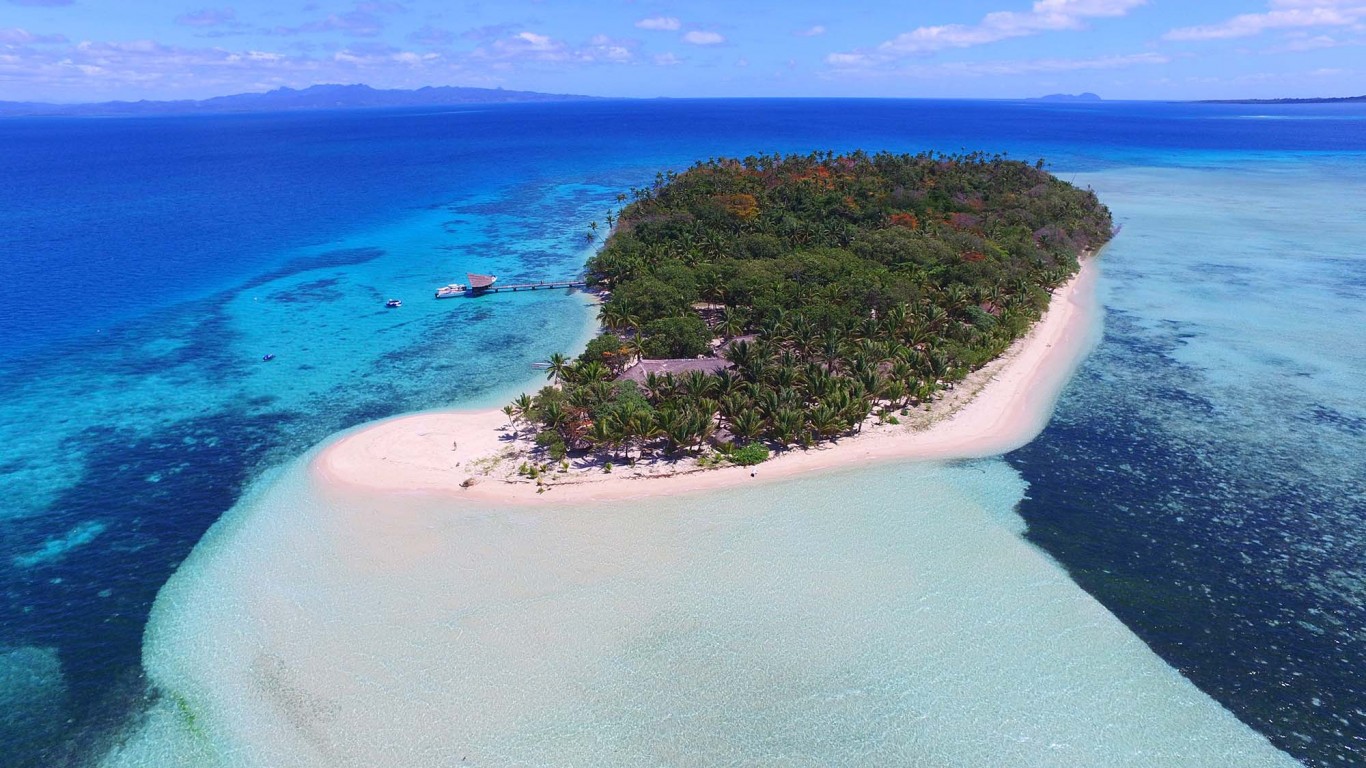
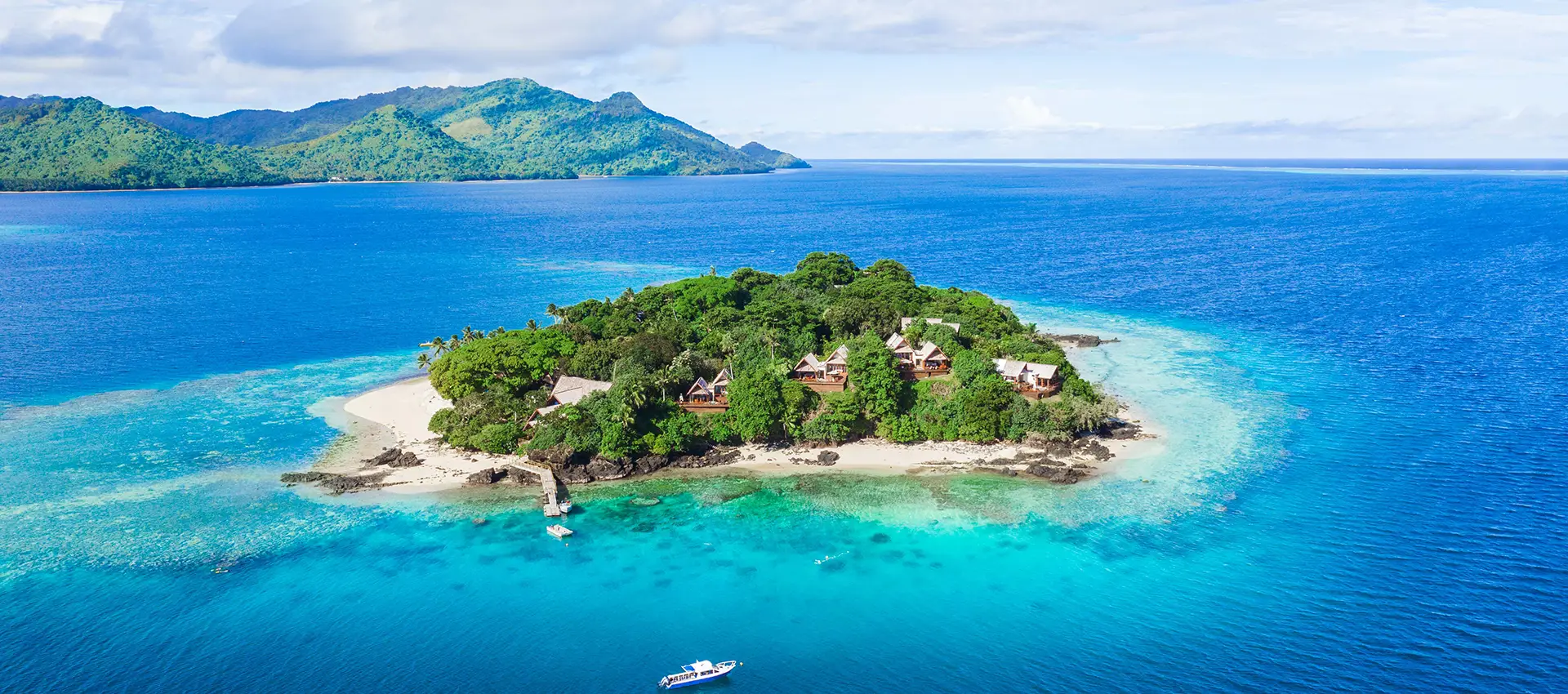
Next step: book the legal ceremony at home first, then approach two or three Fiji properties with the three questions above. How to get legally married in Fiji covers the legal process for couples it applies to, and eloping and renewing vows in Fiji covers the small-ceremony formats that suit a commitment ceremony best. Properties used to small, private ceremonies include Tropica Island Resort, Matamanoa Island Resort, Royal Davui Island Resort, Leleuvia Island Resort and Daku Resort. Coordinators are listed under wedding planners.