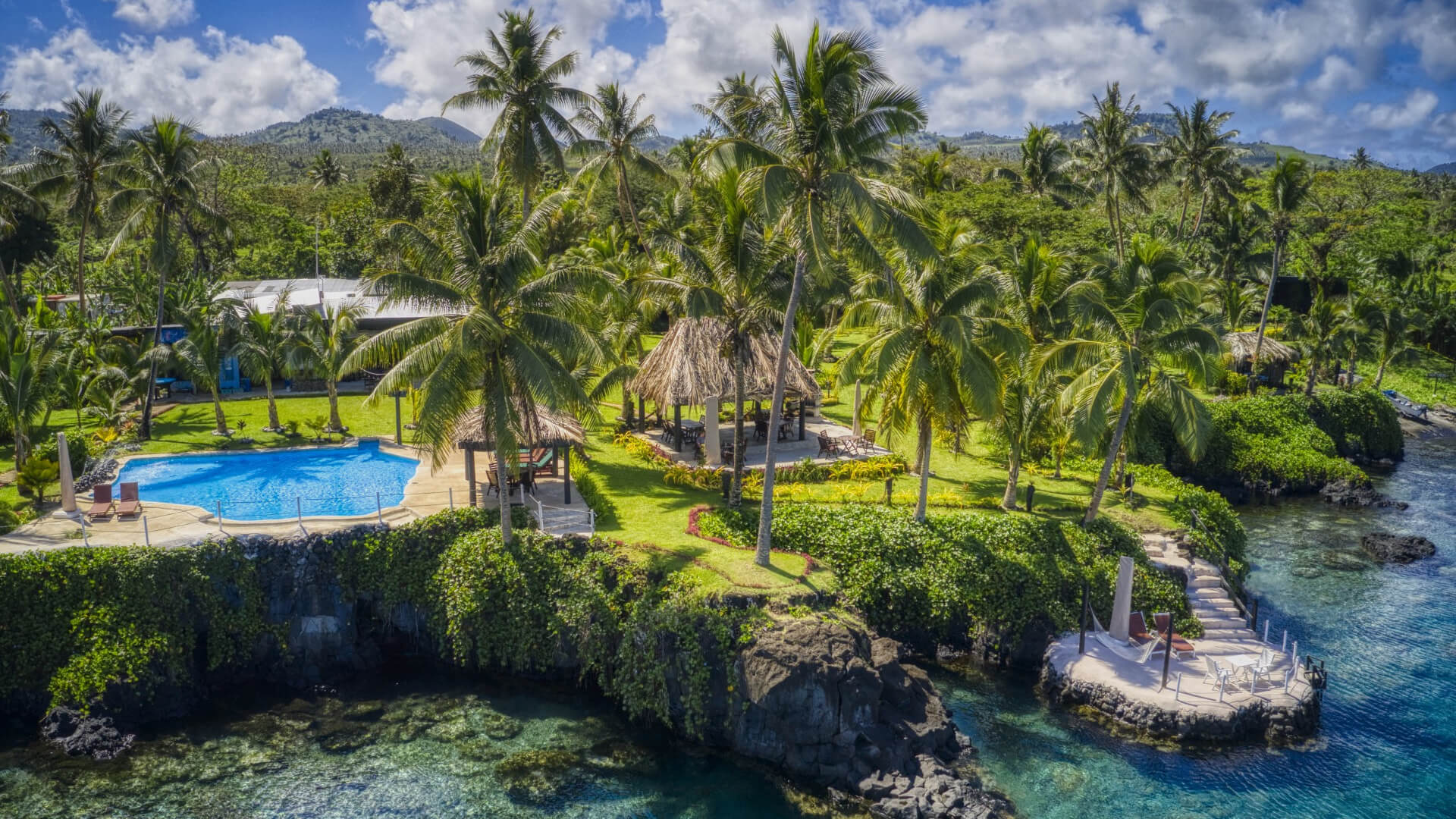
Fiji's domestic network is flown by small aircraft: Fiji Link's largest turboprop seats 68, its Twin Otters seat 19, and a resort helicopter carries six. For a group programme that arithmetic decides everything: moving 60 delegates to Taveuni or Kadavu is not one flight, it is a sequence of rotations, and the rotations set your arrival window.
International lift into Nadi is the easy part, and our air access hub covers it. The domestic leg is where programmes break.
Who actually flies Fiji's domestic routes?
Fiji Link, the domestic arm of Fiji Airways, operates the trunk network from Nadi and Nausori. Wikipedia's fleet summary (August 2025) lists one ATR 42-600, five ATR 72-600s and four Viking DHC-6-400 Twin Otters.
Northern Air flies from Nausori and states on its own site that it operates six aircraft to Suva, Taveuni, Savusavu, Labasa, Levuka, Moala and Nadi, plus charter and medivac.
One change matters. Pacific Island Air ceased operations on 31 January 2025, announced on its own website, citing a reduced fleet and the cost of refitting its seaplanes. Several resort pages still list it; if a transfer quote names it, the quote is out of date.
What seat counts should you plan against?
Fiji Airways' own fleet pages returned errors to us, so the figures below come from seat-map databases and Wikipedia, named per row. The ATR 42-600 count conflicts, so both are shown.
| Aircraft | Operator | Seats | Source |
|---|---|---|---|
| ATR 72-600 | Fiji Link | 68 | SeatMaps.com; AeroLOPA |
| ATR 42-600 | Fiji Link | 46 or 48 (conflict) | SeatMaps.com (46); Wikipedia and AeroLOPA (48) |
| DHC-6-400 Twin Otter | Fiji Link | 19 | SeatMaps.com; Wikipedia |
| EMB-110 Bandeirante | Northern Air | 18 (2017 data) | Wikipedia |
| Light single-turbine helicopter | Island Hoppers | 6 | Vomo Island Fiji (6 pax); Kokomo Private Island Fiji (AS350) |
Published configurations are not seats available on the day: the type actually scheduled, the payload weather and runway allow, and seats already sold all reduce the number. Plan on the type your operator confirms in writing.
How many rotations does a group of 30, 60 or 120 need?
Divide group size by seats and round up.
| Aircraft (seats) | 30 delegates | 60 delegates | 120 delegates |
|---|---|---|---|
| ATR 72-600 (68) | 1 | 1 | 2 |
| ATR 42-600 (46) | 1 | 2 | 3 |
| Twin Otter (19) | 2 | 4 | 7 |
| Helicopter (6) | 5 | 10 | 20 |
Now add time. Paradise Taveuni publishes the Nadi–Taveuni sector at approximately 60 minutes. One aircraft flying four Twin Otter rotations for 60 delegates is eight hours in the air before loading, refuelling or crew limits. That is not an arrival morning, it is an arrival day, and the first to land wait for the last.
Your options are parallel aircraft, split arrivals, or a different destination. All three cost money or programme time. Choose before you contract the venue.
What is the domestic baggage allowance?
Delegates arrive on an international ticket with a generous allowance and meet a much smaller one at the domestic counter. That is the trap.
| Carrier or transfer | Checked allowance | Excess charge |
|---|---|---|
| Northern Air | 15kg per person | FJD$10 per kg |
| Island Hoppers helicopter | 15kg per person | FJD$12 per kg |
| Island Hoppers fixed wing | 23kg per person | FJD$12 per kg |
| Kokomo seaplane/helicopter | 20kg checked + 5kg cabin | Not published |
| Turtle Island seaplane | 23kg total per person | Not published |
Conversions use xe.com mid-market rates taken 14 September 2026, FJ$1 = NZ$0.7838 = A$0.6407; rates move. FJD$10 is about NZ$7.84 or A$6.41, and FJD$12 about NZ$9.41 or A$7.69. Northern Air also charges FJD$150 (about NZ$118 / A$96) per bulky item such as a surfboard or golf clubs.
For Fiji Link we could not reach the airline's own baggage page, which returned a 403. Fiji Pocket Guide, updated October 2024, gives a 15kg domestic checked and 7kg cabin allowance. Fiji Pocket Guide states that booking the domestic and international sectors together allocates the international allowance - typically one 30kg piece in economy. We could not confirm this against fijiairways.com. Confirm the figure with the airline before briefing delegates, and book the domestic sector on the same ticket wherever you can.
Why do bags travel on a later flight?
Small aircraft fly to a weight and balance sheet, not a bag count. When the load is tight the aircraft goes and some baggage follows: Island Hoppers states that excess is charged, sent on the next available flight, or left in storage at its hangar.
So satchels, banners and presenter kit can arrive after the presenters. Send anything the programme cannot start without on an earlier rotation, by sea or by road, never in a delegate's bag.
How do Mamanuca and Yasawa transfers actually work?
Not by scheduled aeroplane. Malolo Lailai (PTF) and Mana (MNF) have airstrips, but Fiji Pocket Guide lists them as charter-only and Wikipedia records Fiji Link's scheduled services to both, and to Yasawa Island, as terminated.
Premium transfers in the Mamanucas and in the Yasawas are therefore helicopter or seaplane, and everything else goes by boat. Vomo Island Fiji publishes a 15-minute helicopter transfer for up to six passengers at 15kg each, against a 35-minute speedboat carrying up to 20 passengers plus luggage. For 60 delegates, that is one boat movement or ten helicopter movements. Operators such as Mamanuca Express exist because air does not scale.
Kokomo Private Island Fiji in Fiji's Outer Islands is reached by Twin Otter seaplane or AS350 helicopter, 45 to 60 minutes from Nadi, and requires a daylight landing in safe conditions. Turtle Island Fiji in the Yasawas publishes a 30-minute seaplane transfer, a 23kg allowance, and warns that same-day connections from Nadi are not always possible.
What do weather, daylight and Nadi connections do to the plan?
Small aircraft and seaplanes are the most weather-sensitive links in a Fiji programme. Kokomo requires daylight and safe conditions; Vomo's helicopters fly in daylight only. A squall line or a late international arrival removes your last rotation of the day.
Nadi's domestic terminal is a short walk from international arrivals, but we could not verify a published group minimum connection time from Fiji Airports or Fiji Airways. Confirm it with your carrier; a group of 60 clearing immigration and re-checking bags needs far longer than one passenger. Keep the first programme element on day two, hold contingency rooms in Nadi, and give a ground handler such as Rosie Holidays written authority to rebook.
When should you fly a group domestically at all?
Less often than planners assume.
- Under 30 delegates, high-value incentive: fly. One or two rotations to Taveuni or Savusavu is manageable and the destination earns it. Budget a full arrival day; Paradise Taveuni is a further hour by road from Matei (TVU).
- 30 to 100 delegates: possible, but only with parallel aircraft or split arrivals, and only if you can absorb a weather day. Price the charter before you fall in love with the island.
- Over 100 delegates: stay on Viti Levu or in the Mamanucas. A coach from Nadi and a catamaran from Port Denarau move a hundred people in one controlled movement, with no weight limit and no rotation maths. That is not a compromise; it is why most large Fiji conferences sit where they do.
Codes: Nadi (NAN), Nausori/Suva (SUV), Matei/Taveuni (TVU), Savusavu (SVU), Labasa (LBS), Vunisea/Kadavu (KDV).
What should you do next?
Confirm the aircraft type in writing, then build the arrival timeline backwards from it. Our guides to moving 100, 300 and 800 delegates, delegate transport and Fiji's islands cover the ground and sea side of the same problem, and the Taveuni and Vanua Levu hub lists the properties at the far end of these flights.