Resort networking works when the format does the work, not the view. A beach reception, a sunset boat, an island day and a lovo night each produce a different kind of conversation and each carries a different logistics load. Pick the format for the conversation you need, then build the contingency around it.
This piece is about format selection rather than venue selection. The underlying assumption is that your delegates are already on a resort property and that the hard part is not finding somewhere pleasant — it is engineering a room's worth of strangers into useful conversation while the sun sets and the wind picks up.
Why do resort networking sessions fail more often than hotel ones?
Because the constraints move outdoors and nobody re-plans for them. A city hotel's cocktail function has fixed walls, fixed acoustics, fixed lighting and a bar you can see from the door. A beach function has none of those, and the three things that most often break it are predictable.
Sound. Open sand and open water give you no reflective surfaces, so unamplified conversation dies at about two metres and a band drowns everything inside ten. Light. Tropical dusk is short, and a function that starts at 6pm in good light is in near-dark by 7pm unless somebody has costed lighting. Movement. People will not cross soft sand to meet someone, so a long thin beach layout produces three separate parties rather than one.
None of that argues against outdoor networking. It argues for choosing a format whose shape does the mixing for you.
Which networking formats actually work in Fiji?
| Format | Works best at | Duration | Conversation it produces | Main logistics demand |
|---|---|---|---|---|
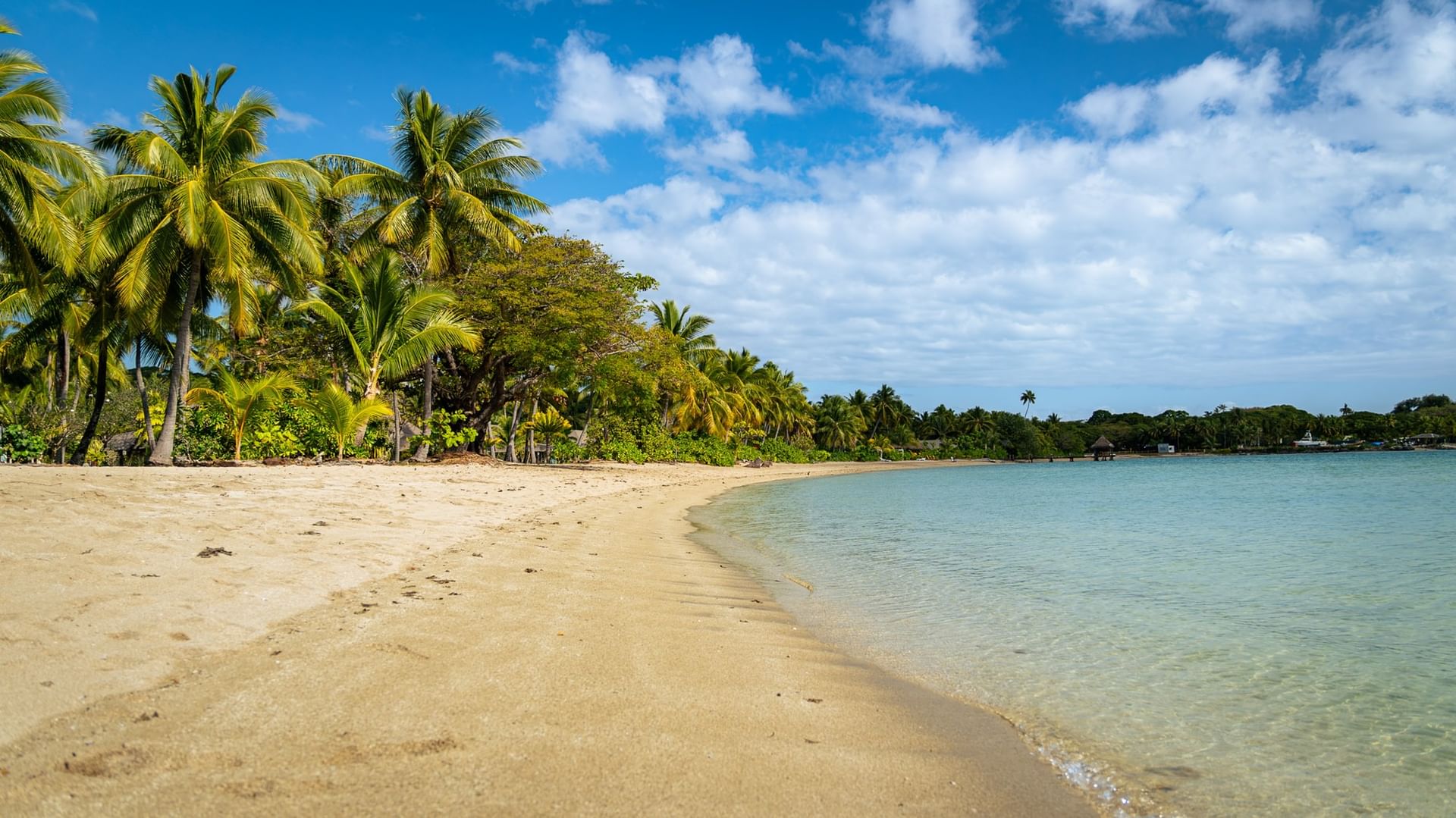
| Beach or lawn welcome reception | 40–250 | 90 min | Broad, shallow, high-volume introductions | Lighting, amplification, named wet-weather room |
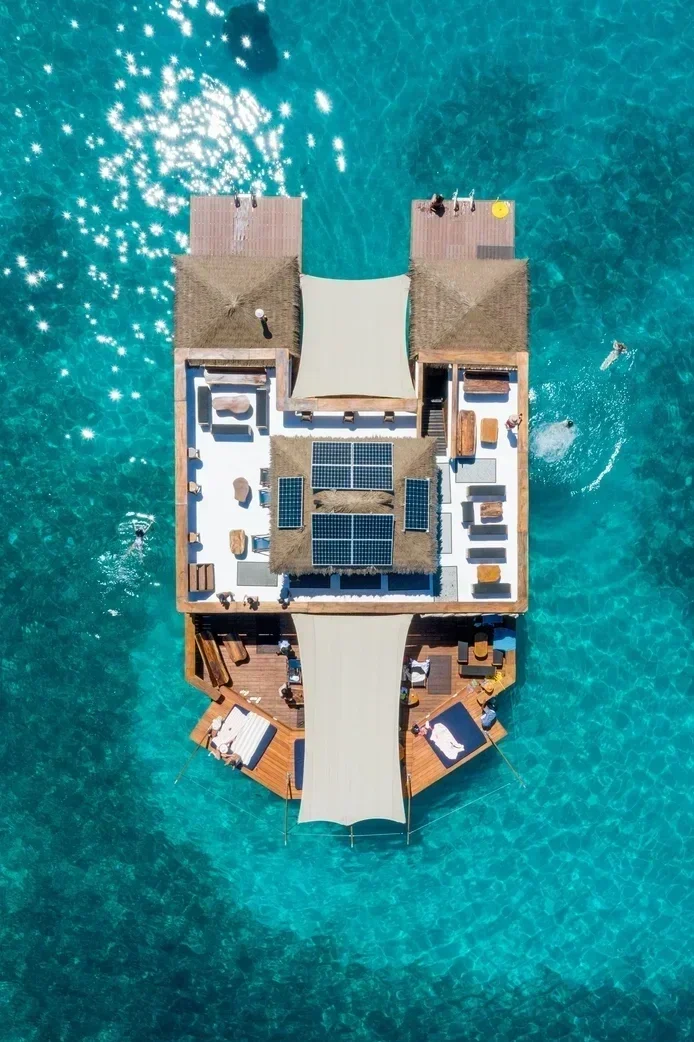
| Sunset boat or catamaran | 20–120 | 2–3 hrs | Deep, sustained, small-group | Hard capacity cap, fixed return time, sea-state call |
| Island day club | 30–200 | 5–7 hrs | Informal, self-sorting, long-arc | Two transfers, sun and alcohol management |
| Lovo night with performance | 60–300 | 3 hrs | Seated, cultural, shared-experience | Long prep lead time, single service window |
| Poolside or deck sundowners | 20–150 | 60–90 min | Quick, convenient, low-commitment | Noise against resident guests |
| Golf or activity pairing | 8–40 | 4–5 hrs | Very deep, very few people | Pairing sheet, kit, slow throughput |
The table is a selection tool rather than a ranking. A 300-delegate association conference and a 40-person leadership offsite want almost opposite things from the same evening.
How does a beach reception differ from a ballroom one?
It differs in throughput. A ballroom cocktail function with a central bar and scattered high tables will churn a 150-person group through perhaps six or seven conversations each in ninety minutes. The same group spread along forty metres of beach will manage two or three, because the layout gives them nowhere to circulate to.
The fix is to compress the footprint deliberately: one bar, one food station, and a lit zone no wider than about fifteen metres, with the dark sand beyond it acting as a wall. It feels counterintuitive to shrink a beach, and it is the single change that most improves the conversation.
Two further specifics. Put the amplified element — a duo, a welcome speech, a lali drum — at one end rather than the centre, so there is always a quiet half. And brief your coordinator on the named indoor fallback room, not the general promise of one. Our guide to wet-weather contingency by venue covers how to get that written into the contract rather than implied.
What makes a sunset boat the strongest networking hour you have?
Captivity, in the best sense. A boat has a fixed guest list, a fixed duration, no exit and a hard capacity limit, which means nobody drifts off to their room and the group has to actually talk. Delegates reliably name it as the part of the programme where they met someone useful.
The constraints are equally hard. Capacity is a vessel number, not a negotiable room number, so a group of 130 is two departures or a different format. The return time is fixed by the skipper and by last light, which makes a boat a poor choice immediately before a plated dinner with a 7:30pm start. And the sea-state call belongs to the operator, usually on the morning of — so a boat night needs a same-day alternative that does not require new catering.
Operators serving the Nadi and Denarau precincts include SeaFiji, Mamanuca Express, Captain Cook Cruises Fiji and Coral Cats Sailing. Confirm published capacity per vessel and whether your number fits one hull before you design the evening around it.
When is an island day worth the transfer?
When you have a spare half-day in the programme and a group that has been in a plenary room for two days. The Mamanuca day clubs — Cloud 9, Malamala Beach Club and Seventh Heaven — are built for exactly this: a boat out, five or six hours of self-sorting, a boat back.
Be honest with yourself about what it costs in programme time. Two transfers plus a day on the water is effectively a whole day gone, and a group that has been drinking in direct sun since eleven is not going to produce a good 6pm session. Island days work as the last day or the free afternoon. They do not work as a lunchtime networking slot.
What does each format need from your run sheet?
Four lines, every time, regardless of format: who makes the weather call and by when; where the amplification and lighting power comes from; what the named fallback is; and what the hard return time is. Most resort networking failures trace back to one of those four being absent rather than to a bad idea.
Add a fifth for anything on water: the operator's own minimum numbers and cancellation window, in writing.
So which should you pick?
For a first-night welcome at any size, a compressed beach or lawn reception with lighting costed in. It is the most forgiving format and the easiest to move indoors.
For a group under about 100 that needs to actually bond, a sunset boat, scheduled on a night with no plated dinner behind it.
For a cultural centrepiece at 60 to 300, a lovo night with performance — see a lovo night for a conference group for the preparation lead time, which is longer than most planners expect.
For a leadership group under 40, the activity pairing. It produces the deepest conversations in the programme and the worst throughput, which is the right trade at that size.
Resort properties with both ballroom capacity and genuine outdoor settings — InterContinental Fiji Golf Resort & Spa and Musket Cove Island Resort & Marina among them — let you run two or three of these formats without moving the group, which is usually worth more than any single venue's view.
Next step
Match the formats above to what is actually reachable from your precinct in half-day activity options near each conference precinct, then read the wider programme context in the delegate experience guide. Operators and venues are listed in the activities and team-building category, and if partners are travelling, partner and accompanying person programmes prices the daytime side of the same question.