A lovo is a Fijian earth oven: a pit lined with wood, river stones heated in a fire, food wrapped in banana or palm leaves and layered onto the stones, then the whole thing sealed under leaves and soil to slow-cook. Several Fiji resorts include one in their wedding packages. It is the most culturally grounded thing you can put on a Fiji wedding menu, and the easiest to get wrong.
How is a lovo actually cooked?
Tourism Fiji describes the method as digging a pit to create a natural oven, placing large river rocks over the wood-lined pit and heating them in a fire, then covering the hot stones with green banana or palm leaves.
The food goes on in a specific order. Tourism Fiji sets it out as root crops first — dalo (taro), cassava, sweet potato — then leaf-wrapped proteins such as chicken, beef, pork and fish, then vegetables on top, including palusami, pumpkin and breadfruit. The pit is then sealed with banana leaves, soil or sacking and left to cook.
Two details worth knowing before you plan around it. First, the stones are heated before anything goes in; the fire is not under the food. Second, the food is marinated in coconut cream and spices before wrapping — the flavour is not a by-product of the cooking method alone.
When it is opened, the food is lifted onto large banana leaves and served buffet style. That unearthing is the moment your guests will remember, and it is worth scheduling as an event rather than letting it happen behind a screen while everyone is at the bar.
How long does it take?
Published sources disagree, and it is worth saying so rather than giving you a single number that might be wrong.
| Source | What it says |
|---|---|
| Tourism Fiji | The sealed pit cooks "slowly over 1-2 hours" |
| Jean-Michel Cousteau Resort Fiji | Food is "left to slow cook for several hours" |
| Namale Resort & Spa | "Left to slow cook for hours", no figure given |
| Nanuku Resort | Its guest-facing lovo experience runs "2-3 hours, at leisure throughout the afternoon" |
None of those is the full cycle from lighting the fire to serving, because the stone-heating stage comes first and nobody publishes how long that takes either. The safe planning position is that a real lovo occupies most of an afternoon, and that your venue's kitchen knows its own number. Ask for it in hours, and ask what time the pit has to be lit.
That matters for your timeline. If the lovo is the reception meal, the pit is being dug and lit while you are getting ready, and it cannot be delayed because the ceremony ran long.
What goes in a lovo?
| Layer | Typical contents |
|---|---|
| Bottom (on the stones) | Dalo (taro), cassava, sweet potato, uvi (wild yam) |
| Middle | Chicken, beef, pork, whole fish, all leaf-wrapped |
| Top | Palusami, pumpkin, breadfruit, leafy greens in coconut milk |
| Served alongside, not cooked in the pit | Kokoda — raw fish marinated in citrus and coconut milk |
Palusami is described slightly differently from venue to venue. Tourism Fiji groups it with the vegetables; Crusoe's Retreat ON the Coral Coast defines it as taro leaves filled with corned beef, onions and coconut cream; Taveuni Palms describes chicken or beef wrapped in taro leaves with onions and coconut milk. If it matters to your menu, ask the specific kitchen what theirs contains.
Vegetarian guests are well served by a lovo, which is worth telling them in advance. Tourism Fiji names taro, sweet cassava, yams, sweet potatoes, smoke-blistered eggplants and leafy greens in seasoned coconut milk among the meat-free elements.
Which Fiji venues will do a lovo for a wedding?
These are venues that state a lovo on their own website. We have separated the ones that name it in a wedding or event context from the ones that run it as a general guest experience, because those are different conversations with the coordinator.
| Venue | Where | What their own site says |
|---|---|---|
| Outrigger Fiji Beach Resort | ON the Coral Coast | Dream Wedding Package reception includes a "Fijian Feast (Lovo) Buffet Dinner" |
| Plantation Island Resort | IN the Mamanucas | Wedding packages offer "Waitui BBQ Grill or Magiti (lovo) buffet" as the reception catering choice |
| Fiji Hideaway Resort & Spa | ON the Coral Coast | Paradise Wedding package includes a "Fijian Lovo buffet dinner prepared and cooked traditionally in an underground earth oven" |
| Matangi Private Island Resort | Off Taveuni | Seven-night wedding package inclusions list a "Fijian Lovo Buffet" |
| Yasawa Island Resort & Spa | IN the Yasawas | Names a "traditional lovo Fijian feast" under its resort buyout offering |
| Shangri-La Yanuca Island | ON the Coral Coast | Describes unveiling a lovo under its "Magiti Fijian Feast" themed-events offering, not on its weddings page |
| Nanuku Resort | Pacific Harbour | Dedicated lovo experience page; not linked to weddings on its site |
| Jean-Michel Cousteau Resort Fiji | Savusavu | Runs a weekly lovo; wedding link not stated |
| Crusoe's Retreat | ON the Coral Coast | "Lovo nights" hosted a few times every week |
| Taveuni Palms Resort | Taveuni | "Fijian Lovo Night", complimentary during a stay |
Several other well-known wedding resorts describe their reception catering without naming a lovo. That does not mean they cannot do one — it means it is not in the published package, so ask rather than assume. More venues in the wedding venues directory.
What does a lovo cost?
No Fiji resort publishes a per-person price for a lovo. We looked at every venue above and could not find one, so we are not going to print a figure.
What is published is the relationship between a lovo and the alternatives. Outrigger Fiji Beach Resort includes the lovo feast in its Dream Wedding Package and prices the upgrades away from it: a South Pacific BBQ Buffet at F$10 per person and an Ocean Feast Buffet at F$27 per person, with children charged at 50% of the buffet cost.
The useful conclusion from that: at the venues that include it, the lovo is the baseline, not the premium option. If you are being quoted a surcharge for a lovo, ask what it is for — the labour, the pit, the performers, or all three — and ask for it as a separate line.
How do you host a lovo respectfully?
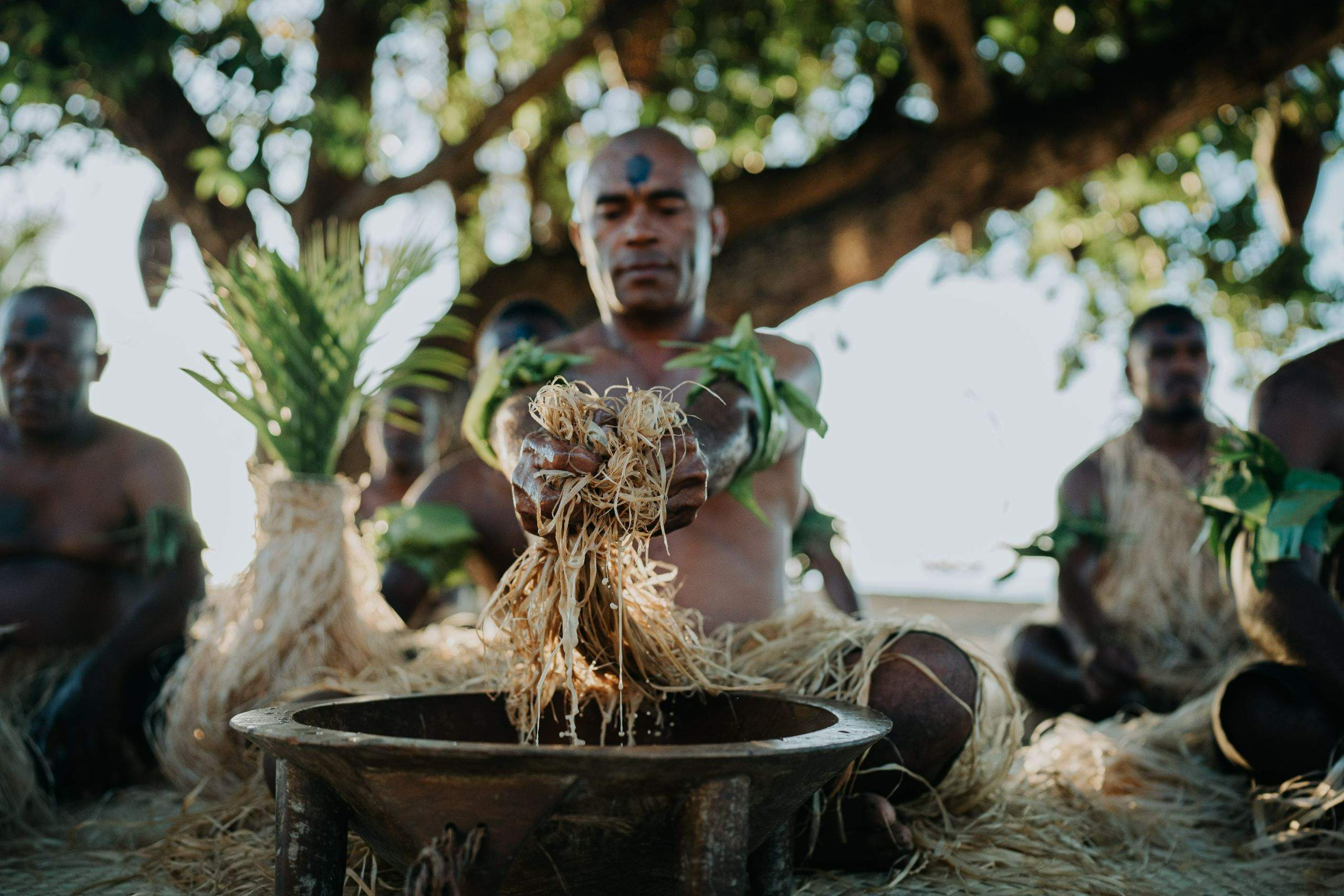
The lovo is not resort decoration. Tourism Fiji describes it as an expression of the Fijian love of sharing, with families and friends contributing ingredients and preparation, reserved for occasions that celebrate life, love and community. Jean-Michel Cousteau Resort puts it plainly: in Fijian villages the lovo is often reserved for weddings, births and funerals.
Four things that follow from that:
- Name and credit the people who make it. The kitchen team, the pit crew, the performers. If a village group is cooking or performing, they are contributors to your wedding, not entertainment.
- Pay properly, and ask how. If performers or a village group are involved, ask the resort what they are paid and whether it goes to them or to a fund.
- Let someone explain it. Thirty seconds from a staff member on what a lovo is and why it is being served turns a buffet into the best five minutes of your reception.
- Watch the framing. Tourism Fiji notes the traditional division of labour, with men handling the pit and women the flavouring and sides. Describe what is actually happening at your wedding rather than a generic version of it.
What can go wrong?
- Weather. A lovo is dug in the ground and cooks in the open. Ask what happens in heavy rain, and get the answer before you sign.
- Timing collision. The unearthing is a fixed moment. If your ceremony runs 45 minutes late, the food does not wait politely.
- Guest expectations. Some guests will be delighted; some will look for a familiar option. A lovo buffet usually carries enough variety to cover both, but tell people what is coming.
- Numbers. No venue we found publishes a minimum headcount for a lovo. Ask early, because digging a pit for twelve people may not be something a kitchen will do.
Next step
Ask your venue three questions: does the package include a lovo or charge for it; what time does the pit get lit; and who is cooking it. The answers tell you whether you are getting a lovo or a barbecue with a name.
Then read Fijian wedding traditions, done properly for the ceremony side, Fiji wedding food and drink for the rest of the menu, and Fijian food explained: kokoda, lovo, palusami and rourou for what your guests will be eating all week.