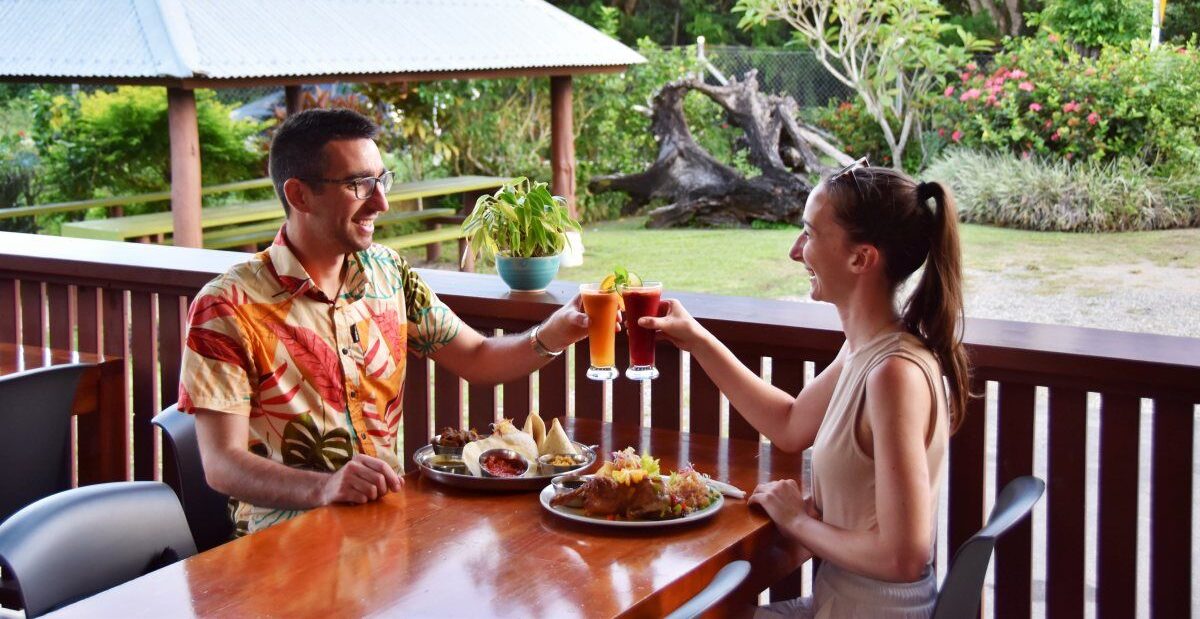
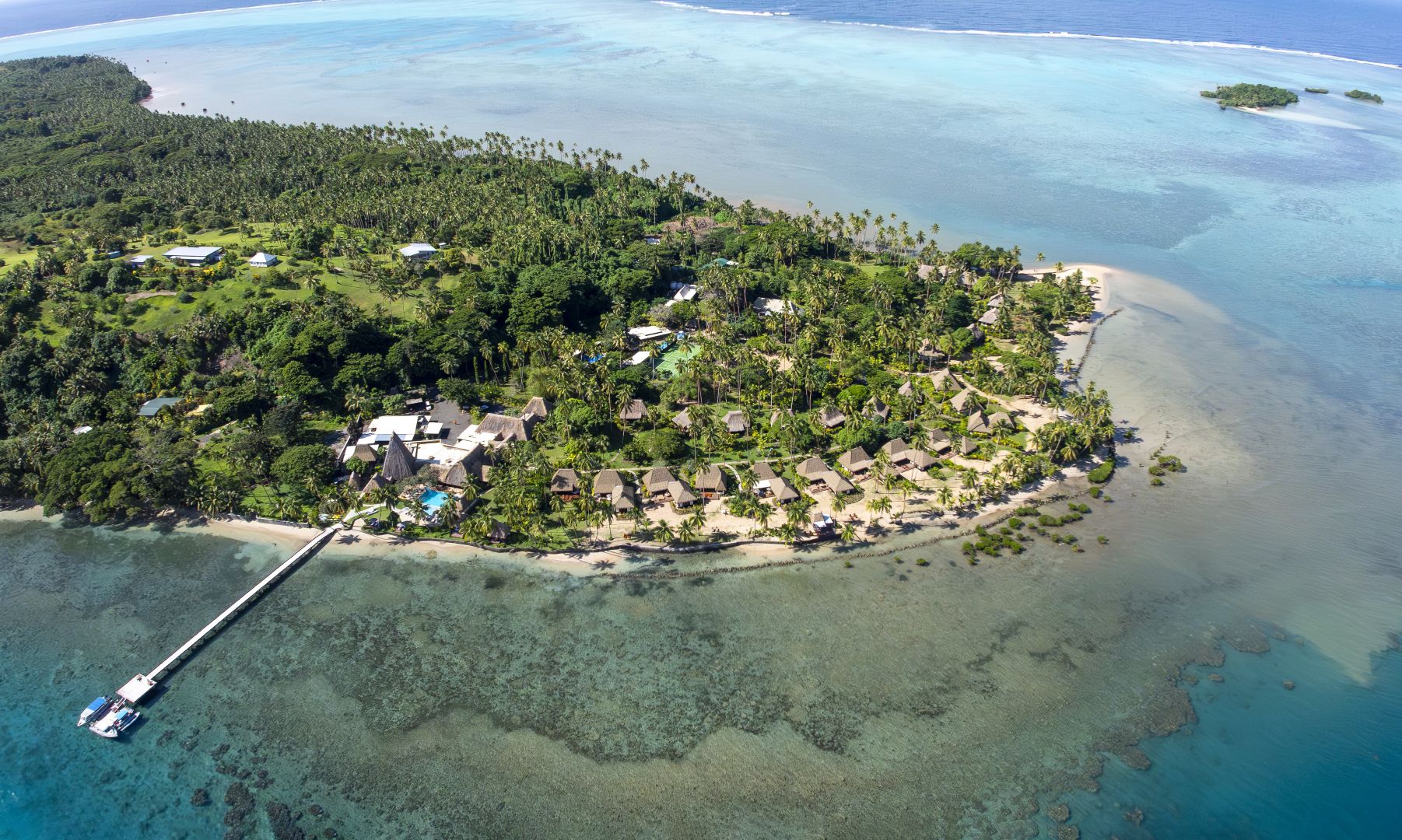
Four things sit at the centre of Fijian cooking. Kokoda is raw fish cured in citrus and finished with coconut cream. Lovo is not a dish at all but an underground oven. Palusami is taro leaf parcels filled with coconut cream. Rourou is taro leaf cooked as greens. Learn those four and most Fijian menus become legible.
Here is what each one actually is, how it is made, how to say it, and where to eat the real version.
What is kokoda, and how is it made?
Kokoda is Fiji's signature dish and the one most visitors meet first, usually as a starter in a coconut shell.
The method is a citrus cure. Raw fish — most often walu or mahi-mahi — is diced and marinated in freshly squeezed lemon or lime juice, which firms the flesh and turns it opaque. Once it has "cooked" in the acid, coconut milk is added, along with finely diced tomato, chilli and salt. Spring onion and cucumber commonly appear.
Pronounce it ko-kon-da. Fijian orthography gives d the value nd, so the spelling is misleading to an English eye. Getting it right is a small courtesy that lands well.
It sits in the same family as Tahitian poisson cru, Samoan oka and Latin American ceviche — the same technique arrived at independently by people with excellent fish and no refrigeration. The Fijian version is distinguished by how much coconut cream goes in and how little else does.
How to judge a good one: the fish should still taste of fish, the coconut should be rich rather than watery, and there should be enough chilli to notice. If it tastes only of lime, it has been over-cured.
What is a lovo?
A lovo is an earth oven, and the meal that comes out of it. It is the Fijian relative of the Māori hāngi and the Samoan umu.
The construction is consistent across descriptions. A shallow pit is dug and lined with wood. River stones are heated over the fire until they are white hot. Food goes on in layers:
- Root crops first — dalo (taro), cassava, yams. They take the longest and sit closest to the heat.
- Then the proteins — chicken, pork, beef or fish, usually marinated in coconut cream and wrapped in banana or palm leaves.
- Then the vegetables — palusami, pumpkin, breadfruit.
The pit is sealed with banana leaves, sacking or soil, and left.
How long? The sources genuinely disagree. Tourism and resort descriptions commonly give one to two hours; other accounts describe food left to slow-cook for several hours. Both appear in credible sources, and the honest answer is that it depends on the size of the pit and the weight of the load. If you are planning an event around one, ask the property for their own number rather than trusting a figure off a website.
Traditionally the men prepare the pit and the women prepare the food, and a lovo is a communal undertaking — it is reserved for occasions that matter: weddings, births, funerals, and the arrival of guests.
What it tastes like: smoky, deeply tender, slightly sweet from the coconut cream, and quite unlike anything produced in a kitchen. It is also, done properly, genuinely excellent food rather than a cultural performance with a plate attached.
Palusami and rourou — what is the difference?
Both are taro leaf, and visitors conflate them constantly.
Palusami is the parcel. Taro leaves are filled with thick coconut cream, onion and salt, very often with canned or corned meat added, then wrapped and baked — in the lovo, or in an oven. It is rich, savoury and slightly silky, and it is the version that appears at feasts.
Rourou is the everyday dish: taro leaves cooked down as a stew or as greens. Simpler, lighter, and eaten far more often in Fijian homes than palusami is.
One practical warning: taro leaf must be cooked thoroughly. Undercooked it causes an unpleasant itching in the mouth and throat from calcium oxalate crystals. This is a non-issue in any commercial kitchen or village lovo — it is simply the reason the cooking times are what they are.
The four, side by side
| Dish | What it is | Core ingredients | How you will meet it |
|---|---|---|---|
| Kokoda (ko-kon-da) | Raw fish cured in citrus | White fish, lime or lemon, coconut milk, tomato, chilli | Starter, served in a coconut shell |
| Lovo | Underground oven, and the feast from it | Dalo, cassava, chicken, pork, fish, banana leaves | Weekly Fijian night; wedding and event set-piece |
| Palusami | Taro leaf parcels | Taro leaves, coconut cream, onion, salt, often corned meat | Side dish at a lovo or feast |
| Rourou | Taro leaf stew or greens | Taro leaves, coconut cream | Everyday side, home cooking, buffets |
What else should you eat?
The Indo-Fijian half of the country's food, which most resort menus underplay. British indentured recruitment from 1879 brought a second culinary tradition that has shaped Fijian cooking ever since. Breakfast in much of Fiji means roti and curry; lunch means rice, dhal and a meat or vegetable curry with salad or chutney. Ginger, garlic, chilli and curry leaves are now as much part of Fiji's flavour as coconut is.
Also worth ordering in their own right: dalo (taro), cassava and breadfruit — treated as staples rather than garnish — and whatever fish landed that morning.
On heat: traditional iTaukei cooking is not especially hot, leaning on coconut, smoke and root crops. Indo-Fijian cooking will be exactly as hot as you ask for. Between the two traditions, every palate is catered for.
Where do you eat it properly?
The resort Fijian night is a real thing and often very good — most properties run one weekly, built around a lovo. But the better versions are usually found slightly off the resort strip.
In the directory: Nadina Authentic Fijian Restaurant on Denarau specialises in Fijian cooking; Tukuni Restaurant in Lautoka and Vilisite's Seafood Restaurant on the Coral Coast are both worth the drive; and Baravi Handicrafts & Cafe pairs food with local craft. Jean-Michel Cousteau Resort Fiji in Savusavu is one of the properties that documents its own lovo process publicly.
To learn rather than just eat, Flavours of Fiji Cooking School in Nadi runs hands-on classes covering exactly these dishes. Where to eat and drink in Fiji is the full dining guide by island and occasion.
Planning a lovo into an event?
It is one of the strongest set-pieces available in Fiji, and it has one operational characteristic worth knowing: a lovo is committed hours in advance and cannot be held. A plated service can absorb a programme running forty minutes late. A pit that was sealed at 2pm cannot.
Build the schedule around the lovo rather than the other way round, and agree the opening time with the property in writing. Event catering and themed dinners in Fiji and Fiji wedding food and drink cover the rest, including dietary handling and beverage packages.
The verdict
- Kokoda is the dish to order first, and ko-kon-da is how to say it.
- A lovo is an oven, not a dish. Cooking times in public sources range from one to two hours up to several — ask your property.
- Palusami is the parcel; rourou is the greens. Both are taro leaf.
- Eat the Indo-Fijian food too. It is half of what Fiji actually eats.
- Book a cooking class if you want to understand any of it properly.
Next step: order kokoda on your first night and ask which night the property runs its lovo. Where to eat and drink in Fiji is the cluster hub; Fijian culture and custom explains the occasions these dishes belong to. Browse activities for cooking schools and food tours, or start from Denarau.