Event catering in Fiji is governed by one number that decides most outdoor menus: under the Food Safety Regulations 2009, food containing meat, seafood, poultry or milk may not be held between 5°C and 66°C for more than four hours in total before it is served. Every beach dinner, lovo night and lawn buffet in the country is built around that clause, whether the caterer says so or not.
This hub covers what Fiji does brilliantly at the table, what the law requires, how the lovo actually works, and where a planner's assumptions about supply, dietary requirements and alcohol licensing need adjusting.
Guideline only. Food safety and liquor licensing requirements are summarised here from published Fiji legislation. Confirm with the Fiji Ministry of Health and Medical Services, the relevant local authority and the Divisional Liquor Licensing Authority before contracting. Last reviewed 7 September 2026.
What is a lovo, and how does it actually work?
A lovo is a Fijian earth oven, and it is the single best set-piece dinner available to a conference in Fiji — provided you understand that it is a slow, physical, communal process rather than a service style.
Tourism Fiji describes the method: a hole is dug and lined with wood, topped with large river rocks heated over a fire. Once the stones are hot they are covered with leaves, and the food is added in layers so it cooks evenly — root vegetables at the bottom, then wrapped proteins, then vegetables on top. More leaves go over the pile before it is buried with soil or sand to seal in the heat, and the food cooks slowly over one to two hours.
What goes in: taro, cassava and yams; chicken, beef, pork and fish. Vegetarian versions use sweet potatoes, eggplant and vegetables in seasoned coconut milk. The result is smoky and dense rather than delicate, and it is best served as an abundant shared table, not plated.
Three planning consequences:
- The cooking window is fixed. A lovo cannot be held. Schedule the meal, not the speeches, around when the pit opens.
- The unearthing is the show. Bring delegates to the pit for the lifting rather than presenting the food already served. It is the moment people photograph.
- It is labour, and it belongs to someone. A lovo is dug, fired and tended by people. Ask who they are, make sure they are credited in the run sheet, and pay for the work rather than treating it as a resort inclusion.
Most resorts pair a lovo with a meke, the traditional dance form in which stories are told through song and movement. Cultural protocol for both is covered in Fijian culture and custom and delegate experience in Fiji.
What does Fiji's food safety law require?
Two instruments matter.
The Food Safety Act 2003 makes it an offence to prepare, pack, keep, convey, sell or give food that is unsafe, unhygienic or unfit for consumption, and section 16(1) states that no person may operate a food establishment unless it is licensed under the Act. Enforcement sits with the Central Board of Health and authorised officers, with local authorities acting as food authorities. Schedule 2 sets maximum penalties of $50,000 and up to ten years' imprisonment for serious offences.
The Food Safety Regulations 2009 carry the operational detail:
| Regulation | Requirement |
|---|---|
| Reg 47(1) | All premises where food business operations are carried out must hold a current health licence issued by the Board |
| Reg 47(13) | A licence remains in force until the 31 December following the date it comes into force |
| Reg 18(3) | Food containing meat, seafood, poultry or milk must not be held in the danger zone between 5°C and 66°C for more than four hours in total prior to sale |
| Reg 18(2) | Fresh meat, poultry, seafood and eggs must be refrigerated during storage and display |
| Reg 18(10) | Transport must keep frozen product frozen and non-frozen raw meat, fish or poultry below 5°C |
| Reg 3 | "Catering premises" expressly includes mobile or temporary vendors of ready-to-eat food |
| Reg 47(5) | Mobile and temporary stall operators need not keep written records but must be able to identify their suppliers to authorised officers on request |
That Regulation 3 definition is the one planners miss: an offsite marquee dinner on a lawn is catering premises under Fijian law. It is not an informal arrangement outside the regime.
The practical process is local. Lautoka City Council, for example, publishes that the health licence is ultimately issued by the Ministry of Health headquarters in Suva, requires council building approval plus Ministry of Labour and National Fire Authority compliance certificates, business registration and tax registration, and must be renewed yearly by January. That council also states a penalty of up to $10,000 or five years' imprisonment for operating without a licence, which does not match the Act's Schedule 2 maxima — we publish both rather than reconciling them, and you should confirm the current position with the Ministry.
What this means for your run sheet
- Four hours is the whole chain, not the service window. Cooking, transport, holding and service all count.
- Ask your caterer, in writing, how they will hold temperature at the offsite location — chafers and hot boxes are not a plan on their own in a Fijian evening.
- Confirm the venue or caterer holds a current health licence and that it covers the location you are using, not just their kitchen.
- For a lovo, the four-hour clause is the argument for serving straight from the pit. It is also why a "lovo-style" buffet trucked in from elsewhere is a different, riskier proposition.
Do I need a special licence to serve alcohol at an offsite event?
Yes, and Fijian law provides a specific instrument for it. Under the Liquor Act 2006, licences fall into four categories — on-premises, off-premises, club and special use. Section 49 says a special use licence "authorises the holder of the licence to supply and sell liquor, on the premises or conveyance described in the licence, to any person attending any occasion or event or series of occasions or events described in the licence."
That is precisely a beach dinner, a marquee gala or a boat charter with a bar.
Key points:
- The issuing authority is the Divisional Liquor Licensing Authority, one per Division, with appeals to the Central Liquor Board.
- Section 50 separately allows on-premises and club licence holders to supply liquor at social gatherings when their premises would normally be closed, valid for up to twelve months.
- The Act's Schedule sets trading hours; published examples include hotel bars 11am–9pm Monday to Saturday, nightclubs 5pm–1am Monday to Friday and 5pm–midnight Saturday, and off-premises sales 8am–9pm Monday to Saturday, excluding Sundays, Good Friday and Christmas Day. Sunday and Good Friday restrictions are the ones that catch conference schedules.
- The Liquor (Amendment) Bill 2022 extends the maximum licence term from three to five years.
No published fee schedule or processing time for a special use licence could be found, so treat lead time as unknown and start early. In practice, most conferences let the venue or a licensed caterer hold the licence — but confirm who holds it, and that it names your event and your location.
How does Fiji handle dietary requirements?
Fiji is genuinely good at this, for demographic reasons rather than hospitality training.
The most recent Fijian census with a religion breakdown is 2007, which recorded the population as approximately 64.5% Christian, 27.9% Hindu and 6.3% Muslim — figures cited in the US State Department's 2022 International Religious Freedom report, which notes 2007 is the most recent census carrying that breakdown. The 2017 census release does not include one. Cite these as 2007 figures; they are the best published data available, and they are dated.
What follows in practice:
- Vegetarian food is mainstream, not an accommodation. Fiji's Indo-Fijian culinary tradition means a full vegetarian menu is normal in most kitchens rather than a special request. This is a real advantage over many Pacific destinations.
- Halal. The Fiji Muslim League demonstrably issues and withdraws halal certification — it withdrew McDonald's Fiji's certification in August 2025, and in March 2024 the Fijian Competition and Consumer Commission announced work with the League on the proper use of halal claims. No published source establishes the League as the sole or statutorily recognised certifier, so ask a caterer which body certified them and verify it, rather than accepting an unattributed "halal available".
- Seafood allergy and toxin risk. Australia's Smartraveller notes that naturally occurring seafood toxins in the region can cause illness. For a large group, ask the caterer about sourcing for reef fish specifically.
- Kava is a dietary question too. Some delegates should not drink it; the medical position is set out in delegate experience in Fiji.
What can Fiji actually source locally?
Less than the marketing suggests, and it is better to plan around that honestly.
Fiji imported around $1.19 billion worth of agricultural goods in the most recently reported year, against roughly $300 million in agriculture and livestock exports, according to Fiji Broadcasting Corporation reporting in July 2026 on the government's push to cut that bill. Much of what appears on a Western-style banquet menu — beef, dairy, wheat products, most temperate vegetables — arrives by ship.
What that means for a conference menu:
- Fish, root crops, tropical fruit, coconut and greens are the local strengths, and a menu built on them will be fresher, cheaper and more distinctive than an imported steak-and-potatoes banquet.
- Imported items carry freight, duty and lead time, and a last-minute menu change to an imported protein can be genuinely impossible rather than merely expensive.
- Sourcing locally is also the sustainability story, and it is a defensible one — see running a sustainable event in Fiji.
Sign the menu off earlier than you would at home, and resist late changes.
Is the water and ice safe?
Tourism Fiji publishes a careful position: in major urban areas such as Nadi, Suva and Savusavu, and at large resorts on the bigger islands, tap water is treated and generally considered safe to drink — but ageing pipes, heavy rain and limited treatment in some locations can affect safety and quality. In rural villages and outer islands, water comes from springs, rain tanks or boreholes and quality varies. Most resorts advise guests not to drink the tap water, since visitors have not built the local immunity, and Tourism Fiji recommends boiling for five to ten minutes in rural areas.
Smartraveller notes that waterborne and foodborne diseases are common in Fiji, with typhoid and leptospirosis cases reported.
On ice, no official Fijian guidance could be found either way. For a delegate group, the practical answer is to provide bottled or filtered water at every session, ask your venue in writing what water source its ice is made from, and brief delegates going into rural areas.
Where do offsite dinners actually happen?
Fiji's offsite dinner market is concentrated in three precincts, and the venue directory carries the current list.
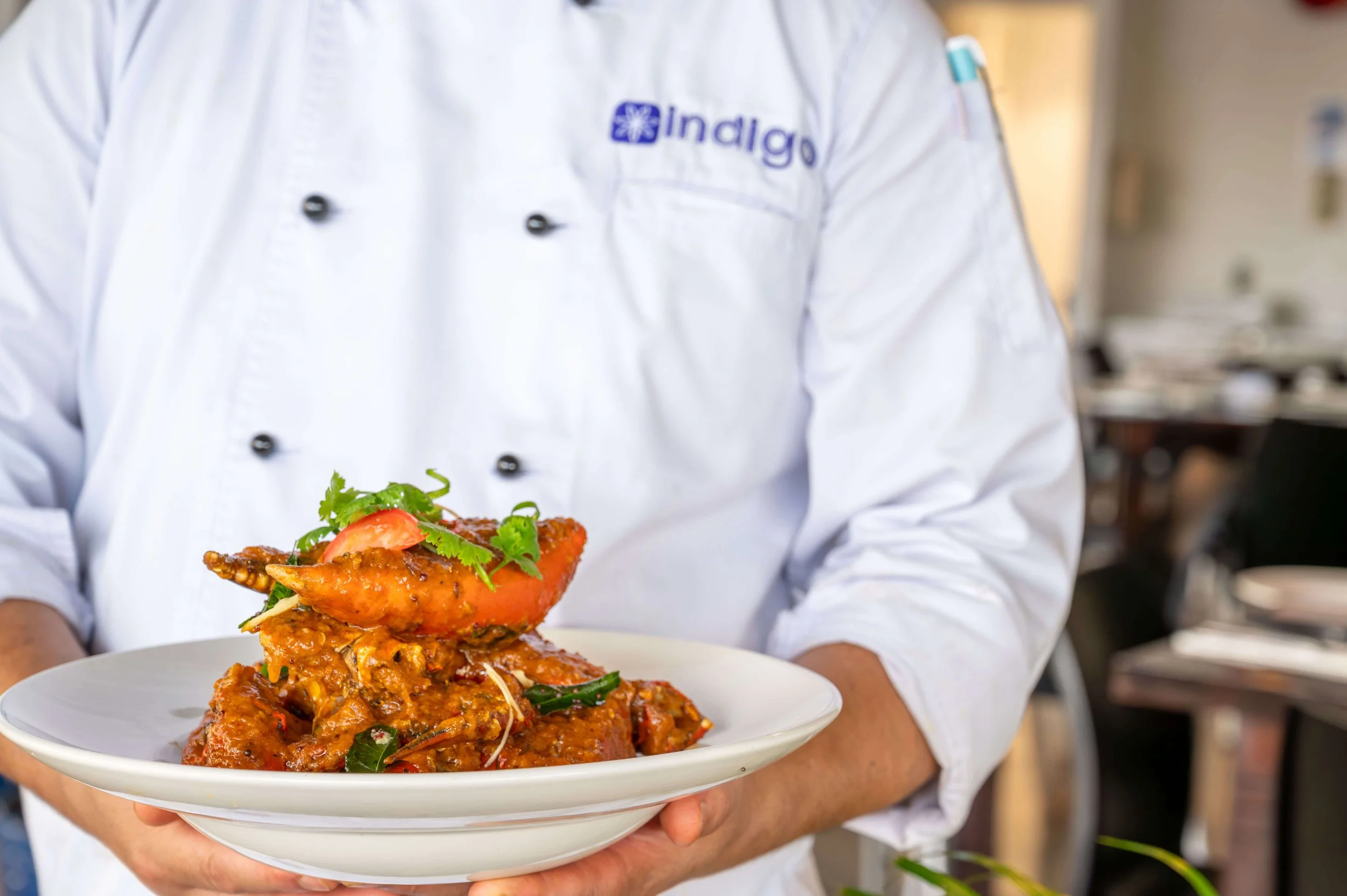
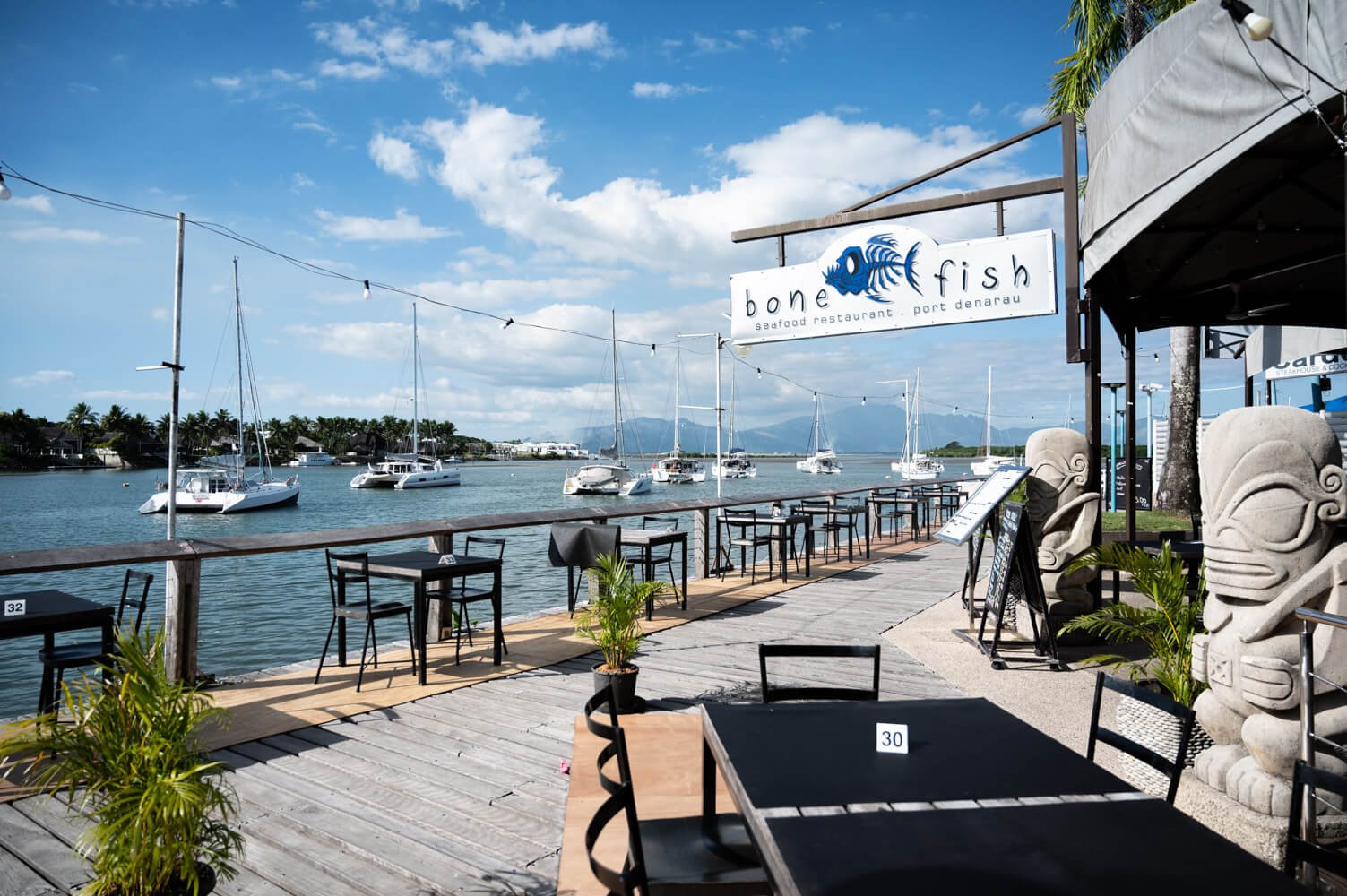
ON Denarau Island, the walkable restaurant strip at Port Denarau makes a dine-around genuinely practical — Cardo's Steakhouse & Cocktail Bar, Nadina Authentic Fijian Restaurant, Indigo Indian Asian Restaurant & Bar and Bonefish Seafood Restaurant sit within a few minutes of each other, which means a 200-person group can be split across four venues without a coach movement.
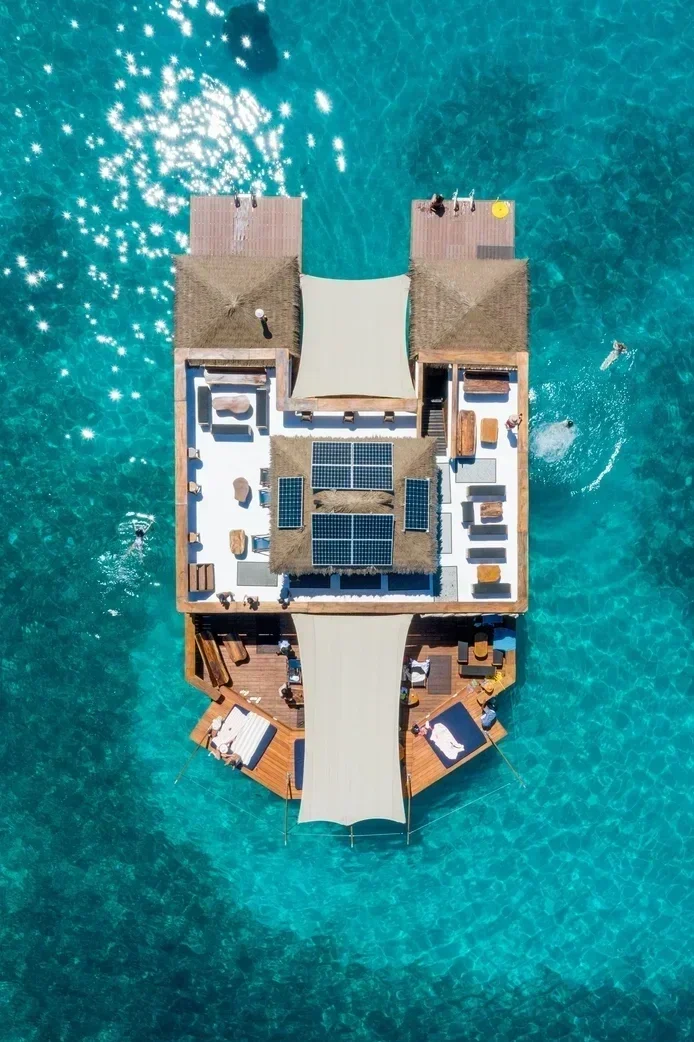
IN the Mamanucas, Malamala Beach Club publishes capacity for up to 350 for corporate functions on its own island about 30 minutes from Port Denarau, and Cloud 9 offers exclusive hire of its floating platform with a wood-fired pizzeria. Both turn dinner into a transfer exercise — factor the last boat.
In Suva, Tiko's Floating Restaurant is the obvious set-piece for a government or development audience. Wider options are in where to eat and drink in Fiji.
For catering and equipment brought to a venue, the directory lists Chefs Catering Fiji and My Kai on the catering side, and Party & Events Fiji, RK Event Hire Fiji, Tents & Awnings and Clyde Equipment Marquee Hire for marquees, furniture and staging.
Heat, hydration and the physical reality of a Fijian evening
Two things that do not appear in any menu proposal and should appear in yours.
Hydration. Delegates arriving from a temperate winter into Fijian humidity underestimate fluid loss badly, and a long standing reception compounds it. Put water stations at both ends of every function space, not just the bar, and make the first drink poured on arrival a non-alcoholic one.
Timing. Outdoor dinners in Fiji work best starting earlier than a European schedule would suggest — light, heat and insects all improve the earlier you sit. Build the wet-weather alternative into the contract for every outdoor function, and walk it physically on the site visit, because a covered restaurant that seats 120 is not a wet-weather plan for a 250-person gala.
The next step
Get three things in writing before you sign a catering contract: the current health licence and what location it covers; how the caterer will meet the four-hour temperature rule at your offsite location; and who holds the liquor licence for the event. Then build the menu from what Fiji grows.
Sizing and venue shortlisting sit in the MICE Fiji capacity chart and Fiji conference scenarios and benchmarks; budget context is in what a Fiji conference costs.