An incentive works when the people who did not qualify can describe it. That is the test. If your top performers come back and the rest of the business shrugs, you have bought a holiday, not an incentive. The programme design — announcement, qualification window, reveal, return — matters more than the itinerary.
Fiji happens to be very good raw material for this. It is roughly three hours from Auckland, Sydney and Brisbane, it looks unmistakably like a reward in a photograph, and it has enough island, reef and village variety to make a four-night programme feel like three different places. But none of that helps if the programme is announced badly.
What makes an incentive trip work as a reward rather than a holiday?
Three things, in order:
- Scarcity that is visible. People must know who qualified and who did not. Not to humiliate anyone, but because a reward nobody can see is not a reward.
- A period of anticipation. The months between the announcement and the trip are where the behaviour change happens. The trip itself is the receipt.
- Experiences that cannot be bought individually. A delegate can book a nice resort themselves. They cannot book a private island for the night, a reef named to them by the family that fishes it, or a dinner where the CEO sits at their table.
Everything below is in service of those three.
When should you announce it, and how?
Announce the destination, not the trip. "Fiji" is a word people already have pictures for; "a four-night incentive programme at a resort to be confirmed" is not.
Announce it live, to everyone, at the same time — not by email. The moment of the reveal is the first piece of value the programme delivers, and an email throws it away. If your business is distributed, a single all-hands video call with the reveal at the end of it works; a recording circulated afterwards does not.
Announce it with the qualification rules already written and already tested against last year's data. The fastest way to kill an incentive is to publish targets that a handful of people were always going to hit and nobody else could.
How long should the qualification period run?
Long enough for a slow starter to catch up, short enough that people can hold it in their heads. Six to nine months is the common shape, with the trip falling in Fiji's dry season (May to October) when the weather is at its most reliable and the photos on the leaderboard look like the photos in the announcement.
A workable 12-month rhythm:
| Month | What happens | Why |
|---|---|---|
| 0 | Live reveal; rules published | Anticipation starts |
| 1–2 | First leaderboard; early-qualifier bonus | Creates early movement |
| 3 | Destination content drop (resort, activities) | Re-anchors the picture |
| 4–6 | Mid-point check-in; a second qualification route opens | Rescues the slow starters |
| 7 | Qualification closes | Hard stop, no extensions |
| 8 | Qualifiers announced live; partner invitations issued | The second reveal |
| 9 | Pre-trip pack, packing list, passport and visa check | Removes friction |
| 10 | The trip | |
| 11 | Post-trip content back to the whole business | Feeds next year's announcement |
The "second qualification route" in months four to six is the part most programmes skip. Without it, everybody who is behind at the halfway mark stops trying, and you lose the majority of your audience for the second half of the year.
What does the reveal actually look like on the ground?
The strongest moments in a Fiji programme are usually the ones the group could not have arranged for themselves.
- An island the group has to itself. Malamala Beach Club IN the Mamanucas publishes its exclusive-use terms openly, which is rare: an island charter from FJ$51,599 for up to 200 guests plus a FJ$12 landing fee per person, a minimum food and beverage spend of FJ$30,000 for up to eight hours, and an additional FJ$10,000 exclusive-use charter fee for groups under 150. Those are real numbers you can budget against rather than a "price on application".
- Arrival handled so completely that nobody touches a bag. This is the first hour of the programme and it sets the tone. Rosie Holidays runs 24-hour airport services with meet-and-greet and a fleet of around 100 air-conditioned vehicles; Tourist Transport Fiji has been doing group arrivals for more than 35 years.
- A team event built rather than bought. Team Up Events Fiji, based ON Denarau Island, states that it is the only certified Catalyst Global team-event provider in the region and lists exhibition and onsite registration services alongside team events — useful if the incentive is bolted onto a conference.
- Water you can put the whole group on. Captain Cook Cruises Fiji operates charters and group cruising out of Denarau; Cloud 9 is a floating platform IN the Mamanucas that reads as a reward in every photograph taken on it.
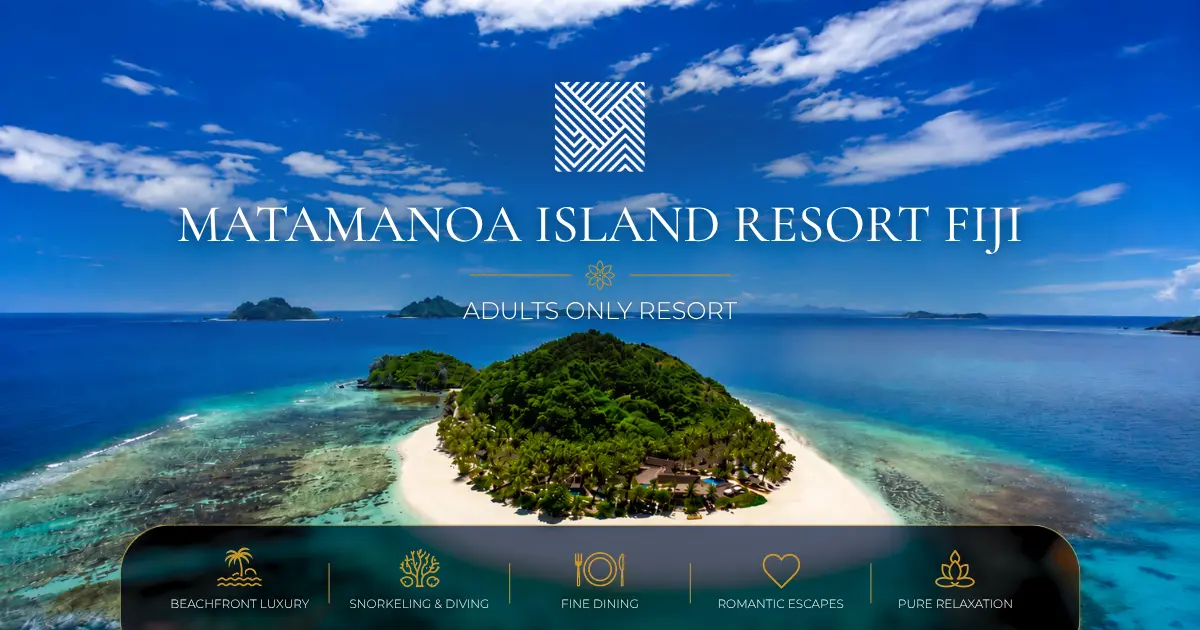
- A resort small enough to take over. Resort buyout changes the psychology completely: there are no other guests, so the group is not sharing its reward with strangers. Tokoriki Island Resort, Likuliku Lagoon Resort and Matamanoa Island Resort are all adult-oriented properties IN the Mamanucas at buyout-plausible scale; Nanuku Resort sits ON the mainland near Pacific Harbour with the activity range of a much bigger place.
Browse the full set through the incentive houses directory or the venues directory.
How do you handle the people who did not qualify?
Badly, in most programmes. They are told who won and then the subject changes.
Two things help. First, publish something from the trip that is genuinely interesting to a non-qualifier — the work the group did, not the cocktails. Second, open next year's qualification the week the group gets home, while the photographs are still circulating. The gap between "the winners are back" and "here is how you get there" is the most wasteful two months in the incentive calendar.
What does the money look like, and what changed in 2026?
Two Fiji-specific things a 2026 budget has to account for.
A new 5% Tourism Services Tax took effect on 1 September 2026. It sits on top of Fiji's 12.5% VAT, applies to tourism operators above a FJ$2 million annual turnover threshold, and reporting on the 2026–2027 budget package describes it as a temporary measure running to 31 August 2027. The Ministry of Finance confirmed a transition rule: bookings made before 1 September 2026 are not subject to it even where the service is delivered afterwards. If you contracted an incentive programme in early 2026 for delivery next year, check which side of that line your contract sits on.
There is no Fiji subvention for business events. Tourism Fiji does operate an Event Development Fund and a Marquee Event Fund, but both explicitly exclude "business events such as Meetings, Incentives, Conferences or Exhibitions". Do not build a budget assuming destination support that is not on offer. We have covered this in full in is there any funding or subvention for Fiji business events?.
Beyond that, the cost drivers are the ordinary ones: air, room nights, the buyout or exclusivity premium, and the one or two signature experiences that carry the programme. What a Fiji conference costs per delegate gives the per-head shape.
The verdict
If you have a budget and six months, spend the first month on the announcement and the qualification rules, and the remaining five on the fact that half your audience will disengage at the midpoint unless you give them a second route in.
Then, and only then, build the itinerary. Fiji will do its part. Pick one experience the group could not have bought on its own, hand the arrival to somebody who does it every day, and make sure the people who did not go can describe what happened.
Start with the cluster hub, designing a Fiji incentive programme, then CSR and legacy activities for incentive groups for the part of the programme that earns the flight, and delegate experience in Fiji for everything between sessions.
Tax and levy positions above are guidance only and change with each Fiji budget — confirm current rates with the Fiji Revenue and Customs Service before contracting. Last reviewed 16 September 2026.