June is one of the most reliable months to marry in Fiji. It sits inside the dry season and outside the November-to-April cyclone season, the chance of rain falls steadily through the month, and the humidity that makes February uncomfortable has eased. The two things to plan around are the early sunset — about 5:45pm — and school-holiday pricing in the second half.
What is the weather actually like in Fiji in June?
Figures below are for Nadi, on the drier western side of Viti Levu, which is where most Fiji weddings happen. Suva, the Coral Coast and the eastern islands are wetter year-round.
| Measure (Nadi, June) | Figure |
|---|---|
| Average high | ~28°C (83°F), usually 27–31°C |
| Average low | ~20°C (68°F), usually 17–23°C |
| Rainfall (31-day rolling average) | ~76 mm (3.0 in) falling to ~48 mm (1.9 in) across the month |
| Chance of a wet day | 20% on 1 June, 14% by 30 June |
| Chance of a muggy day | 76% falling to 63% |
| Average wind | ~20 km/h (12.3 mph), easterly |
| Sunrise | 6:34–6:41am |
| Sunset | 5:41–5:46pm |
| Daylight | ~11 hr 5 min |
Source: Weatherspark, Nadi. Temperatures converted from Fahrenheit; rainfall converted from inches.
Two comparisons put that in context. The wettest part of the Fiji year is around March, when the chance of a wet day peaks at roughly 55% — nearly four times June's end-of-month figure. And the most humid day of the year falls around 23 February, when conditions are muggy essentially all of the time. June is the month Fiji stops being sticky.
Is June inside cyclone season?
No. The South Pacific tropical cyclone season runs November to April, which puts a June wedding comfortably outside it. That is the single biggest argument for the month, and it is why June, July and August carry Fiji's highest wedding volumes.
It is not a guarantee of calm. A trough can still bring a wet afternoon, and a strong easterly can cancel a boat crossing on a cloudless day — which matters more than rain if your venue is in the Mamanucas or Fiji's Outer Islands. Keep the wet-weather plan and the transfer buffer regardless. Cyclone season and your Fiji wedding sets out the real risk picture across the year.
Seasonal information is guideline only — confirm current outlooks and warnings with the Fiji Meteorological Service. Last reviewed 29 October 2026.
What time should the ceremony be?
This is the question June gets wrong more than any other month, because couples plan to a southern-hemisphere summer clock and Fiji in June does not have one.
Sunset is between about 5:41pm and 5:46pm, with roughly 11 hours of daylight — about two hours shorter than Fiji's longest day in late December. A running order that works:
- 4:00pm — ceremony. Light is warm, the heat of the day has gone, and guests are comfortable.
- 4:30pm — congratulations, drinks, signing.
- 4:45–5:30pm — group and couple photographs in the last of the usable light.
- 5:45pm — sunset. Then dinner.
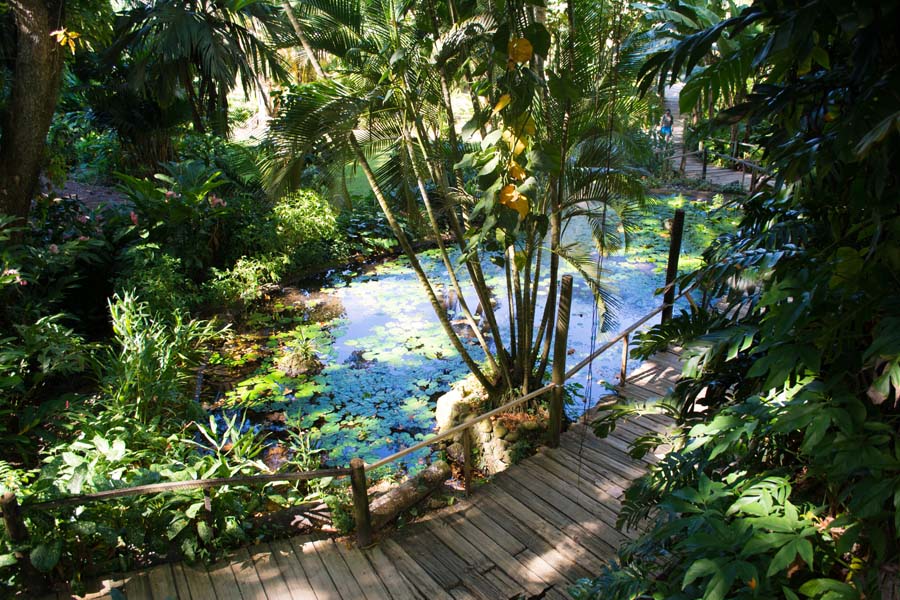
Push the ceremony to 5pm and you lose the photographs. The effect is sharper in shaded settings: in a rainforest or dense garden venue such as Garden of the Sleeping Giant, usable light goes earlier than the published sunset suggests. On an open west-facing beach — Tokoriki Island Resort and Matamanoa Island Resort both face the sunset side — you keep light longer.
What does June do to the price?
It splits the month in two, and this is worth real money.
The first two weeks of June are arguably the best value in the Fiji calendar. You get dry-season weather at shoulder-season rates, because the Australian and New Zealand school holidays have not started.
The second half is peak-adjacent. AU and NZ school holidays begin in the latter part of June and run into July, lifting airfares and resort occupancy at the same time. If your dates are flexible by two weeks, move them earlier. Confirm the exact holiday dates for your guests' states and regions — they differ, and they shift year to year.
Two tax points to check on any June quote. Fiji's VAT is 12.5%, reduced from 15% effective 1 August 2025 (Fiji Revenue and Customs Service), and since 1 September 2026 a 5% Tourism Services Tax applies at licensed hotels and tour operators with annual turnover above FJ$2 million. Ask whether per-person figures are tax-inclusive before you compare two properties. How to read a Fiji venue proposal goes through the rest.
What is good about June beyond the weather?
Guests in formalwear are comfortable. At 28°C with humidity easing, a suit is wearable through a ceremony and a dinner. In February it is not. If your wedding party is in jackets, June is kind to them.
Evenings are pleasant rather than warm. With overnight lows near 20°C, an outdoor dinner does not need to be fought for — and guests should pack one light layer, which almost nobody does.
Water clarity is often at its best. Less river run-off in the dry months usually means better visibility for snorkelling and underwater photography. The offset is the easterly breeze, which can make exposed reef sites choppy.
Boats run more predictably. Fewer weather cancellations in the dry season is a practical advantage if your venue is reached by water, and it is the reason outer-island weddings cluster in these months.
What is the catch?
Three things, none fatal.
- Availability. June, July and August are when everyone marries in Fiji. Popular properties and the better photographers book out 12 to 18 months ahead.
- The short day. Covered above, and solvable with a 4pm ceremony.
- Wind, not rain. June's easterly is stronger than February's calm. On an exposed beach that means veils, menus, candles and marquee sides all need weighting — worth one line in the brief to your stylist.
The verdict
Choose the first half of June if you want the strongest combination of weather and price in the Fiji year, and you can book far enough ahead to get the property you want.
Choose the second half of June if your guests are tied to school holidays — and accept that you are paying peak-adjacent rates for weather that is marginally better than the first half.
Choose July or August instead if you want the driest possible odds and price is not the constraint; see getting married in Fiji in July and in August.
Either way, start the ceremony at 4pm. Sunset will not wait.
Next step: compare June against the rest of the year in the best time to get married in Fiji, then match your guest count to a venue on the capacities index.