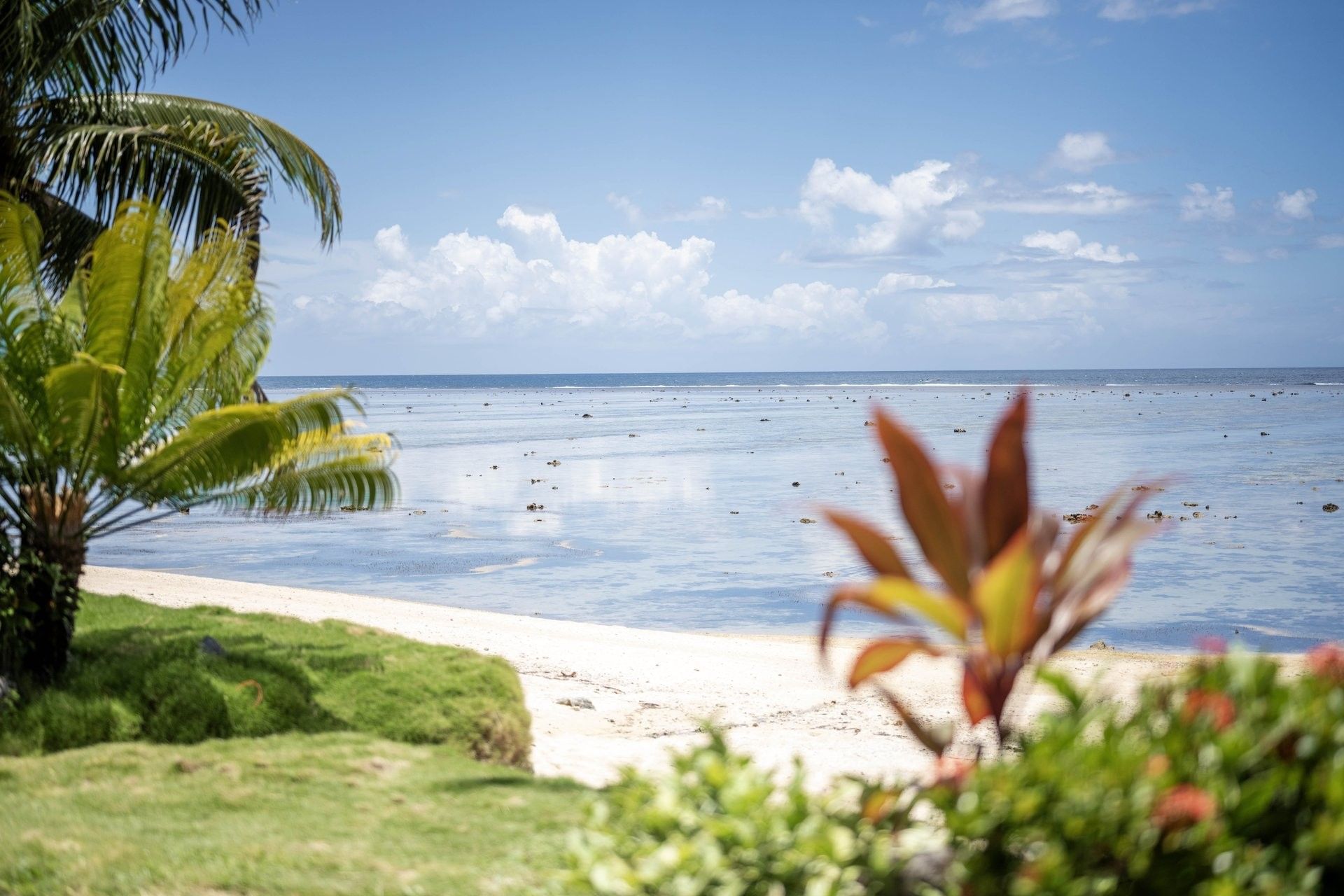
February is the wettest and highest-risk month to marry in Fiji. Nadi averages roughly 223 mm of rain across about 15 wet days, humidity sits near 80 percent, and February falls in the middle of cyclone season — Cyclone Winston struck Fiji on 20 February 2016. It can still work, but only with a contracted indoor alternative and insurance bought early.
What is the weather actually like in Fiji in February?
| Measure | Figure | Source |
|---|---|---|
| Average high, Nadi | 31.1°C (88°F) | WeatherSpark |
| Average low, Nadi | 23.9°C (75°F) | WeatherSpark |
| Average high, Nadi | 31.5°C | Weather Atlas |
| Monthly rainfall, Nadi | ~223 mm (8.8 in) | WeatherSpark |
| Monthly rainfall, Fiji overall | 300–400 mm | Weather Atlas |
| Wet days, Nadi | ~15 days | WeatherSpark |
| Relative humidity | 78% (Levuka) to 81% (Lami) | Weather Atlas |
| Sea temperature | ~28°C | Weather Atlas |
| Heat index, Momi | 36°C | Weather Atlas |
| Maximum UV index, Korolevu | 7 | Weather Atlas |
The rainfall figures conflict, and the conflict is instructive. WeatherSpark puts Nadi at about 223 mm; Weather Atlas puts Fiji overall at 300–400 mm. Both can be right — Nadi sits in Viti Levu's drier western lee, while the south-east and the interior catch far more. If your venue is on the Coral Coast, in Suva or on Vanua Levu, plan on the higher figure, not the Nadi one.
There is also an internal contradiction worth knowing about: WeatherSpark describes February as the month with the most wet days at 15.0, yet its own monthly table lists March higher, at 16.2. Treat February and March as a pair at the top of the range rather than relying on a single-month ranking.
Guideline only — confirm current and seasonal forecasts with the Fiji Meteorological Service before you set a date.
What time does the sun set in Fiji in February?
Late enough that a 4:30 pm or 5 pm ceremony works comfortably. Published sunset times for early February run around 6:41 pm at Savusavu and 6:46 pm at Lami, drawing in to about 6:28 pm by the end of the month. Nadi, further west, runs slightly later again.
The practical point is the 18-minute drift across the month. A ceremony time chosen in November for a date in late February will land differently against the light than you planned. Fix the ceremony time against the sunset time for your actual date and your actual venue, not against a seasonal average.
Heat is the other timing constraint. With an average high above 31°C and a heat index reaching the mid-30s, an outdoor ceremony before about 4 pm will be genuinely uncomfortable for guests in formalwear. February's late sunset is the month's one real gift — use it.
How serious is the cyclone risk?
Serious enough to change how you contract, and not serious enough to rule the month out.
Fiji's cyclone season runs roughly November to April, with February squarely inside it. Fiji's weather bureau issues a seasonal outlook each year with an expected number of systems — in the 2022–23 season it forecast up to seven cyclones in the region. Most seasons pass without a cyclone hitting a given resort on a given weekend. But February is also when Cyclone Winston struck, on 20 February 2016, and insurers' own alert notices from that event are a reasonable reminder of what the tail risk looks like.
Two things follow from this, and neither is "don't marry in February".
First, buy insurance early. Travel and event insurers generally stop selling cover for a cyclone once that cyclone is named and forecast — the event is no longer unforeseen. Insurance bought six months out covers you; insurance bought when a system appears on the chart does not. Read the policy for a named-storm or named-event exclusion and understand what triggers a claim: a cancelled flight, a government advisory, a resort closure, or actual damage. These are different triggers and policies differ sharply.
Second, contract the contingency. A February wedding needs the wet-weather plan written into the venue contract rather than promised verbally — which space, who decides, by when, and whether the price changes. Our honest cyclone risk guide and wet-weather plan guide set both out in detail.
What should you book differently for February?
| Decision | February approach |
|---|---|
| Venue | Choose a property with a genuine hard-walled indoor space for your full guest count, contracted in writing |
| Ceremony time | Late afternoon, fixed against the sunset time for your exact date |
| Insurance | Buy at deposit, not at final payment. Check named-event exclusions |
| Flights | Build a spare day either side; February schedule disruption is a real risk |
| Florals | Choose varieties that hold in high humidity; expect shorter vase life |
| Hair and beauty | Plan for 80% humidity, not for a studio — see hair that survives Fiji humidity |
| Decor | Weight everything. Wind and squalls, not just rain |
| Guest brief | Tell guests plainly that it is the wet season, and to bring insurance of their own |
| Deposits | Ask what is refundable, transferable, or creditable to another date |
The transferable-date question is the one worth pushing hardest. Several Fiji properties will move a booking rather than refund it, which is a materially better outcome than a credit note — but it is rarely offered unless asked for at contract stage.
Is there an upside to February?
Yes, three of them, and they are real.
Availability and rate. February is low season for weddings. Your first-choice date is likely available, the resort is quieter, and there is more negotiating room on packages and room blocks than in July or August.
The light. Wet-season afternoons produce dramatic skies and soft, diffused light that dry-season midday sun does not. Photographers will generally tell you they would rather shoot a February afternoon than a cloudless one.
Warm water. Sea temperatures around 28°C make everything from the swim before the ceremony to the day-after snorkel genuinely pleasant.
The verdict
Choose February if your venue has a contracted indoor alternative that fits your whole guest list, you buy insurance at deposit stage, you brief your guests honestly, and you value availability and price over certainty.
Choose another month if an outdoor ceremony is non-negotiable, if your guest list cannot absorb a flight disruption, or if the stress of watching a weather chart for six weeks would spoil the lead-up. April is the usual compromise — the season is turning but prices have not fully risen — and the comparison is in getting married in Fiji in April and dry season versus wet season.
For a February date, shortlist properties on their indoor capacity first. Sheraton Fiji Golf & Beach Resort, Warwick Fiji Resort and Spa, The Pearl Resort and Grand Pacific Hotel Suva all carry substantial function space, which is the single most useful thing a wet-season venue can have.
Then work through the month-by-month comparison on the best time to get married in Fiji hub, and check what is in bloom in Fiji wedding flowers month by month. Regional rainfall differences are covered on the Coral Coast guide.