April is the month Fiji's wet season breaks. Rainfall at Nadi falls to roughly 168mm across 13 rainy days, down from about 282mm in March, and average temperatures ease to 25.6°C. It is still inside the official cyclone season, and sunset drops to 5.53pm by the end of the month — both of which change how you plan.
That makes April the most interesting month in the Fijian wedding calendar, and the one most often described badly. It is not "wet season", and it is not the dry season either. It is the fortnight-by-fortnight handover between them, which means an early-April date and a late-April date are meaningfully different bookings.
What is the weather actually like in Fiji in April?
Here is the Nadi data alongside the months on either side, from Climate-Data.org's 1991–2021 series.
| Month | Avg temp | Max temp | Rainfall | Rainy days |
|---|---|---|---|---|
| March | 26.0°C | 29.1°C | 282mm | 18 |
| April | 25.6°C | 28.7°C | 168mm | 13 |
| May | 24.6°C | 27.7°C | 82mm | 7 |
| June | 23.8°C | 27.0°C | 71mm | 4 |
The shape of that table is the whole story. April carries roughly 60% of March's rain and twice May's. It sits on a steep slope, and the slope runs through the month: the back half of April behaves much more like May than the front half does.
Where the sources disagree. Tourism Fiji's own April page gives rainfall of 230mm to 287mm and temperatures of 23°C to 30°C, which is considerably wetter than the 168mm Climate-Data.org records for Nadi. Both can be true at once — Tourism Fiji is describing Fiji as a whole, including the much wetter eastern and windward sides, while the Nadi figure covers the dry western side where most weddings are held. If you are marrying on the Coral Coast, on Denarau Island or around Nadi, the lower number is the more relevant one. If you are marrying in the Yasawas, Taveuni or around Suva, plan closer to the higher one, and ask your venue for its own records.
What neither number tells you is the pattern. Fijian rain in April is typically a heavy afternoon burst that clears, not an all-day grey. A 40-minute downpour at 2pm does not ruin a 4pm ceremony. What it does is make a contracted alternative space non-negotiable.
Is April still cyclone season?
Yes, and it is worth being straight about it. The South Pacific tropical cyclone season officially runs November to April, with peak activity usually January to March. The regional average is around seven tropical cyclones a season across the RSMC Nadi area, roughly four of them west of the Dateline. Systems have occasionally formed in October and May.
So April is the tail, not the exit. Practically, that means three things:
- Buy insurance, and read what triggers it. A policy that pays only on physical damage is close to useless; you want cancellation and postponement cover triggered by a named system or an official warning.
- Hold a wet-weather space in writing, with a named room, a decision time on the day and no relocation fee.
- Build a buffer day into guest travel. A disrupted arrival is a far more common April problem than a cancelled ceremony.
The risk in a single late-April week is low. It is not nothing, and a venue that tells you otherwise is selling, not advising. Our honest cyclone risk guide goes through the numbers properly.
What time should an April ceremony start?
April light is the month's quiet advantage, because it is early enough to put a whole evening after the ceremony.
| Date (Nadi) | Sunrise | Sunset | Day length |
|---|---|---|---|
| 1 April | 6.17am | 6.13pm | 12h 39m |
| 30 April | 6.24am | 5.53pm | 12h 14m |
| 1 July (for comparison) | 6.42am | 5.47pm | 11h 52m |
| 31 October (for comparison) | 5.33am | 6.17pm | 13h 29m |
A 4pm ceremony in late April puts the vows in soft light, the group photographs in the last hour before sunset at 5.53pm, and guests seated for dinner by dark. A 5pm start works at the beginning of the month and is cutting it fine by the end of it. If your photographer has asked for golden-hour coverage, lock the start time against the sunset for your actual date, not a generic one — twenty minutes moves across the month.
What about cost and crowds?
April usually prices below the July and late-December peaks. The exceptions are Easter and the Australian and New Zealand school holidays, which can fill western Viti Levu resorts for a fortnight and lift both room rates and supplier fees. Check where Easter falls in your year before you commit to a date, because a week either side of it is a different market.
Which venues handle April best?
The test is simple: does the venue have a real indoor or undercover alternative at your guest count, and will it name it in the contract?
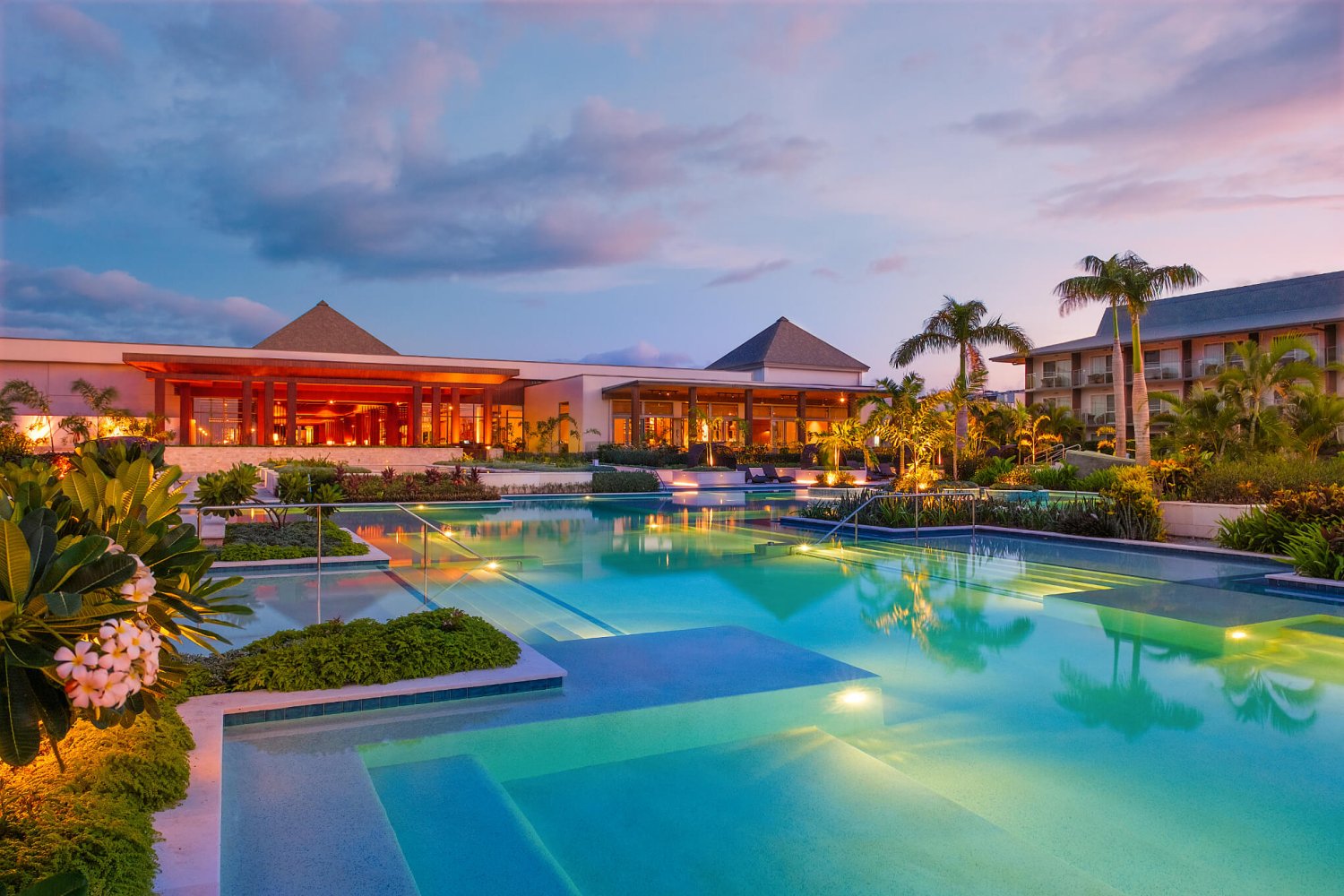
- Crowne Plaza Fiji Nadi Bay Resort & Spa — beach and garden ceremony settings with substantial indoor function space behind them
- Fiji Marriott Resort Momi Bay — resort-scale indoor capacity alongside its outdoor settings
- DoubleTree Resort by Hilton Fiji — Sonaisali Island, a short transfer from Nadi
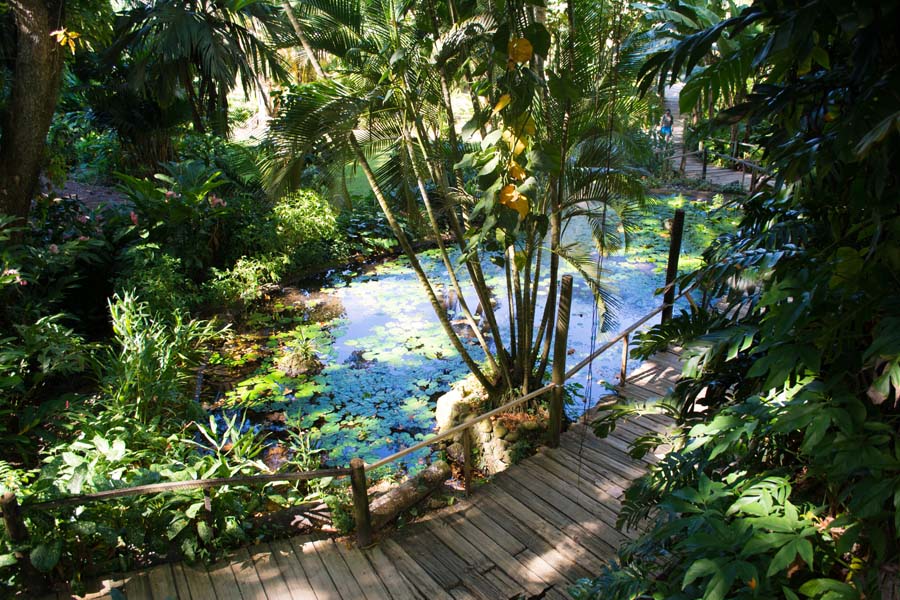
- Garden of the Sleeping Giant — an off-resort option that names its undercover Tour Centre, for up to 200 guests, as its wet-weather space
For an off-resort April wedding, a planner earns their fee on the contingency alone. Events Fiji handles off-resort Nadi weddings and holds the supplier relationships that make a last-minute relocation work.
So should you pick April?
Choose April if you want shoulder-season pricing, want the landscape at its greenest, can be flexible toward the second half of the month, and are willing to insure properly and contract a wet-weather space.
Choose May or June instead if weather certainty matters more to you than price. May's 82mm across 7 rainy days is a different proposition entirely, and it is only a few weeks later.
Avoid April if your ceremony has no credible indoor alternative at your guest count, or if your guests cannot absorb a travel-day delay.
Next step
Fix your date against the sunset time for that exact day, then ask your venue two questions in writing: what is the named wet-weather space for our guest count, and what is the decision deadline on the day? Start with the full month-by-month breakdown, compare against dry season versus wet season, and work through the best-time-to-marry hub or the Nadi venue directory.
Climate figures are long-run averages, not forecasts. Cyclone-season guidance here is a guideline only — confirm current warnings and seasonal outlooks with the Fiji Meteorological Service. Last reviewed 18 October 2026.