A Hindu wedding in Fiji is legally straightforward, culturally deep, and commercially under-served. A pandit can solemnise your marriage — under a different section of Fiji's Marriage Act from Christian clergy — and the Arya Pratinidhi Sabha publishes a directory of registered pandits. What no Fiji resort publishes is a Hindu wedding package. That gap is the planning problem.
Guideline only. The legal information below is drawn from Fiji's Marriage Act and Ministry of Justice publications and is a starting point, not legal advice. Confirm current requirements and fees with the Registrar-General, Births, Deaths and Marriages Registry, Ministry of Justice before you commit to a date. Last reviewed 21 September 2026.
Why Fiji, for a Hindu wedding?
Because the community is not imported. Indo-Fijians descend from more than 60,000 men, women and children who arrived as indentured labourers from the late 1870s to the 1920s to work the sugar plantations, and Hinduism has been practised continuously in Fiji ever since. The last census with published religious composition is 2007, which recorded 27.9 per cent of the population as Hindu; the 2017 census is the most recent, and a published religion table for it could not be confirmed.
So a Hindu wedding in Fiji is not a themed ceremony in a tropical location. It is a local tradition with its own institutions, its own pandits and its own documented Fijian variations — which is exactly what makes it worth doing properly.
Can a pandit legally marry you in Fiji?
Yes, and the mechanism is worth understanding because it is unusual.
Fiji's Marriage Act defines a "minister of religion" at section 2 as "a person recognized by a religious body or organization of the Christian faith". Christian clergy register as marriage officers under section 4. Section 5 covers everyone else: "Any person, other than a minister of religion, professing any recognized religion may apply to the Registrar-General… for registration as a marriage officer in which event the Registrar-General may, in his discretion, upon being satisfied that there is a need for a marriage officer of that particular religion, register such person."
Fiji's Ministry of Foreign Affairs states it plainly: solemnisers include ministers of religion of the Christian, Hindu and Muslim faiths, or other suitably qualified persons professing any recognised religion — and these must be registered annually in the Fiji Republic Gazette.
The practical consequence: confirm your pandit's current registration, because it renews yearly. The Ministry of Justice does not publish an online register of marriage officers, so the Gazette is the primary record and the pandit or their sabha is the fastest route to an answer.
The paperwork
| Item | What is published |
|---|---|
| Notice period | 21 consecutive days; the Ministry of Justice says booking is required 21 days in advance |
| Special licence | The Registrar-General may waive the notice period; the licence is valid for not more than 28 days |
| Notice of Intention | $15 VAT-exclusive (Ministry of Justice); $16.35 VAT-inclusive on a public notice effective 1 August 2019 |
| Special Licence | $54.50 VAT-inclusive on the same 2019 notice |
| Marriage certificate | $27.25 VAT-inclusive; decorated certificate $81.75 |
| Registering a religious marriage officer | No fee (Ministry of Justice) |
| Documents | Passports, birth certificates, photo ID, divorce or death certificates if applicable; non-residents need a Single Status Certificate or Certificate of No Legal Impediment |
| Witnesses | Two, with photo ID |
| Registry | Level 1, Suvavou House, Victoria Parade, Suva; (679) 3308600 |
One caution on the fees: the VAT-inclusive figures come from a public notice effective 1 August 2019, when VAT was at a different rate from today's 12.5%. Treat them as indicative and confirm current amounts. Our guides to getting legally married in Fiji and every document you need for a Fiji marriage licence cover the general process in detail.
Who are the religious bodies?
Arya Pratinidhi Sabha of Fiji, founded on 25 December 1904, is the most useful to a planning couple because it publishes something almost nobody else does: a directory of registered pandits as marriage officers, listing name, address, samaj and telephone for each, described as registered under the Sabha to perform all sanskars. Its office is at 1 Ono Street, Samabula.
Shree Sanatan Dharam Pratinidhi Sabha of Fiji is confirmed by a Fiji Government press release as the largest Hindu religious body in the country, with 28 local branches and hundreds of temples and mandalies linked to it. It publishes no website, so the route in is a local branch or temple.
TISI Sangam — Then India Sanmarga Ikya Sangam — represents the South Indian tradition, was founded in 1926, runs close to thirty educational institutions and manages the Sri Subramaniam temple in Nadi. It also publishes no website.
On the temple itself: Tourism Fiji publishes that the Sri Siva Subramaniya Swami Temple in Nadi is built in Dravidian architecture, offers guided tours every half hour from 8.30am to 3.00pm, charges a small entry fee, requires modest dress and removal of shoes, and permits exterior photography only. Weddings are not mentioned on that page. Do not assume the temple hosts them — ask.
Arya Samaj or Sanatan? The difference matters
This is the part most wedding writing gets wrong, and in Fiji it is wrong for roughly half the audience.
Scholarly work on Hinduism in Fiji documents concrete differences between Arya Samaj and Sanatan practice as performed there:
| Element | Arya Samaj practice in Fiji | Sanatan practice in Fiji |
|---|---|---|
| Circumambulations (bhaawar) | Four, walked together | Seven, with alternating leadership |
| Garlanding | The bride garlands the groom | Mutual garlanding |
| Sindoor (vermillion) | Applied openly, in front of those present | Applied privately |
| Taag Paat | Not part of the rite | A protective pink woollen garland, placed by the groom's elder brother |
Arya Samaj's own published account describes four rounds around the sacred fire, each representing one of the four basic goals of human life, with the bride leading the first three and the groom the last.
For completeness, classical Vedic descriptions give three circumambulations invoking Aryama, Varuna and Pushana, with a fourth oblation made to Prajapati without circling. Three, four and seven are each correct in their own frame — which is why naming the tradition is not pedantry.
The ceremony, element by element
Muhurat. The auspicious time, chosen by consulting the purohita in accordance with the Hindu panchanga. In a destination context this is where the conflict arises, because venue availability and an auspicious hour do not negotiate with each other. Fix the muhurat first and build the venue booking around it.
Mandap. The wedding canopy, specified in the shastras as having four pillars, ideally facing east, on a raised stage covered in white cloth to mark ritually pure space; footwear is removed before stepping onto it. Its four pillars are variously read as the four purusharthas, the four stages of life, the four walls of a home and the four parents of the couple.
Baraat. The groom arrives with music and is formally welcomed by the bride's elders, with a puja to the groom including a seat, water for washing the feet, and a mixture of honey and yoghurt.
Kanyadaan. The bride's mother pours a stream of holy water from the kalasha onto the father's palm, which flows to the groom's palm and then the bride's. The father instructs the groom not to transgress her as he pursues duty, wealth and fulfilment — repeated three times.
Vivaha homa. The priest lights the fire, invoking Agni as the impartial witness. At each "svaha" a spoonful of ghee is poured into the homa-kunda. Performing it marks the couple's entry into grihastha ashrama, the householder stage.
Saptapadi. Seven steps taken forward in a line, the purohita preparing seven small mounds of rice to step on, each invoking nourishment, strength, prosperity, fulfilment, progeny, the seasons and lifelong friendship. This is a separate rite from the circumambulations above and the two are often conflated.
Mangalsutra and sindoor. The mangalsutra, literally "auspicious thread", is presented by the bride's mother and sanctified by the purohita before the groom places it. Sindoor is applied in the parting of the hair with a red mark on the forehead. Both come near the ceremony's close.
Vidaai. The bride's departure with the groom's procession, accompanied by songs of parting from her father's home.
On the pre-wedding side, mehndi is documented as a henna and music celebration; a standalone pan-Hindu "haldi ceremony" under that name could not be verified from a non-commercial source, though turmeric-paste rituals under regional names are well documented — and in Fiji specifically, a rite involving frying raw rice in oil in the mandap at both the bride's and groom's homes is recorded. Ask your pandit what your family's tradition does rather than working from a generic list.
Duration: the core ceremony typically runs two to three hours. In Fiji, North Indian ceremonies are recorded as lasting three days, matching South Indian traditions.
Where do you actually hold it?
Here is the honest finding: no major Fiji resort publishes a Hindu or Indian wedding package. Warwick Fiji, InterContinental Fiji and Crowne Plaza Fiji Nadi Bay were all checked, and all publish wedding packages with no Indian or Hindu option, no mandap and no vegetarian or Indian catering mention.
The one useful published commitment comes from Crowne Plaza Fiji Nadi Bay, whose wedding FAQ states that religious ceremonies can be arranged and that its culinary team can tailor menus to suit personal preferences, dietary requirements and cultural or religious considerations. That is generic rather than Indian-specific, but it is written down, which is more than anywhere else offers.
So the practical route is to build it: book the venue for the space and the accommodation, bring the pandit through a sabha, and contract mandap, decor and catering separately. For catering, Fiji has a deep Indian restaurant and caterer base to draw on — the directory lists established Indian kitchens in Suva, Nadi, on Denarau and on the Coral Coast — and vegetarian catering at scale is something Fiji kitchens do routinely. Our guide to Fiji wedding catering covers how resort catering is contracted.
On photography, Ocean Studio Fiji publishes a traditional Indian wedding portfolio and lists resorts it has worked across — one of the few Fiji suppliers publishing visible experience of these ceremonies.
No Fiji source publishes typical costs for a Hindu wedding in Fiji. Everything is quoted individually, and the government fees above are the only fixed numbers available.
What to do first
Fix the muhurat with your pandit. Confirm the pandit's current Gazette registration as a marriage officer. Then, and only then, book the venue — with the mandap position, the fire, the catering and the three-day shape all named in the contract rather than assumed. A resort that has never hosted one will say yes to all of it in an email and discover the details a week out.
And hold the cultural material properly. A Hindu wedding in Fiji sits inside a living community with its own sabhas, pandits and musicians. They are named, credited and paid — the same standard we set out in booking Fijian performers respectfully.
Next step
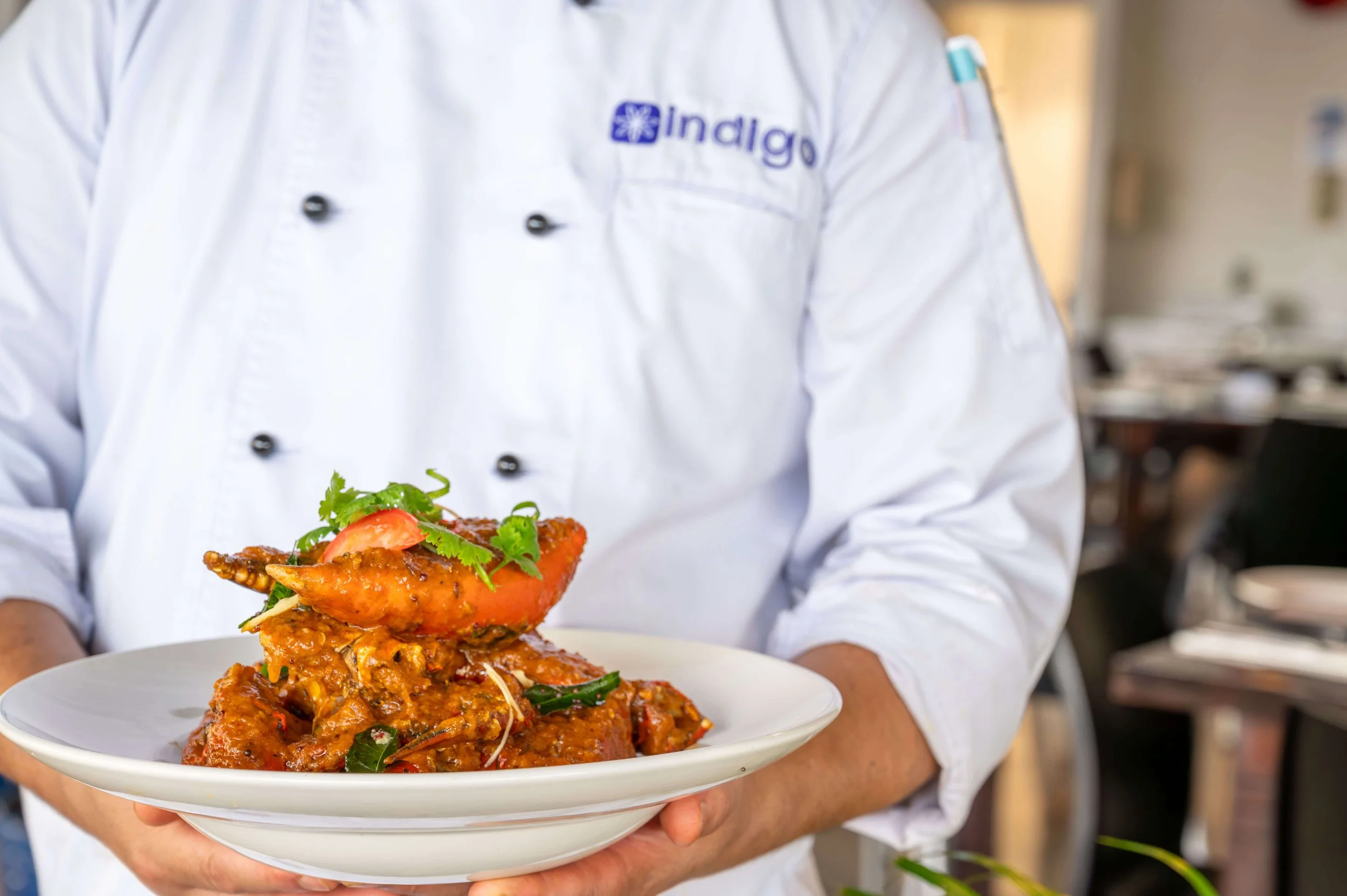
Browse the celebrants and marriage officers and catering listings in the directory, along with Fiji's established Indian kitchens — Ashiyana in Suva, Indiana Tandoori in Nadi, Indigo on Denarau and Sitar on the Coral Coast — plus Crowne Plaza Fiji Nadi Bay. Then read Fijian wedding traditions, done properly and a lovo feast at your wedding.