A workable Fiji conference shortlist takes about three hours, not three weeks. Filter by delegate count first, then by precinct, then by room inventory on a single site, and you will be down to four or five candidates. The slow part is never finding venues — it is getting comparable numbers out of them.
This is the method we use, and the order matters.
Step one: what does your delegate count rule out?
Start with the plenary, because it is the only constraint that cannot be worked around. Everything else — rooms, catering, transfers — can be assembled. A room that seats your whole group cannot.
Fiji's published room capacities thin out quickly as numbers rise. Working only from capacities the venues themselves publish:
| Published theatre capacity | What it opens up |
|---|---|
| Up to 50 | Nearly every resort and city hotel in the country |
| 100–200 | Most Denarau and Nadi resorts, the Suva hotels, the larger Coral Coast resorts |
| 300–450 | A short list: Crowne Plaza Fiji Nadi Bay event centres at 448 each, Grand Pacific Hotel Suva ballroom at 400, Novotel Suva Lami Bay convention centre at 350 |
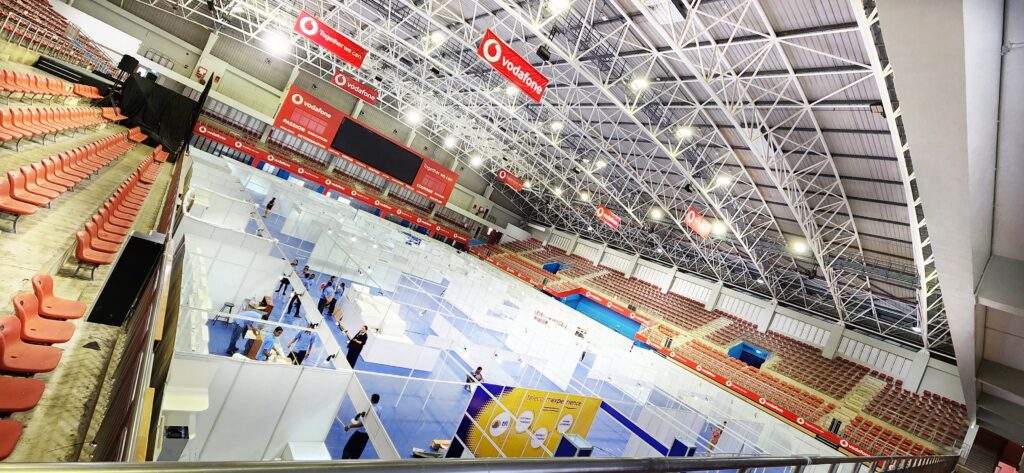
| 500+ in one room | Effectively a purpose-built or non-hotel venue, such as Vodafone Arena in Suva at 5,000 theatre |
If you are over 300 delegates in one room, your shortlist is short and you should accept that early. Our Fiji conference venues by capacity tool and the 300-delegate plan both start from that reality rather than pretending the choice is wide.
Step two: which precinct, and why?
Precinct is a logistics decision disguised as a preference. Pick it on transfer time and room inventory, not on which beach photographs best.
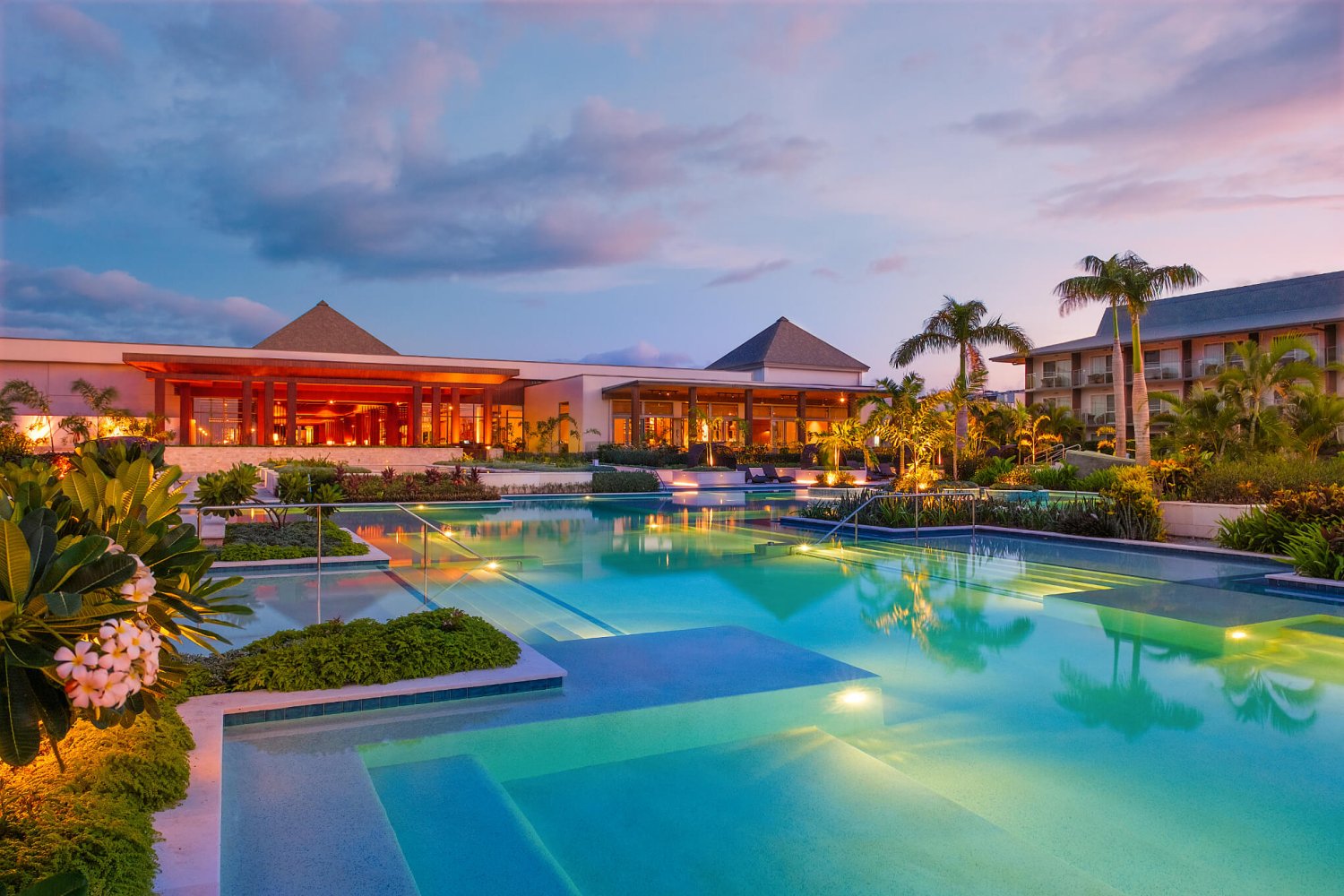
- Denarau — the deepest room inventory in one walkable precinct, roughly 20–30 minutes from Nadi International. The default for 150+ delegates, and the only place you can realistically run one event across several hotels.
- Nadi — closest to the airport, strongest for short, arrival-heavy programmes and for anything where a late inbound flight matters.
- Suva — the capital, the government and institutional market, and the largest single-room capacity in the country. The trade-off is air access, covered in Nausori airport and the Suva access problem.
- Coral Coast — resort scale with genuine separation from the airport, at the cost of a drive of roughly two hours or more.
- Mamanuca and Yasawa islands — superb for incentives, constrained for conferences by boat capacity and weather, not by meeting space.
Step three: can one site hold the whole programme?
Count the rooms you actually need, not the ones you would like: plenary, two or three breakouts, a registration area, a gala space, and somewhere to put the AV build. Then check whether one property has all of them at once — on the same day, which is the question most site lists forget to ask.
Where a single site cannot do it, you are into a multi-property event, and the cost moves from venue hire to transport. Multi-property conferences: running one event across four hotels sets out what that actually involves.
Step four: the six things worth comparing
Once you have four or five candidates, compare only these. Everything else is noise at shortlist stage.
- Plenary capacity in your actual set-up — theatre, cabaret and banquet numbers for the same room differ enormously, and a cabaret layout can cut a theatre number by half.
- Room inventory on site — and how many of those rooms your group needs before the property starts selling you its overflow partner.
- Transfer time from Nadi International, with the arrival-wave maths done. Moving 100, 300 and 800 delegates around Fiji has the vehicle arithmetic.
- Wet-weather alternative for every outdoor element — not "we have a marquee", but which room, at what capacity, and at whose cost. Wet weather contingency by venue is the comparison.
- What the venue controls versus what you can bring — catering and bar are almost always the venue's; AV and production often are not. See AV and production in Fiji: what's available in country.
- The tax and surcharge lines, because they are material in Fiji and they change. VAT sits at 12.5%, and a 5% Tourism Services Tax applies to prescribed tourism services rendered between 1 September 2026 and 31 August 2027 for providers above the turnover threshold. VAT, service charge and levies on a Fiji event invoice breaks it down.
Why are Fiji venue capacities so hard to pin down?
Because most Fiji properties do not publish a capacity chart at all, and the ones that do sometimes publish figures that disagree with the figures in their own sales kit. This is the single biggest time sink in sourcing a Fiji event, and it is why we publish capacities openly rather than gating them behind an enquiry.
Where public sources conflict, we publish both numbers and say they conflict. A shortlist built on one unverified figure is a shortlist you will rebuild after the site inspection. Which Fiji venue is actually the largest works through a case where the published numbers genuinely do not agree.
What should the afternoon produce?
Four or five named properties, each with a capacity figure and its source, a transfer time, a stated wet-weather room, and a note of what you cannot bring in. That is enough to issue an RFP — use the Fiji conference RFP template — and enough to brief a partner if you want local hands.
If you would rather not do the filtering yourself, a DMC or PCO will do it in a day; do you need a DMC in Fiji is an honest answer to whether you need one. Either way, go into that conversation with your own shortlist. It changes the quality of what comes back.
The verdict
Shortlist on capacity and transfer time, decide on wet-weather and control. Choose Denarau if room inventory and simplicity matter most, Suva if you need the biggest single room or you are hosting government, the Coral Coast if separation is the point, and the islands if the programme is an incentive rather than a conference.
This is the short version of how to source everything for a Fiji event in one place. Start with the capacity filter, or browse conference venues and accommodation directly.
Capacity figures cited are those published by each venue or its operator and recorded in the MICE Fiji directory as at 24 October 2026. Tax rates are current as at that date and should be confirmed with the Fiji Revenue & Customs Service before budgeting.