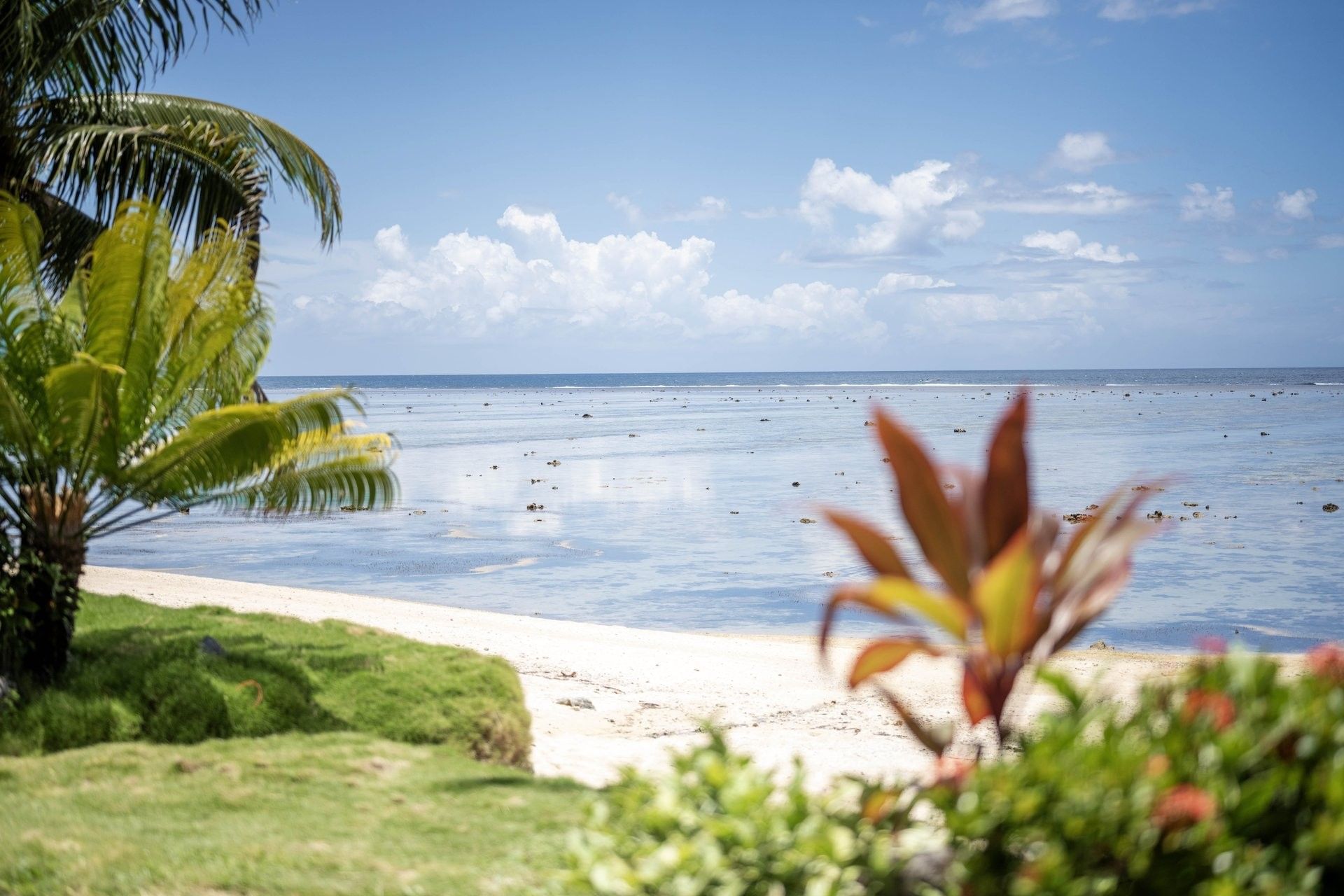
A Fijian beach is a hostile environment for styling. Steady trade winds, salt-laden air, soft sand that holds nothing and afternoon heat will destroy a decor plan built for a marquee at home. The fix is not less styling — it is styling chosen for the conditions, and most of it is already available locally.
What actually goes wrong?
Four forces, acting at once.
Wind. The south-east trades are most consistent in the dry season, May to October, which is also when most couples marry. On an exposed beach that is a constant afternoon breeze, not an occasional gust.
Sand. It will not hold a stake. Anything vertical has to be weighted from below or it is coming down.
Salt and humidity. Salt film on glass and untreated metal, humidity that wilts temperate flowers and softens paper within an hour.
Heat. Published Nadi reference figures put dry-season maximums around 29°C, with sea temperatures near 26°C. Wax, buttercream, adhesive and florist foam all behave differently at that temperature than they do in a cool church.
What breaks, and what holds?
| Element | Outcome on an exposed beach | What to use instead |
|---|---|---|
| Taper candles, open pillars | Will not stay lit | Hurricane glass, enclosed lanterns, good LED |
| Staked arbour or arch | Topples in sand | Weighted base: sandbags buried, water ballast, augers |
| Loose place cards, menus, programmes | Airborne | Weighted, clipped, or printed on a single board |
| Light chiffon drapes | Billows, wraps, obscures the couple | Short runs, heavier fabric, or drop the drape |
| Frangipani in structures | Bruises on handling | Use for hair and scatter; build with firmer stems |
| Imported temperate blooms | Wilt in heat and humidity | Locally grown tropicals |
| Rose petal aisle on sand | Scatters within minutes | Petals pressed into damp sand, or a woven mat runner |
| Paper signage | Softens, curls | Timber, acrylic, or printed fabric |
| Fine linen overlays | Lift at the corners | Weighted hems or clipped |
None of this is an argument against a beach ceremony. It is an argument for asking your stylist the right question: not "can you do this look", but "how will you hold this down".
How should you think about flowers?
Locally grown tropicals are the honest answer, and they are also the better-looking one.
Heliconia, ginger, anthurium and orchid stems are structurally robust, hold their colour in strong light and do not collapse in humidity the way imported temperate flowers do. Frangipani belongs in hair, on tables and scattered — it is lovely and it bruises if you look at it hard.
What is cut-able in any given week is seasonal and grower-dependent, which is why the useful conversation with a florist is "what will you have the week of our date" rather than "can you source peonies". What is in season month by month sets out the pattern.
Florists working across the main wedding regions include Firefly Flowers Fiji in Lautoka, which also covers Nadi and Denarau, Genesis Flowers in Nadi, and Divine Blooms Fiji in Suva.
What should you hire locally rather than fly in?
Almost everything structural. Three reasons: excess baggage costs more than hire, you cannot test anything until you land, and fresh plant material may not clear the border at all.
Cut flowers, foliage, seeds and some dried botanicals fall under Fiji's biosecurity import controls. This is guideline only — confirm what you may bring with the Biosecurity Authority of Fiji before you pack. Last reviewed 20 October 2026.
Hire locally:
- Arbours, arches and structural framing. Stylists such as The Wedding & Events Atelier Fiji and Decorations Hire Fiji carry stock built for these conditions.
- Chairs, tables, linen and glassware. Party & Events Fiji and RK Event Hire Fiji hold volume stock.
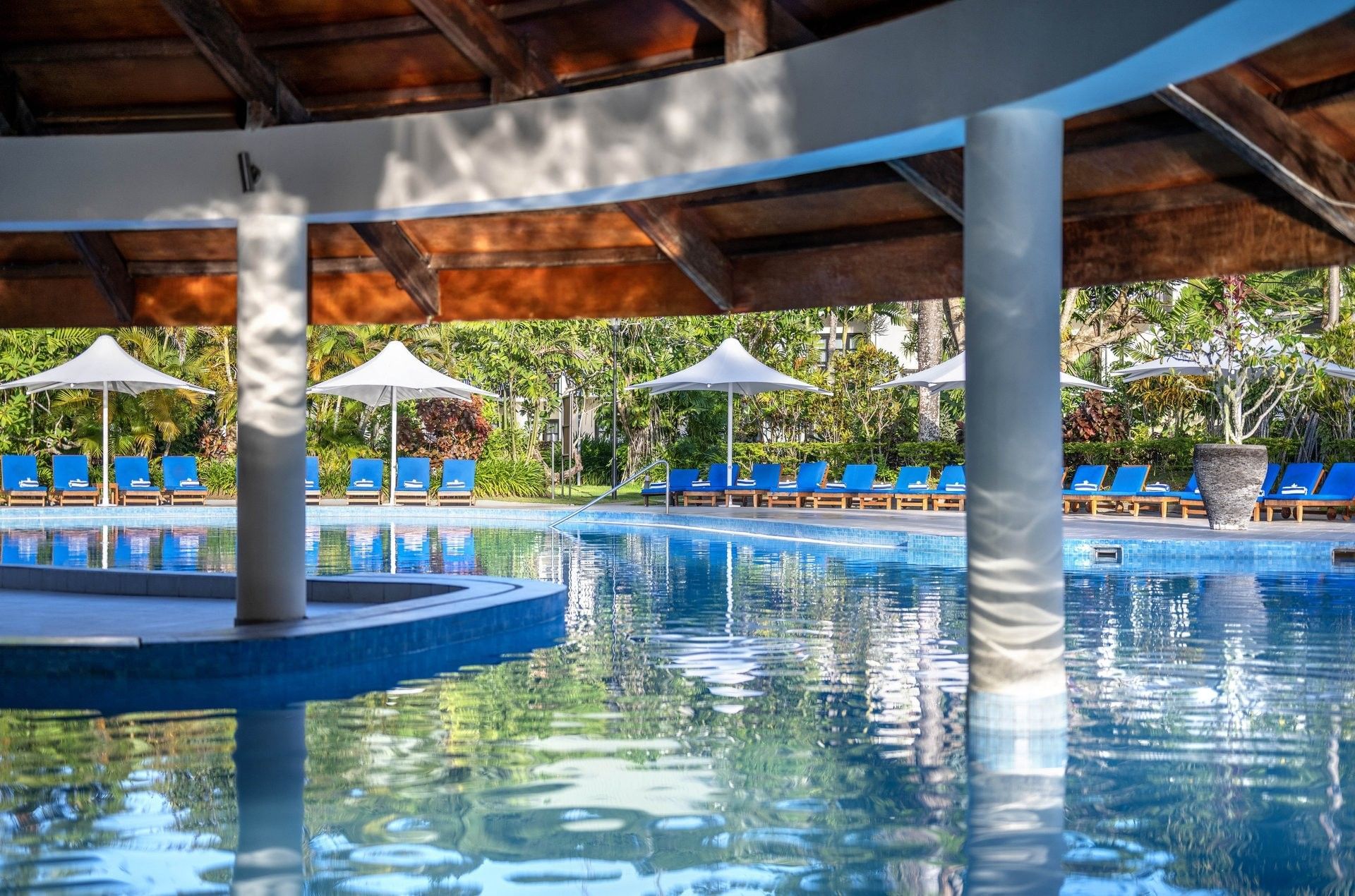
- Marquees and shade structures. Clyde Equipment Marquee Hire and Tents & Awnings Ltd service most of Viti Levu. A marquee is also your wet-weather answer.
- Lighting and sound. Salt and sand are hard on equipment; let somebody else own that risk.
Fly in only what is small, light and sentimental: a cake topper, a ring box, a flat-packed sign, a grandmother's handkerchief.
How do you plan the day around the wind?
The wind is usually lighter in the morning and strengthens through the afternoon, so the timing of a ceremony is itself a styling decision. A morning or early-afternoon ceremony is calmer; a late-afternoon one gives better light. Pick which you are optimising for and tell your stylist, because the structure they build should differ.
The second lever is the setting. Every exposed beach has a sheltered alternative within the same property:
- Outrigger Fiji Beach Resort lists chapel, garden and lawn settings alongside its beach.
- Warwick Fiji Resort and Spa lists beach, garden and deck.
- The Naviti Resort lists beach, lawn, garden and deck.
- Yatule Resort & Spa at Natadola lists beach, lawn and a chapel.
A garden or lawn set back from the water is not a downgrade. It is usually where the better photographs happen anyway, because nobody is squinting.
What should you ask your stylist?
Five questions, in writing, before you pay a deposit:
- How do you weight vertical structures on sand, and to what wind speed?
- What is your call time if the forecast turns, and who makes the decision — you or the resort?
- Which of these elements is your own stock and which is subcontracted? Subcontracted stock arrives unseen.
- What does the resort restrict? Open flame, anchoring into decks and lawns, and confetti are commonly limited.
- What happens to the ceremony decor afterwards? Moving an arbour to the reception is usually an extra charge and an extra crew.
The verdict
Style for the conditions and you get a better day, not a compromised one. Weighted structures, enclosed flame, local tropical stems, firm signage and a sheltered alternative within the same property will survive anything a dry-season afternoon produces.
Style for a photograph taken somewhere else and you will spend the ceremony watching your decor move.
Next step
Brief a local stylist before you buy anything, and ask for photographs of their own stock in situ on a windy day rather than from a mood board. Start with the supplier directory, check the palette against colours that work in Fiji light, and make sure the plan has a roof in it — your wet-weather plan covers that properly.