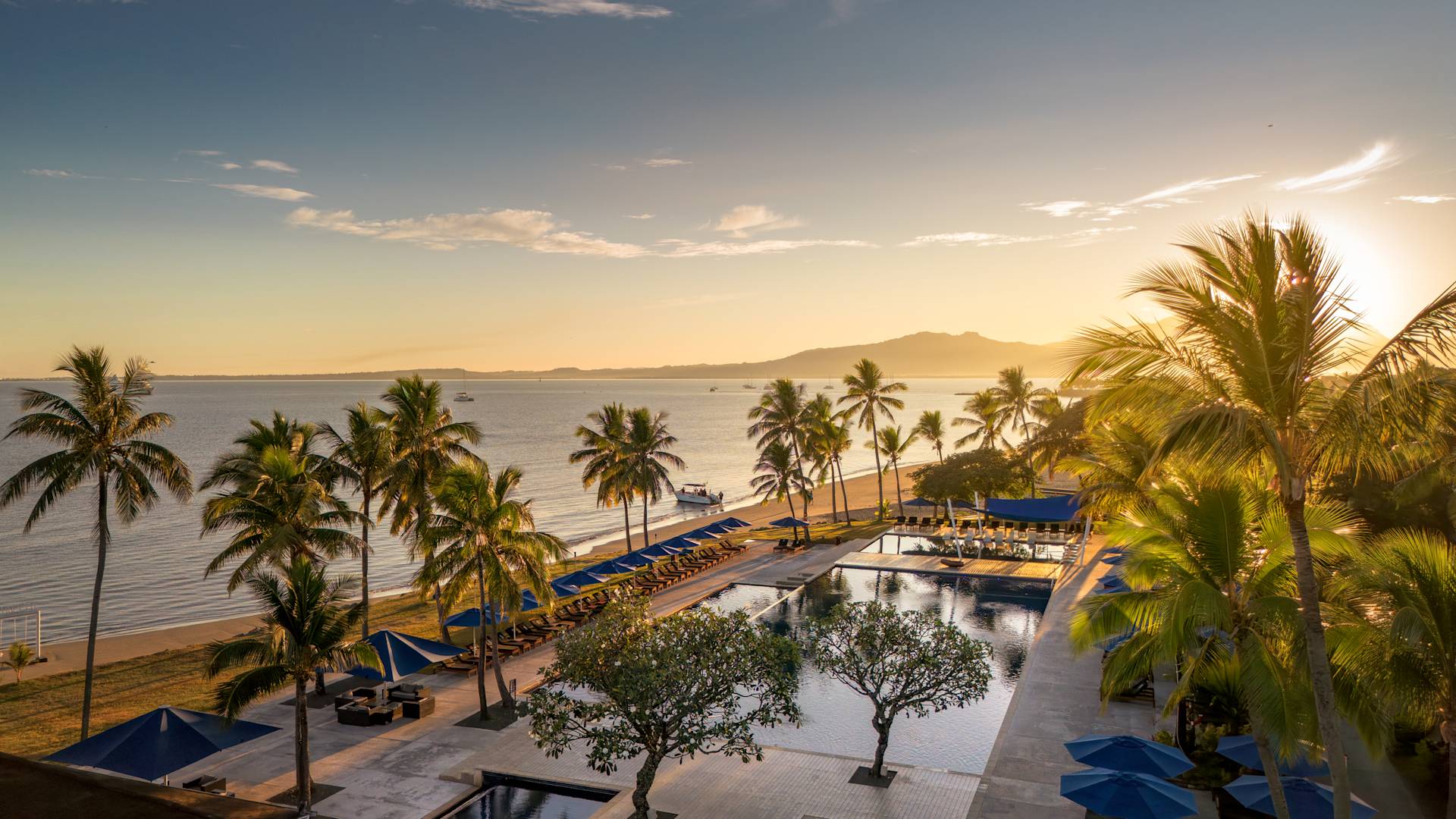
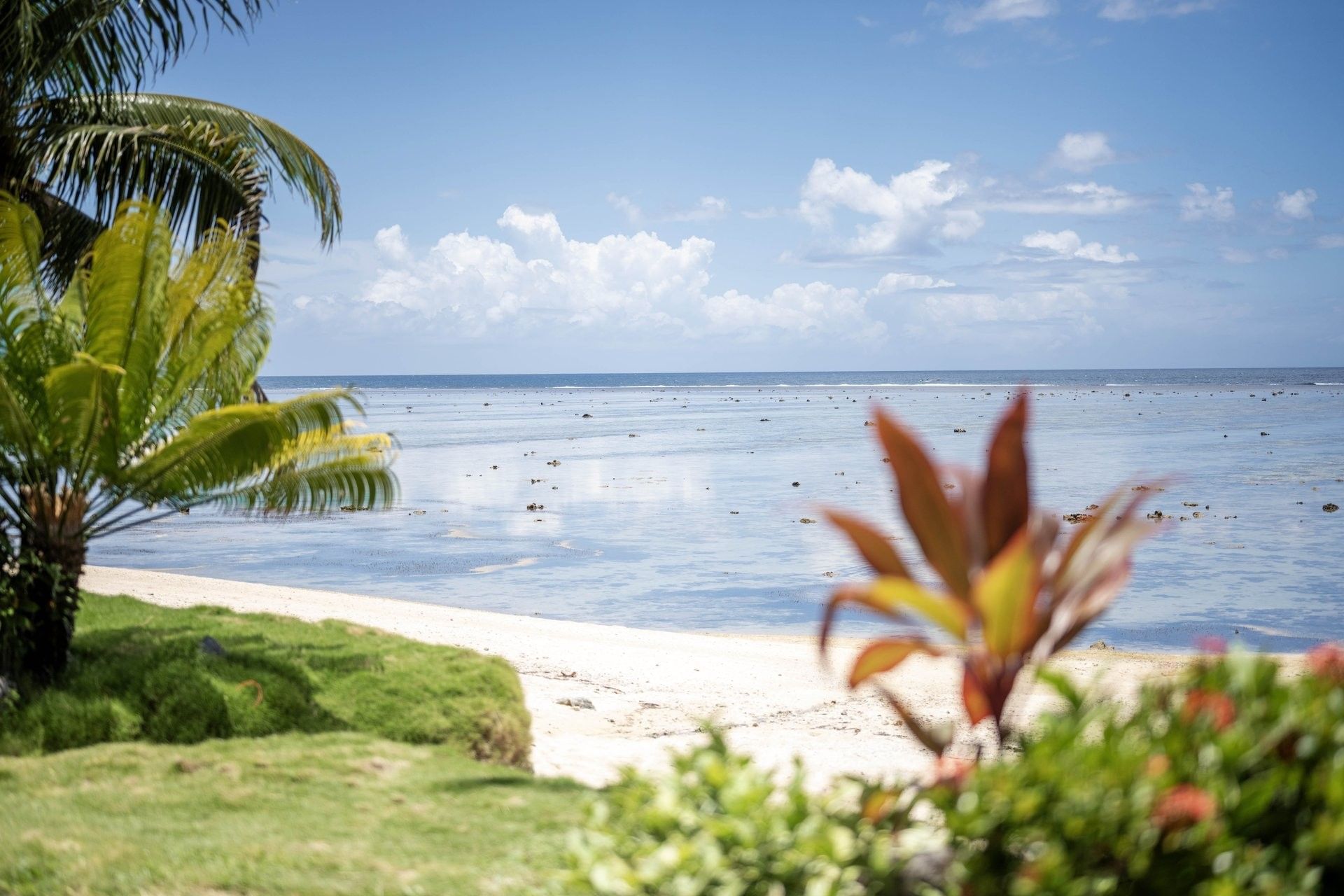
A Fiji honeymoon has seven cost lines: flights, airport transfers, island transfers, accommodation, meals, activities and tax. Most budgets fail on the last three. This is the itemised structure, with the taxes and surcharges that are real and published — and an honest note on which numbers you have to get quoted.
Why won't anyone publish a single honeymoon price?
Because Fiji resort rates move constantly with season, package inclusions and the agent you book through, and the same room can carry four different advertised rates in a week. Any site quoting you "the average cost of a Fiji honeymoon" has made it up.
What does not move is the structure. The taxes are legislated. The transfer architecture is fixed by geography and one daily ferry departure. The meal-plan decision follows from which island you pick. Get those right and the rate you are quoted becomes predictable rather than alarming.
What are the seven lines, and which can you control?
| Line | What drives it | How much control you have |
|---|---|---|
| International flights | Season, origin city, booking lead time | High — dates and lead time |
| Nadi airport transfer | Distance to your resort | Medium — resort choice |
| Island transfer | Ferry, seaplane or helicopter | High — this is a big swing |
| Accommodation | Resort tier, room category, nights | High |
| Meals | Meal plan vs à la carte vs self-catering | High — and usually mishandled |
| Activities and spa | What you actually book | High |
| Tax and surcharges | Legislated and fixed | None |
The two lines most couples underestimate are island transfers and meals. A mainland resort on the Coral Coast needs no boat at all. A Yasawa resort may need a 4-hour-plus ferry day each way, or a seaplane. That is not a reason to avoid the Yasawas — it is a reason to price them honestly and build a rest day around the travel, which we cover in how long it really takes to get between Fiji's islands.
What tax will you actually pay in Fiji?
Three charges can stack, and one of them is brand new.
| Charge | Rate | What it hits |
|---|---|---|
| VAT | 15% | Most goods and services, including meals, activities and hire |
| Environment and Climate Adaptation Levy (ECAL) | 5% | Prescribed goods and services from businesses above the turnover threshold — in practice most resorts and Nadi Airport outlets |
| Tourism Services Tax (TST) | 5% | Qualifying tourism services from businesses with turnover above FJ$2 million, from 1 September 2026 |
| Airport departure tax | FJ$140 per person | Leaving Fiji — usually already inside your ticket |
| Airport security charge | FJ$9.78 | Departing international and domestic tickets |
The Tourism Services Tax is the one to check on any quote prepared before mid-2026. The Fiji Revenue and Customs Service confirmed it commences 1 September 2026, applying to businesses over a prescribed FJ$2 million turnover threshold. Resorts have begun showing it explicitly: Crowne Plaza Fiji Nadi Bay, for example, states that the 5% TST applies to bookings made between 1 September 2026 and 31 August 2027, on accommodation and on on-property food, beverage and spa.
Public sources disagree on the ECAL turnover threshold — FJ$3 million is commonly quoted — so treat it as approximate and confirm with FRCS rather than with a travel agent.
Two more that are not taxes but behave like them: ferry operators commonly add a fuel surcharge of around FJ$15–25 per person, and card payments frequently attract a 3% surcharge on credit and foreign debit cards.
What do the conversions look like today?
Prices in Fiji are quoted in Fijian dollars. As at 13 October 2026, mid-market rates were FJ$1 = NZ$0.79 and FJ$1 = A$0.64 (xe.com). So a FJ$1,000 line is roughly NZ$790 or A$636. Rates move; take your own quote on the day you commit.
Where does the money actually go by island type?
| Island type | Example properties | Transfer cost profile | Meal cost profile |
|---|---|---|---|
| Mainland — Nadi / Denarau | Hilton Fiji Beach Resort & Spa, DoubleTree Resort by Hilton Fiji | Road transfer only — the cheapest line in the itinerary | Many restaurants nearby; à la carte is viable |
| Mainland — Coral Coast | Outrigger Fiji Beach Resort, Warwick Fiji, InterContinental Fiji | Longer road transfer, still no boat | Some off-resort options; meal plan optional |
| Mamanucas | Malolo Island Resort, Matamanoa, Tokoriki | Short-to-medium ferry, or a seaplane upgrade | Captive — budget a meal plan |
| Yasawas | Yasawa Island Resort, Paradise Cove Resort, Navutu Stars | Longest ferry day, or a flight | Fully captive — meal plan is not optional |
| Private island | Kokomo Private Island, Likuliku Lagoon Resort | Usually seaplane or helicopter, often bundled | Almost always inclusive |
The pattern is simple and worth stating plainly: the further out you go, the more of your total spend is locked before you arrive. That is not a bad thing. A fully inclusive Yasawa stay with the transfer in the price is often easier to budget than a Denarau room rate that looks cheap and then absorbs seven dinners at resort prices.
What is the honest way to build the number?
Work in this order, and get a written quote for each line rather than an estimate:
- Pick your nights and your island type first. Everything else follows from it.
- Price the transfer before the room. A seaplane can cost more than a night's accommodation; a Coral Coast road transfer costs very little. This line decides whether a resort is affordable.
- Decide the meal plan deliberately. On a captive island, compare the meal plan against à la carte for your actual appetite, not the brochure's.
- Add 15% VAT, then ECAL and TST where they apply. Ask the resort to show them as separate lines. Many quotes to overseas guests are tax-inclusive; some are not, and the gap is over 25%.
- Add the fixed extras: FJ$140 departure tax per person, any ferry fuel surcharge, and 3% if you are paying by card.
- Leave a contingency for activities. Diving, a day cruise and a spa treatment each add up quickly, and this is the line that makes the holiday.
Verdict: where is the real saving?
Not in the room rate. The two decisions that move a Fiji honeymoon budget most are how far offshore you go and whether you are captive for meals. A Coral Coast or Denarau base with day trips out to the islands costs materially less than the same nights on an outer island, and for a first visit it is often the better trip as well.
If the overwater, fully-remote version is the point of the honeymoon, pay for it knowingly — and shorten it. Seven nights split as four mainland and three island usually beats seven island nights at the same total spend.
Next
Build the itinerary before the budget: Fiji honeymoon itineraries at 7, 10 and 14 nights. For the wedding alongside it, start at the Fiji wedding cost breakdown and the Fiji honeymoon guide.