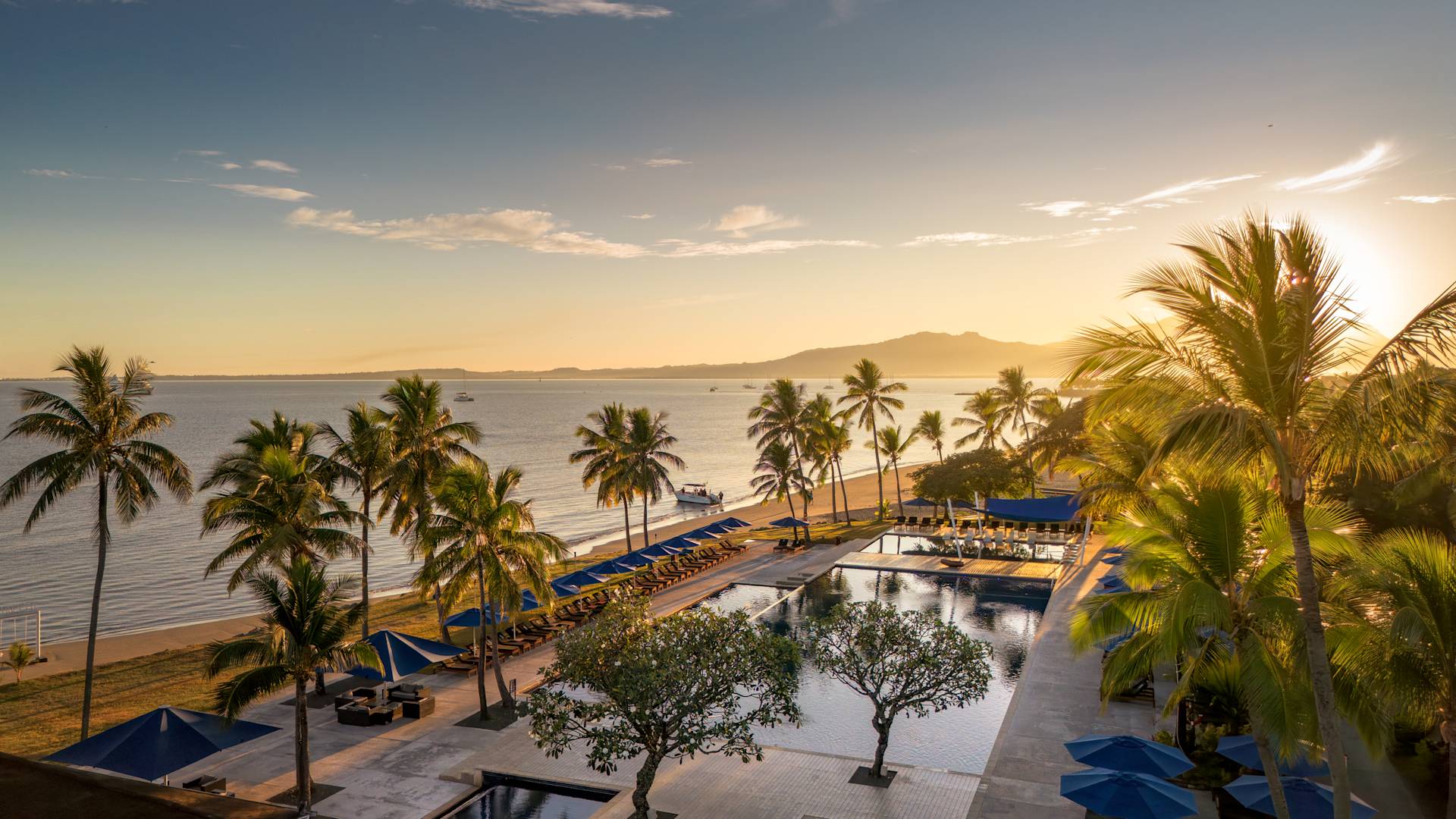
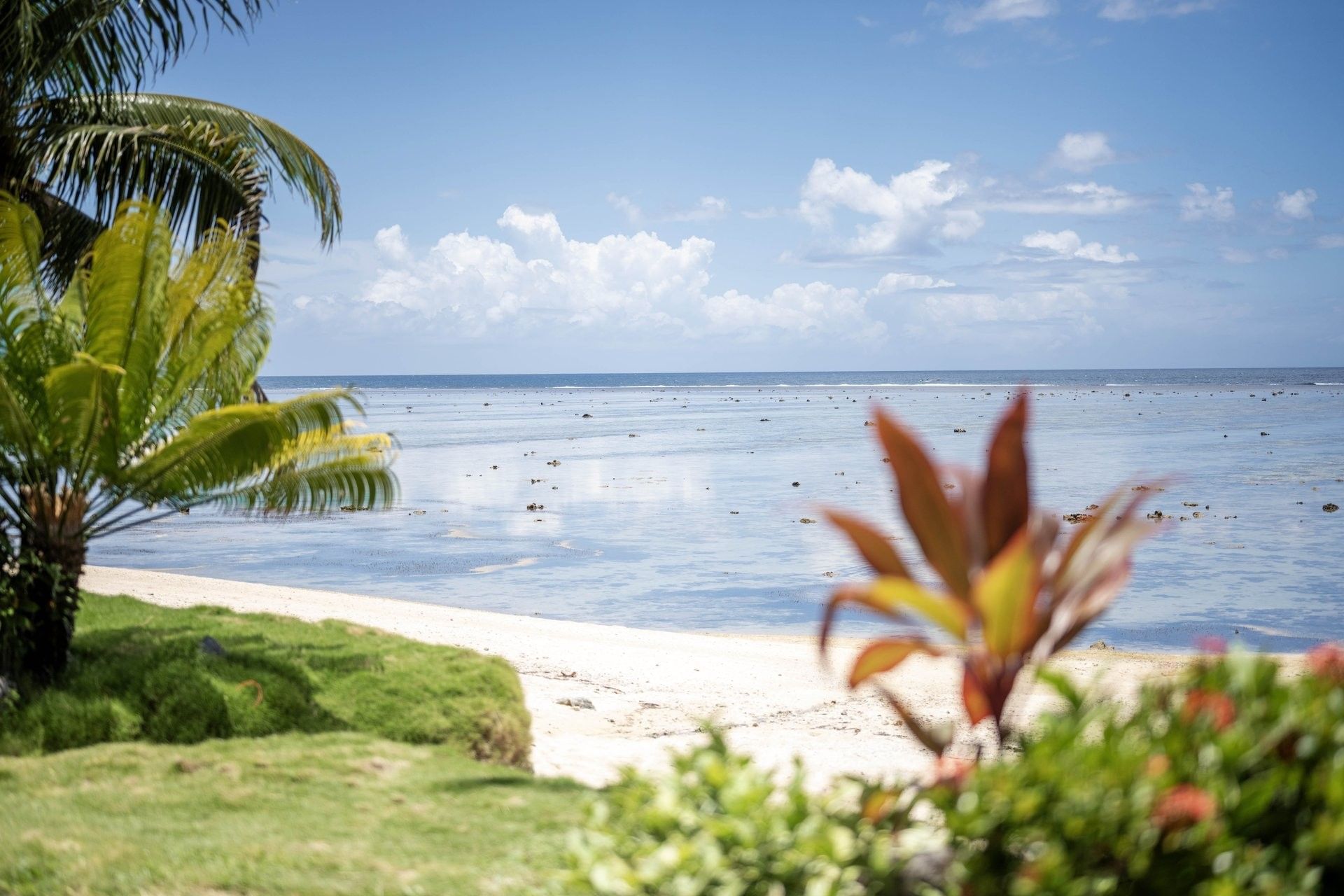
Fijian kitchens are outstanding at fire, seafood, coconut and root crops — the lovo, kokoda, palusami and a whole fish in banana leaf. They are working against a supply chain in which roughly 80% of the fruit and vegetables the tourism sector consumes are imported, and 4,629 tonnes of sheep meat arrived in 2021 against 74 tonnes produced locally. Build the menu around what the country grows and cooks, not around a European banquet with a tropical garnish.
That is the whole brief for a themed night in Fiji. Below: what a lovo actually is, what the few published prices tell you, which offsite venues publish real terms, and how to do the cultural content without turning performers into wallpaper.
What is a lovo, and why does it work for a group?
A lovo is an underground oven. Food is wrapped in banana leaves — Shangri-La describes "a braiding technique" — and cooked over hot stones buried in a pit for several hours. Plantation Island describes meat, fish and vegetables "buried in an underground oven lined with hot stones, and slowly cooked to smoky perfection."
What goes in varies by property and is worth asking about, because it tells you how seriously the kitchen takes it. Nanuku publishes a spread of "kokoda (Fijian ceviche with spiced coconut milk), lovo-roasted meats, whole stuffed smoked pumpkin and banana-leaf wrapped fish," taking two to three hours "at leisure throughout the afternoon." Outrigger publishes "a pig on a spit, vegetables traditionally cooked underground, chicken, and fish."
For a group, the lovo has three structural advantages. It is cooked off the main kitchen line, so it does not compete with the banquet kitchen for pass capacity — a genuine constraint we cover in banquet kitchen capacity. The uncovering of the pit is a set-piece with a natural start time. And it is one of the few dinner formats where the food itself is the entertainment, which saves you an act.
The trade-off is inflexibility. Everything goes in together and comes out together. If you need staggered service, individual plating or a large number of separately prepared dietary meals, a lovo will fight you. Blue Lagoon Cruises' approach is instructive: the lovo is prepared and buried on Nanuya Island during the day and served that evening — the timing is fixed hours in advance.
What does a themed night actually cost?
Almost nothing is published, and that absence is the honest headline.
Across Sheraton Fiji, Sofitel Fiji, Hilton Fiji, The Westin, Radisson Blu, InterContinental Fiji, Shangri-La Yanuca, Warwick Fiji, Grand Pacific Hotel, Holiday Inn Suva, Tanoa and Novotel Nadi, not one publishes a per-person banquet, gala dinner or set-menu rate in Fiji dollars. Every one routes pricing to an enquiry form or an events email.
Four published figures exist, and they are worth having as anchors:
| What | Published price | Schedule | Where |
|---|---|---|---|
| Sacred Flame Show and Lovo Dinner | FJD 151 adult / FJD 76 child under 16 | Mondays and Fridays, 6pm | Marau Village, Shangri-La Yanuca Island |
| Firewalking show | FJD 30 adult / FJD 15 child | Every Tuesday, 5.30pm | Na Koro Cultural Centre, Outrigger Fiji Beach Resort |
| Malamala exclusive island hire | FJD 30,000 minimum F&B spend for up to 8 hours; +FJ$10,000 charter fee for groups under 150 | Up to 350 guests; no venue hire fee | Malamala Beach Club |
| Malamala arrival by private vessel | Landing fee FJ$35pp; minimum spend FJ$50pp per visit | — | Malamala Beach Club |
Read the Shangri-La figure as your sense-check. FJD 151 per adult buys a buffet lovo dinner and a staged cultural show, at a five-star resort, on a fixed public schedule. A bespoke private gala with plated service, exclusive use and a custom set should cost more than that — but if a quote comes back at a multiple of it, ask what specifically is driving the difference.
What can Fijian kitchens source, and what has to come in?
This is the number that should shape your menu.
The FAO's Fiji Domestic Market Study found that 80% of fruits and vegetables consumed by the tourism sector are imported, with the industry importing FJ$35 million in vegetables alone in 2006. The same study found 94% of hotels would buy locally if a supply that met their needs was available — hotels rank quality (60% of respondents) and reliable delivery (55%) above price, and around 40% of larger operators need credit terms. The constraint is consistency of supply, not willingness.
Protein tells the same story. Fiji imported 4,629 tonnes of sheep meat in 2021 from Australia and New Zealand against formal local production of about 74 tonnes a year. If your menu specifies lamb, you are specifying an import, with the lead time and price exposure that implies.
Two practical consequences:
- Season your menu. The FAO study notes that the high tourist season of June to November "coincides with the best agronomic conditions for growing vegetables in Fiji," with local vegetables cheaper than imports through the mid-winter months. A June–November event that leans on local produce is both better and cheaper. A February event will import more of the plate.
- Specify what Fiji does well, not what your home market does well. Reef and ocean fish, prawns, coconut in every form, taro, cassava, breadfruit, dalo leaves, tropical fruit, and anything that benefits from smoke and long cooking. Kokoda — raw fish cured in citrus and coconut milk — is world-class and costs a fraction of an imported protein.
How do you handle dietary requirements without wrecking the theme?
Ask about three things separately, because Fiji handles them differently.
Halal. The certifying body is the Fiji Muslim League, through its Board of Consumer Affairs. Its process is substantive, not a rubber stamp: applicants must list permanent Muslim staff who verify halal, submit full menu and ingredient lists with manufacturers and certifying authorities, list meat and poultry suppliers, and accept "surprise inspections without prior notification." Certification is also revoked — the League withdrew McDonald's Fiji's certification after determining a mechanical slaughter process did not fully comply. Ask for the certificate and its expiry date, not a verbal assurance.
Hindu and Indo-Fijian vegetarian. Well served across Nadi, Suva and Denarau, with a substantial Indo-Fijian culinary tradition to draw on. A vegetarian menu here can be a highlight rather than an accommodation.
Allergy and intolerance. Larger resorts handle these routinely; remote properties on set meal plans need advance notice. Get requirements in at least two weeks out, and get the kitchen's confirmation in writing. Our guide to dietary, halal, kosher and allergy handling in Fiji goes further.
Where can you put 300 people for dinner?
| Venue | Banquet | Cocktail / reception | Notes |
|---|---|---|---|
| Denarau Island Convention Centre, Sheraton Fiji | 1,000 | 1,600 | The largest indoor banquet room in the country |
| Koro Lawn, Hilton Fiji | 1,500 | 2,000 | Outdoor; the largest published banquet number on Denarau |
| Pro-shop Lawn, Sheraton Fiji | 800 | 1,500 | Outdoor |
| Sandy Point, Sheraton Fiji | 500 | 800 | Beachfront |
| Grand Ballroom, Sofitel Fiji | 550 | 800 | Denarau |
| Ratu Makutu Events Centre, Shangri-La Yanuca Island | 500 | Not published | Coral Coast, 648 sqm |
| Britannia Ballroom, Grand Pacific Hotel Suva | 400 | 550 | The most complete published capacity chart in Fiji |
| Coral Coast Conference Centre, Warwick Fiji | 200 | 400 | 312 sqm |
| Malamala Beach Club | — | Up to 350 exclusive | Own island, 30 minutes from Port Denarau |
| Vodafone Arena, Suva | — | 5,000 seated | Fiji Sports Council; kitchen, medical room, Hall A and B, Events Lounge |
Two notes. Every outdoor number above needs a wet-weather plan holding the same headcount — see wet-weather contingency planning. And Warwick publishes cocktail and theatre for its 510 sqm Talanoa Hall but not a banquet figure, which is a useful reminder to ask for the number in the setup you actually want.
Which offsite venues publish real terms?
Only one, properly. Malamala Beach Club publishes its whole commercial model — exclusive hire for up to 350 guests, a FJD 30,000 minimum food and beverage spend for up to eight hours, no venue hire fee, and a FJ$10,000 charter fee on top for groups under 150. That transparency is rare enough to be a reason to shortlist it.
The others require an enquiry:
- Cloud 9 publishes that you can hire the full platform or half, for a full or half day, and that "Our fees include a guaranteed bar and food spend" — but no figure, capacity or hire fee.
- Seventh Heaven confirms it takes large group bookings and private exclusive hire, a short boat ride from Port Denarau, with no published terms.
- Garden of the Sleeping Giant — 20 hectares at the foot of the Sabeto Range with over a thousand orchid varieties, open daily 9am–5pm, and hosting corporate events via an enquiry form. No hire price published.
- Vodafone Arena publishes capacity and facilities in detail but not rates.
- The Fiji Museum in Thurston Gardens, Suva, publishes no venue-hire information at all, despite being one of the most evocative possible dinner settings in the country.
Our offsite dinner venues for conference groups guide covers the full shortlist.
How do you do the cultural content properly?
Not as decoration. Three specifics.
The kava ceremony. Kava — yaqona, from the root of Piper methysticum — is presented as sevusevu, traditionally a bundle offered to a chief to seek permission to enter communal land. The ceremony opens with scripted dialogue between the visitors' spokesman and the host. Guests are offered "high tide (full cup) or low tide (half cup)," and hosts "tend to go easier on first timers." The protocol on receiving: clap once, drink in one gulp, clap again. Visitors should "stoop low respectfully" when moving to their place. Brief your delegates on all of this beforehand; being told at the moment is what makes people awkward.
Firewalking is Beqa's, specifically. The tradition began around 500 years ago in the highland village of Nakarovu on Beqa Island, and the ability passes only through one bloodline to members of Beqa's Sawau tribe. It is performed on Beqa itself at Beqa Lagoon Resort, and on Viti Levu at The Pearl Resort in Pacific Harbour, Outrigger and Warwick on the Coral Coast, and Shangri-La. Name the group in your programme, credit them from the stage, and pay them properly. A firewalking troupe is not a lighting effect.
The arrival welcome. Nanuku publishes a version worth learning from: a warrior beats a lali, another blows a conch shell, and each guest is met by an itokani — a buddy in full Fijian dress — who presents a bu, a freshly picked young coconut, and places a tekiteki flower behind the ear. It is complimentary to hotel guests and, tellingly, is rescheduled to the next morning if arrival is after 5pm rather than being performed badly in the dark.
The verdict
Build the night around the lovo and the ocean, put it in the June–November window if you can, and let the cultural content be performed by the people whose tradition it is, named and paid. Use FJD 151 per head as your published sense-check for a lovo-plus-show, get every quote broken out per head with the tax basis named, and confirm the wet-weather plan holds the full headcount.
Do not ask a Fijian kitchen to produce a European gala with imported everything. It can, and it will be the least interesting dinner anyone has that week.
Next step
Start at the event catering and themed dinners hub, then read conference catering in Fiji: what it costs and what you get and offsite dinner venues for conference groups. For suppliers, the directory holds Chefs Catering Fiji, Bulaccino Catering, My Kai, VOU Fiji for dance and performance, and Tents & Awnings Ltd for the marquee that makes the outdoor plan work. Browse the full catering directory.