In almost every case, you still get married — a day or two later, in a different room, with fewer guests in the photographs. Fiji resorts move ceremonies indoors as standard, and systems in this basin are tracked days out. The real damage lands on flights, island transfers and your marriage licence's 28-day clock.
That last one is the part nobody warns couples about, so this piece deals with the administrative consequences as seriously as the meteorological ones. For whether to book the season at all, read cyclone season and your Fiji wedding: the honest risk guide. This is the piece about what happens once a system is actually on the map.
What actually happens, in order?
The sequence is consistent, and it is rarely the sequence couples expect.
- The forecast narrows over several days. The Fiji Meteorological Service operates the Regional Specialised Meteorological Centre in Nadi — the body that names and tracks cyclones for the South-West Pacific. You normally get days of signal, not hours.
- Airlines move before anyone else. The first concrete hit is retimed or cancelled flights into Nadi, and guests who cannot get out on the day they booked.
- Boats stop before roads do. Island transfers are the first ground movements suspended. A mainland wedding keeps functioning long after an island wedding has lost its access.
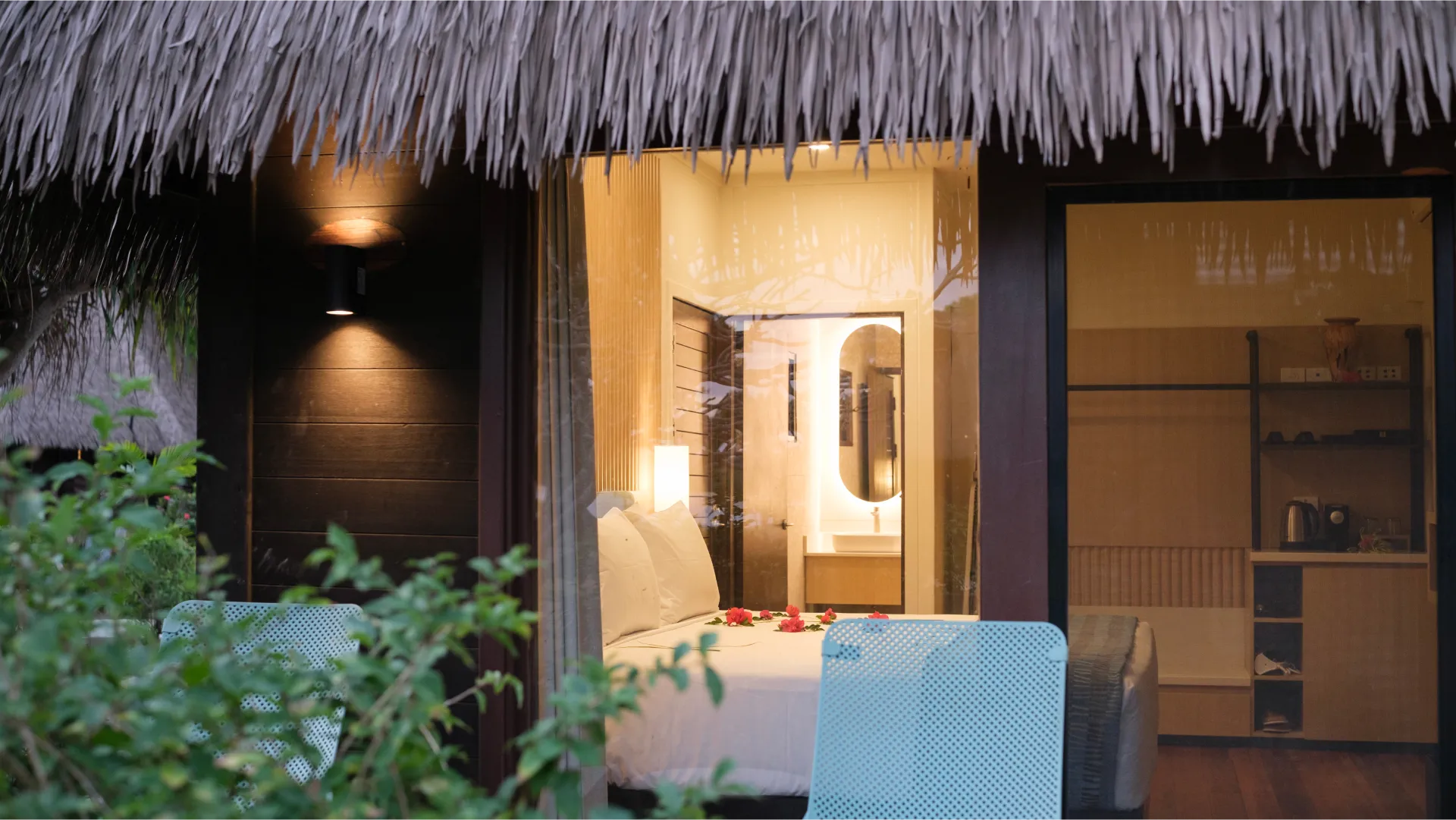
- The resort moves functions indoors. Beach ceremonies go to a ballroom, a chapel or a restaurant. This part almost always works.
- The programme compresses. Welcome drinks get dropped, the ceremony holds, the recovery party moves to the following night.
- Then the paperwork becomes the problem — and this is where an otherwise well-run postponement comes apart.
Does a cyclone invalidate your marriage licence?
Not invalidate. Expire.
Fiji's marriage licence is time-limited. Under section 21 of the Marriage Act, the Registrar-General may grant a special licence authorising solemnisation "within such time, not exceeding twenty-eight days, as shall be named therein". Fiji Pocket Guide describes the same instrument as allowing a couple to marry "within 28 days". The standard alternative route — a Notice of Intention to Marry — requires, per Fiji's Ministry of Foreign Affairs, 21 consecutive days of notice, with both parties present at a Births, Deaths and Marriages registry to post it.
So a postponement of two days is an administrative non-event. A postponement of five weeks is a return trip to the registry.
| If the cyclone moves your date by… | Licence position | What you have to do |
|---|---|---|
| 1–3 days | Still inside the licence window | Tell the marriage officer and the venue; nothing else changes |
| Up to the end of the 28-day window | Still valid, but check the exact expiry named on the licence | Confirm the named expiry date in writing before re-booking |
| Beyond the 28-day window | Expired | Attend a BDM registry again, in person, both parties, and pay again |
| Into a trip months later | Expired, and the 21-day notice route reopens | Either re-post notice 21 days out, or apply for a fresh special licence |
The fees are small — Fiji's MFA publishes the Notice of Intention to Marry at FJD 16.35 and a court marriage at FJD 54.50 (about NZ$13.00 and NZ$43.35, or A$10.45 and A$34.85, at 0.795 NZD and 0.639 AUD to the Fijian dollar on 6 October 2026). The cost is not the money. It is that both of you have to be standing in a registry office during a week when the country is cleaning up.
Guideline only — confirm current licence fees, validity periods and notice requirements with the Registrar-General's Office (Births, Deaths and Marriages), Suva, before relying on them.
Can your celebrant still legally marry you?
Only if that specific person reaches you.
Fiji law is narrow about who may solemnise a marriage. The Registrar-General may do it anywhere in Fiji and a district registrar within their district; otherwise it must be a marriage officer registered with the Registrar-General, whose name appears in the annual list published in the Gazette. A guest cannot stand in. An overseas celebrant cannot stand in. A resort manager cannot stand in.
That matters enormously for island weddings, because your officiant is usually travelling from the mainland on a boat or a seaplane — the two things weather stops first. Island Hoppers publishes that it flies within daylight hours, typically 6.30am to 5.30pm, weather permitting; Turtle Airways operates within sunrise and sunset times.
The fix is cheap and almost nobody does it: ask the resort whether your marriage officer will be on the island the night before. On a Mamanuca or Yasawa wedding in the wet season, that single question is worth more than any insurance policy. Who can legally marry you in Fiji covers how to verify an officiant's registration.
You also still need two or more witnesses, who must sign the certificate alongside you and the marriage officer. If the cyclone has stripped your guest list to four people, that is fine — see witnesses at a Fiji wedding.
What happens to guests already in transit?
Three distinct problems, and only the first is obvious.
Inbound flights. Everything from Australia and New Zealand lands at Nadi. A retimed flight usually costs a guest a day, not the wedding.
The last boat. The Mamanuca catamaran from Port Denarau runs three times daily with a 15:15 last departure and check-in 30 minutes prior. The Yasawa Flyer runs once a day, departing 08:45. Miss it in settled weather and you wait a day; miss it in a cyclone watch and you may wait three.
Daylight-only air. Seaplanes and helicopters do not fly at dusk to catch up a delayed group, so a recovery transfer is a next-morning option, not a same-evening one.
Ground transport on Viti Levu is the resilient part of the system — operators such as Tourist Transport Fiji run around the clock from the terminal, and a mainland venue stays reachable by road long after the boats have stopped.
What does the resort actually do?
More than it promises, and that gap is the honest finding.
When we checked the wedding pages of 25 Fiji resorts in September 2026, exactly two named a wet-weather alternative publicly: Outrigger Fiji Beach Resort describes Palm View Terrace as sheltered alternative reception space, and Musket Cove describes the Marama Room as contingency space. Every other property has indoor space and will use it. None commits on its website.
The weatherproof answer is a chapel. Yatule Resort & Spa at Natadola, The Pearl Resort at Pacific Harbour, Tokoriki Island Resort and Sheraton Fiji Golf & Beach Resort all hold a chapel on site. A chapel ceremony proceeds in weather that would make a beach ceremony absurd — which is precisely why Fiji has so many of them.
Who pays for the difference?
Your contract decides, and Fiji resorts do not publish standard wording, so this is negotiated rather than accepted.
- A postponement right beats a cancellation right. The ability to move the date once, within a stated window, without losing the deposit, is usually easier for a resort to grant than a refund — and it is what you actually want.
- Your suppliers are separate contracts. Photographer, celebrant, florist, stylist, band. A resort clause covers none of them. Ask each the same postponement question and expect different answers.
- Insurance has a cut-off. Cover for a named storm is generally excluded once the storm is named, so buy at deposit stage. Check it covers postponement and supplier failure, not just your own travel.
Changing your wedding date in Fiji works the mechanics through, and wedding insurance for a Fiji wedding covers the policy wording. Neither is legal or insurance advice — have contracts reviewed by a lawyer qualified in the relevant jurisdiction.
The short version
If a system forms while you are in Fiji, in order: confirm your marriage officer's physical location for the night before, confirm the named indoor space and who calls the move, check the expiry date printed on your licence, and tell guests to stop optimising flights and just get to the island early.
Do those four things and a cyclone costs you a view. Skip the first one and it costs you the wedding.
Next step: build the plan before you need it with your Fiji wedding wet-weather plan, then read the season honestly in cyclone season and your Fiji wedding. The full planning sequence is in getting married in Fiji: the complete guide, and chapel and indoor settings are listed by venue in Fiji wedding venues. Browse the precinct in Denarau Island.
Guideline only — confirm cyclone warnings with the Fiji Meteorological Service and licence requirements with the Registrar-General's Office. Last reviewed 6 October 2026.