Getting married in Fiji takes two documents, one registry visit and a venue. Most nationalities enter visa-free on a Visitor's Permit of up to four months, a Special Licence costs FJ$56.25 and waives the 21-day notice period, two witnesses are required, and roughly 25 resorts across ten regions host weddings. The decisions that actually matter are your month, your region and your rain plan.
This is the master guide. It sets out the sequence in the order the decisions bind, and links to the detailed page for each step.
Why do couples choose Fiji?
The honest case has four parts, and none of them is scenery.
Access. Fiji Airways and four other carriers fly into Nadi from Auckland, Wellington, Christchurch, Sydney, Melbourne, Brisbane, the Gold Coast, Cairns, Adelaide, Canberra, Los Angeles, San Francisco, Honolulu, Vancouver, Hong Kong, Singapore and Tokyo. For New Zealand and Australian couples the flight is short enough that guests will actually come, which is the whole ballgame for a destination wedding.
Paperwork that works for visitors. Fiji's Immigration Regulations grant a Visitor's Permit for up to four months to nationals of around 150 countries, and the Registrar-General publishes a Special Licence specifically for "foreign visitors who are in the country for a short period of time". You do not need to live in Fiji, and no residency period is published.
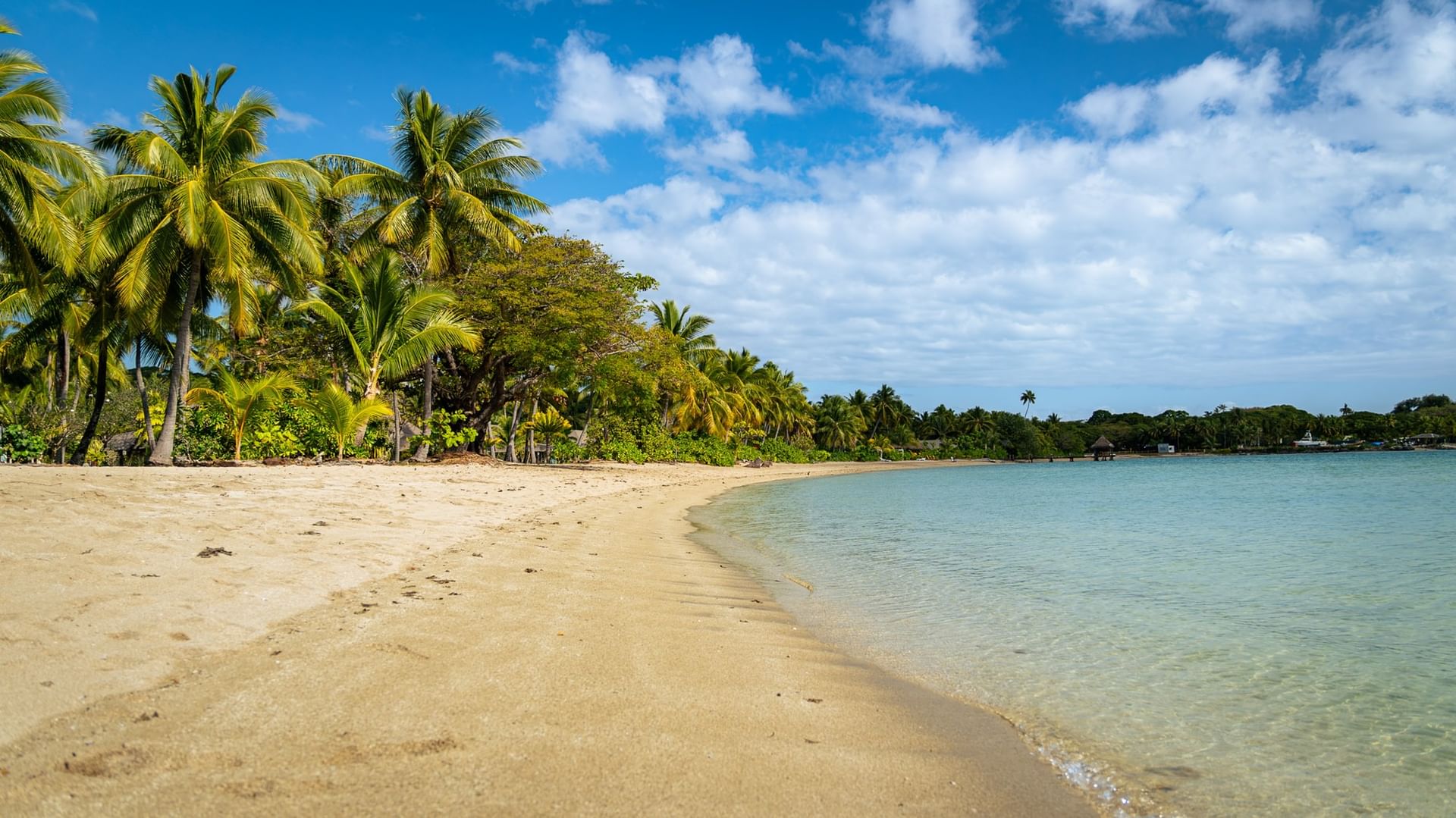
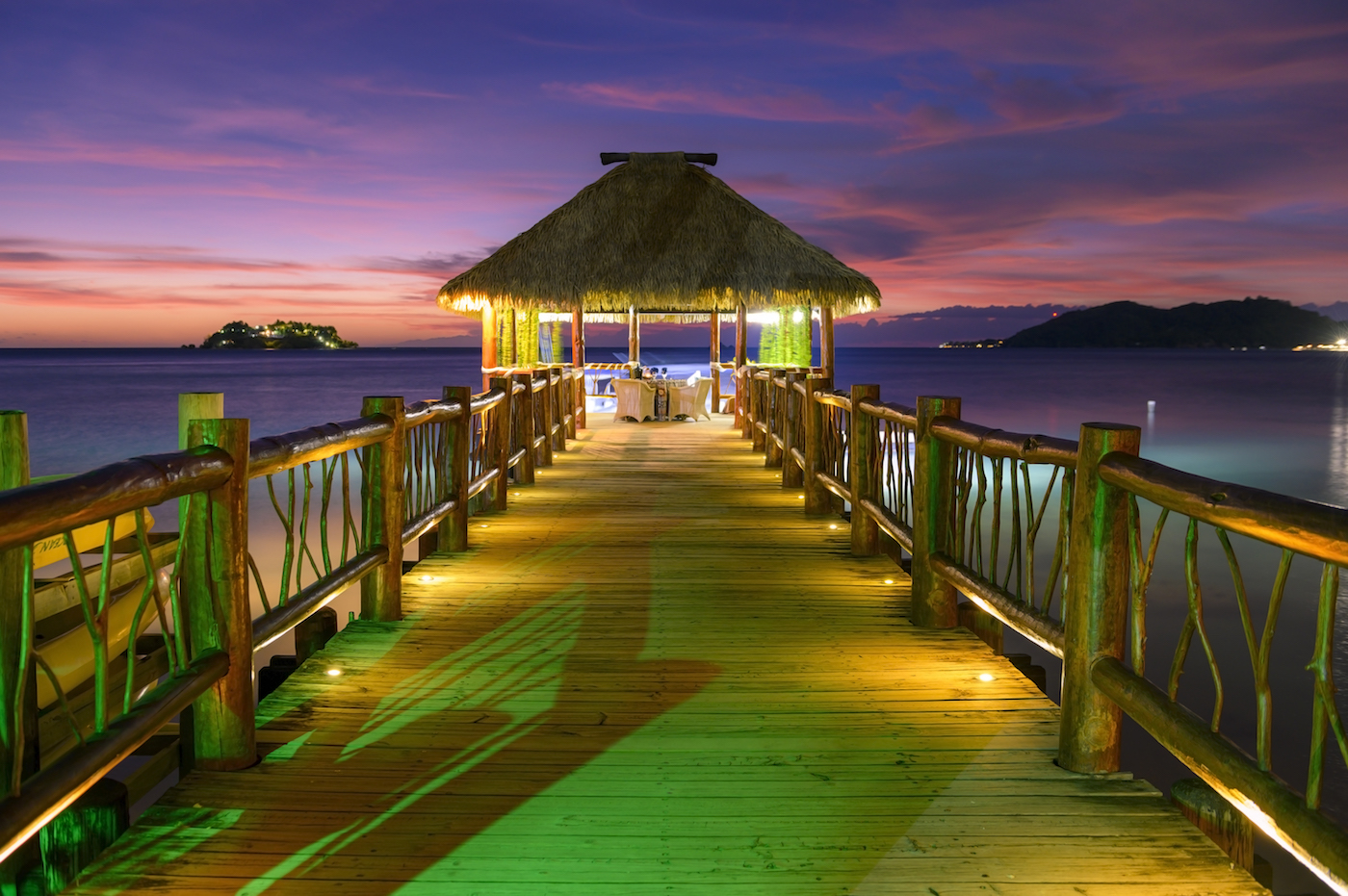
Choice of setting in a small area. Beach, chapel, overwater deck, lawn, hilltop and private island are all available within an hour or two of one airport.
A dry season you can plan around. May to October is Fiji's dry season, and the western side of Viti Levu is genuinely dry — Fiji Met recorded 1,974mm at Momi in 2024 against 3,993mm at Laucala Bay in Suva.
Against that, three honest counterweights. Island transfers are weather-dependent and time-tabled. Very few resorts publish capacities, rates or vendor policies, so you negotiate in the dark unless you ask the right questions. And from 1 September 2026 a new 5% Tourism Services Tax applies to hotels and tour operators turning over more than FJ$2 million a year, announced in the 2026–2027 National Budget on 26 June 2026 and stated to run for 12 months — which raises the bill on most of the resorts you will shortlist.
Our 10 reasons to get married in Fiji makes the fuller case.
Is it legal, and what does the paperwork involve?
Yes, and it is more straightforward than most couples expect.
Entry first. Nationals of about 150 countries, including Australia, New Zealand, the United States, Canada, the United Kingdom, all EU states, Singapore, Japan, China and India, need no visa. Fiji's Immigration Regulations 2007 permit a visitor to enter to "attend a conference or meeting" and as a tourist; getting married is not itself work, so the standard Visitor's Permit is the right one. See do you need a visa to get married in Fiji.
Then the licence. Both of you attend a Births, Deaths and Marriages Registry in person. There are two routes:
| Route | Fee (FJD) | Wait |
|---|---|---|
| Notice of Intention to Marry | 16.88 | Notice stands 21 consecutive days |
| Special Licence | 56.25 | Waives the 21 days for short-stay visitors |
Add FJ$112.50 for an "Outside Marriage" if the ceremony is at your venue rather than in the registry, and FJ$16.88 for the marriage certificate. Fees are from the Ministry of Justice schedule dated 1 August 2025.
What to carry: both passports with a valid entry permit, a certified birth certificate each, a Single Status Certificate from your country of origin and country of residence, two witnesses with photo ID, plus divorce or death certificates if either of you was married before. The Single Status Certificate is the long-lead item — New Zealand's equivalent, a Certificate of No Impediment on form BDM 189, takes three to five weeks. Full list in every document you need for a Fiji marriage licence.
Who marries you: the registry, a registered religious marriage officer, or one of the 11 civil marriage celebrants Fiji publishes on the Ministry of Justice website. Most resort weddings use a religious marriage officer the resort nominates.
Guideline only — confirm current requirements and fees with the Registrar-General's Office, Ministry of Justice, before you travel.
When should you get married in Fiji?
This is the decision that constrains everything else, so make it first.
Fiji has two seasons. The dry season runs May to October and the wet season November to April. The tropical cyclone season shares the wet-season window: the Fiji Meteorological Service states it "runs from November to April, with peak activity typically occurring between January and March", and that "usually around two tropical cyclones affect Fiji per season".
July is almost always the driest month; March is usually the wettest. The dry season is also peak season, so rates are higher and popular dates go early.
The wet season is not off-limits. It is cheaper and quieter, and if you marry in the western dry zone in a chapel with a named indoor backup and a postponement clause, the risk is manageable. What does not work is a February beach ceremony on a remote island with guests arriving that morning and no insurance.
Read the best time to get married in Fiji for the month-by-month picture and cyclone season and your Fiji wedding for the contract and insurance detail.
Where in Fiji should you marry?
Work outward from Nadi airport, because transfer time is what your guests will feel.
| Region | Transfer from NAN | Best for |
|---|---|---|
| Denarau Island | 20–30 min by road | 100+ guests; guests nervous of boats; walkable resorts |
| Nadi and Momi Bay | 20–45 min by road | Large ceremonies — Momi Bay publishes 500 on Vonu Beach |
| Lautoka and Vuda | 15–20 min by road | Value; First Landing publishes 300 on its own island |
| Coral Coast | 50 min – 1 hr 10 min by road | Best balance of setting and capacity |
| Pacific Harbour | 2–3 hrs by road, or 30 min by air | Green, quiet, Beqa Lagoon diving |
| Mamanuca Islands | 30–75 min by boat; 10–15 min by helicopter | The classic Fiji picture, up to about 100 guests |
| Yasawa Islands | 2–5 hrs by catamaran; ~30 min by seaplane | Small groups who will enjoy the journey |
| Taveuni and Vanua Levu | 55 min–1 hr 15 by domestic flight | Rainforest, waterfalls, diving |
The Yasawas deserve the plain version: the catamaran to the far northern resorts is a five-hour day, and Nanuya Island Resort says so on its own site. That is not a reason to rule them out. It is a reason to build a rest day around the transfer and to have guests arrive early.
Which Fiji venue, by setting and island sorts this properly, and Fiji wedding resorts A–Z profiles the properties one by one.
How many guests can Fiji actually hold?
More than most people assume at the top end, and less than most assume on the islands.
Of 25 resorts whose own sites we checked in September 2026, only eight publish a maximum ceremony number. The largest published figure is 500, on Vonu Beach at Fiji Marriott Resort Momi Bay. Shangri-La Yanuca Island publishes reception spaces to 500 and Sheraton Fiji lists its Denarau Island Convention Centre at 1,600 for cocktails.
On the islands the numbers are much smaller, because rooms rather than beach space are the limit. Musket Cove publishes 100 on its beach and its private cay and 80 in its Island Chapel. Tropica offers a whole-resort takeover for 60. Fiji's chapels, where a capacity is published at all, sit between 30 and 80.
Our Fiji wedding venue capacity chart records every published figure, names the three venues that contradict themselves, and leaves the gaps visible.
What does a Fiji wedding cost?
The structure is consistent even though the numbers are not published.
Almost no Fiji resort publishes a venue-hire rate. The model is a package — ceremony setup, celebrant, licence assistance, flowers, cake, sometimes photography — priced per couple with per-guest add-ons and quoted on enquiry. The fragments that are published give a sense of the edges: Mana Island states F$2,500 including taxes for exclusive use of a restaurant, charges $800 to bring in a Catholic priest, and prices in-house photography at $1,500; Matamanoa charges FJ$250 as a location fee for an external photographer.
The items couples routinely leave out of the budget are the ones that scale with the guest list: minimum-night stays, per-guest transfers, the wet-weather setup, and the new 5% Tourism Services Tax. Vomo requires four nights for the couple and three for group weddings, with all guests resident on the island — multiply that across 40 people before comparing package prices.
Government costs are small and knowable: FJ$56.25 for the special licence, FJ$112.50 for an outside marriage, FJ$16.88 for the certificate.
See what a Fiji wedding actually costs for the full line-item breakdown and current conversions.
Who plans it, and who supplies it?
Most larger Fiji resorts include a coordinator. Sheraton Fiji and Fiji Marriott Momi Bay offer Marriott Certified Wedding Planners; First Landing publishes a full-time wedding and functions coordinator; Nanuku introduces local vendors for florals, decor, lighting and photography.
A resort coordinator manages the resort. An independent planner manages everything else — off-site suppliers, guest logistics, the run sheet, the weather call. Under about 30 guests at a resort with an in-house team, the coordinator is enough. Above roughly 60, or with outside vendors, or with the ceremony on a different island from the accommodation, a planner earns their fee. Fiji's planners include Rosie Holidays, Paradise Bride and Splendid Weddings and Events.
Fiji has a deep local supplier base — photographers, videographers, florists, stylists, hair and makeup artists, cake makers and bands. Before you book any of them, check the venue's outside-vendor policy, because most resorts do not publish one and a few charge for the privilege. Start with Fiji wedding suppliers: who to book and how, then photography and film, style and decor and food and drink.
What do your guests need to know?
Three things, and telling them early prevents most problems.
Arrive a day early. If the venue is on an island, this is not optional. Island Hoppers publishes that it flies "within daylight hours (typically 6.30am – 5.30pm)" and Turtle Airways within sunrise and sunset, both weather permitting; catamarans can be cancelled in heavy swell. A cancelled transfer can mean the next day, not the next hour.
Pack light if flying to the island. Island Hoppers publishes 15kg per person by helicopter with excess at FJ$12 per kilo, and 23kg by fixed wing. Turtle Airways publishes a 460kg combined-weight maximum on flights departing Nadi. Dresses, suits and decor often travel better by boat.
Insure the trip. Bought at deposit stage, not later — once a cyclone is named it is generally treated as a known event and no longer insurable.
Send guests the Fiji wedding guest playbook, and use the planning timeline and tools and templates to keep the sequence straight.
What about culture, and doing it respectfully?
Fijian ceremony elements — a kava welcome, a choir, a meke, a lovo feast — are commonly offered as wedding inclusions, and they are one of the reasons couples choose Fiji. They are also living cultural practice belonging to specific communities and clans rather than resort decoration.
The practical guidance is simple: ask who is performing, from where, and make sure they are named, credited and paid properly rather than billed as an anonymous package line. If a resort cannot tell you which group is performing, that is worth asking about. Fijian wedding traditions, done properly goes into this in detail.
Elopements, micro-weddings and vow renewals
If the guest list is you two, the process is the same and the cost is much lower. Fiji still requires two witnesses — resorts routinely supply them — and the Special Licence route means you are not waiting 21 days.
Uprising Beach Resort publishes a 20-guest beachside ceremony, and overwater decks and hilltop sites suit very small groups well. Eloping and renewing vows in Fiji covers the mechanics.
The honeymoon
Fiji's advantage here is that you can marry in one place and honeymoon in another without a long flight — marry on Denarau or the Coral Coast, then move to the Mamanucas or Yasawas once the guests have gone home. Several resorts reward longer stays: Tokoriki offers complimentary honeymoon amenities on a minimum of five nights. See Fiji honeymoons.
The order to do this in
If you take one thing from this page, take the sequence. Couples who get into trouble almost always did these in the wrong order.
- Choose the month. Dry season or wet, and accept the trade either way.
- Choose the region, based on transfer time your guests will tolerate and, if the date is November to April, on rainfall zone.
- Choose the setting — beach, chapel, lawn, private island — and only then the resort.
- Get the five hard answers in writing: ceremony capacity for your setup, the named wet-weather space and who makes the call, seated reception maximum, outside-vendor policy, and whether another wedding is booked that day.
- Order the Single Status Certificate, the three-to-five-week item.
- Buy insurance at deposit stage.
- Book suppliers — after the venue has confirmed you may.
- Brief your guests on arriving early, packing light and insuring their own travel.
Your practical next step
Start with the month and the region, then shortlist two venues rather than one. Fiji wedding venues by setting and island is the fastest way to build that shortlist, the capacity chart tells you what each one actually publishes, and the venue directory lets you compare properties side by side.
Last reviewed 10 September 2026. Legal, immigration and fee information is guideline only — confirm with the Registrar-General's Office, Ministry of Justice, and the Ministry of Immigration, Fiji.