A Fiji wedding room block is a set of guest rooms a resort holds for your guests at an agreed rate until an agreed date. There are four versions of it, and they differ in one way that matters more than the rate: whether you are personally liable for rooms your guests do not book. Settle that before you discuss price.
Most couples discover this clause after they have announced the venue, which is the worst possible order. Here is the mechanism, the dates that bind, and the questions that keep the risk on the resort.
What are the four kinds of room hold in Fiji?
| Type | How it works | Who carries the risk | Where you'll meet it |
|---|---|---|---|
| Courtesy hold | Rooms set aside at a rate; no signature, no minimum, released on a cut-off date | The resort | Small weddings, 10–30 guests, most Fiji resorts |
| Group rate code | A booking code guests use; no rooms actually held | Nobody — and nothing is guaranteed | Large resorts with high inventory |
| Contracted block | Signed agreement for a named number of room nights | You, to the extent of the attrition clause | 30+ guests, or peak dates |
| Package-embedded nights | Accommodation is inside the wedding package price | You, from the moment you sign | Published Fiji wedding packages |
The first two are safe. The third is the one to read carefully. The fourth is the one couples do not realise they have agreed to.
What does "package-embedded" mean, and why does it matter?
Several Fiji resorts build their wedding packages around a fixed number of nights in a named room category, so your own accommodation is already paid for inside the headline price. Two worked examples from published material:
- Fiji Marriott Resort Momi Bay publishes a Tropical Fijian Wedding for up to 30 guests at FJD 29,999, which includes three nights in a Duplex Lagoon Bure; and a Grand Fijian Wedding for up to 50 guests at FJD 50,999, including three nights in an Overwater Bure. At 27 October 2026 rates (FJ$1 = NZ$0.78 / A$0.63) those are roughly NZ$23,400 / A$18,900 and NZ$39,700 / A$32,200 respectively.
- Sheraton Fiji Golf & Beach Resort publishes Fairytale and Love Is In The Air packages for up to 10 and up to 30 guests, each including two nights in an Ocean View room plus a two-night honeymoon stay, and a Paradise package for up to 30 guests including four nights. Sheraton does not publish package prices.
That structure is generally good value — but note what it is not. It covers the couple's rooms, not the guests'. Your guests book separately, and that is where the block sits. Do not confuse a package that includes your accommodation with a package that guarantees your guests'.
What is a cut-off date, and what happens on it?
The cut-off — sometimes called the release date — is the day unbooked rooms go back into general sale. On Fiji's peak dates that is the moment your late-deciding guests lose the rate, the room category, or both.
Typical Fiji cut-offs fall 60 to 120 days before arrival, but resorts set their own and it is a negotiable term rather than an industry standard. Three things to fix in writing:
- The exact date, not "approximately three months out."
- Whether you get written notice before it passes, and how many days.
- Whether you may extend it, once, at the same rate, if bookings are tracking late.
The third is the most valuable concession you can ask for and the one resorts most often grant, because extending costs them nothing if the rooms are unsold anyway.
How does attrition work, and who pays for empty rooms?
Attrition is the clause that makes you liable for a shortfall against a contracted block. It is written against room nights, not guests — a distinction that trips up almost everyone.
A block of 20 rooms for 4 nights is 80 room nights. If your contract allows 20% attrition, you must deliver 64 room nights. Here is the trap: 20 guests who each stay 3 nights instead of 4 is 60 room nights. Every guest came. You are still 4 room nights short and liable for them.
That is wash — the gap between people attending and room nights consumed — and in Fiji it is systematically underestimated, because destination-wedding guests make their own holiday of the trip. Some arrive early, some stay on, and a meaningful number book a cheaper property down the road or an island night in the middle. Every one of those decisions eats your block.
The contract-mechanics detail — how holds, cut-offs, attrition and wash interact — is set out at length for conference planners in How Room Blocks Work in Fiji, and the arithmetic is identical for a wedding. The only difference is who signs: a company, or you.
What should you actually ask for?
Ask these eight questions before you sign anything, and get the answers in the contract rather than the email thread.
| Question | What a good answer looks like |
|---|---|
| Is this a courtesy hold or a contracted block? | Courtesy hold, in writing, for anything under about 30 guests |
| What is the exact cut-off date? | A date, with written notice to you 14 days before |
| Is there an attrition clause? At what percentage of what? | Ideally none. If there is, a stated percentage of room nights, not guests |
| Does the wedding package depend on a minimum number of rooms or nights? | A clear yes or no, and if yes, the exact minimum and what happens if you miss it |
| Can the cut-off be extended once at the same rate? | Yes, on written request |
| Is the rate per room or per person, and does it include meals? | Per room, stated, with meal plan named separately |
| Is the rate inclusive of VAT and the Tourism Services Tax? | Inclusive, or exclusive with both rates stated |
| What is the cancellation and date-change position on the block? | Tied to the same terms as your wedding deposit, not harsher |
On that last line: Fiji's 5% Tourism Services Tax commenced on 1 September 2026 for tourism businesses above a FJ$2 million turnover threshold, which covers every major resort. Ask whether quoted room rates are inclusive of it and of VAT. Confirm current rates with the Fiji Revenue & Customs Service. Deposit and cancellation terms generally are negotiable — see Fiji Wedding Deposits and Cancellation Terms: What to Negotiate.
How many rooms should you block?
Block for the guests who will come, not the guests you invited. Destination-wedding attendance runs well below a home wedding's, and the realistic range is covered in How Many Guests Actually Come to a Destination Wedding.
A practical approach that works in Fiji:
- Block conservatively at first — around 60% of your expected room nights, as a courtesy hold.
- Add rooms as bookings firm up. Resorts will almost always sell you more; they will rarely release you from fewer.
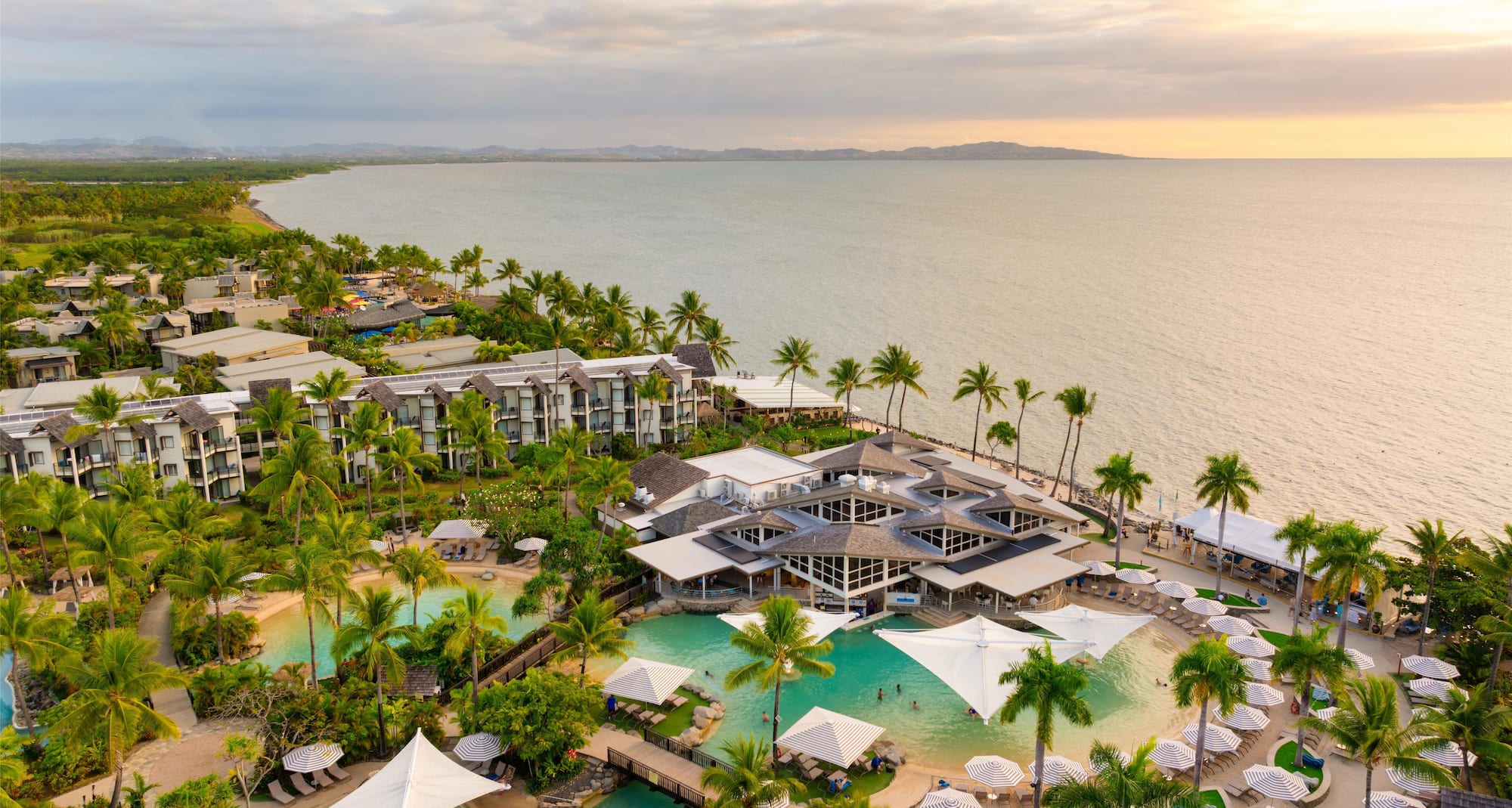
- Spread across categories. Fiji guest lists span budgets, and a block entirely in one category pushes your cheaper guests off-property. Resorts like Radisson Blu Resort Fiji Denarau Island, with 270 rooms including apartment-style options, and Plantation Island Resort handle mixed-budget guest lists better than small-inventory properties.
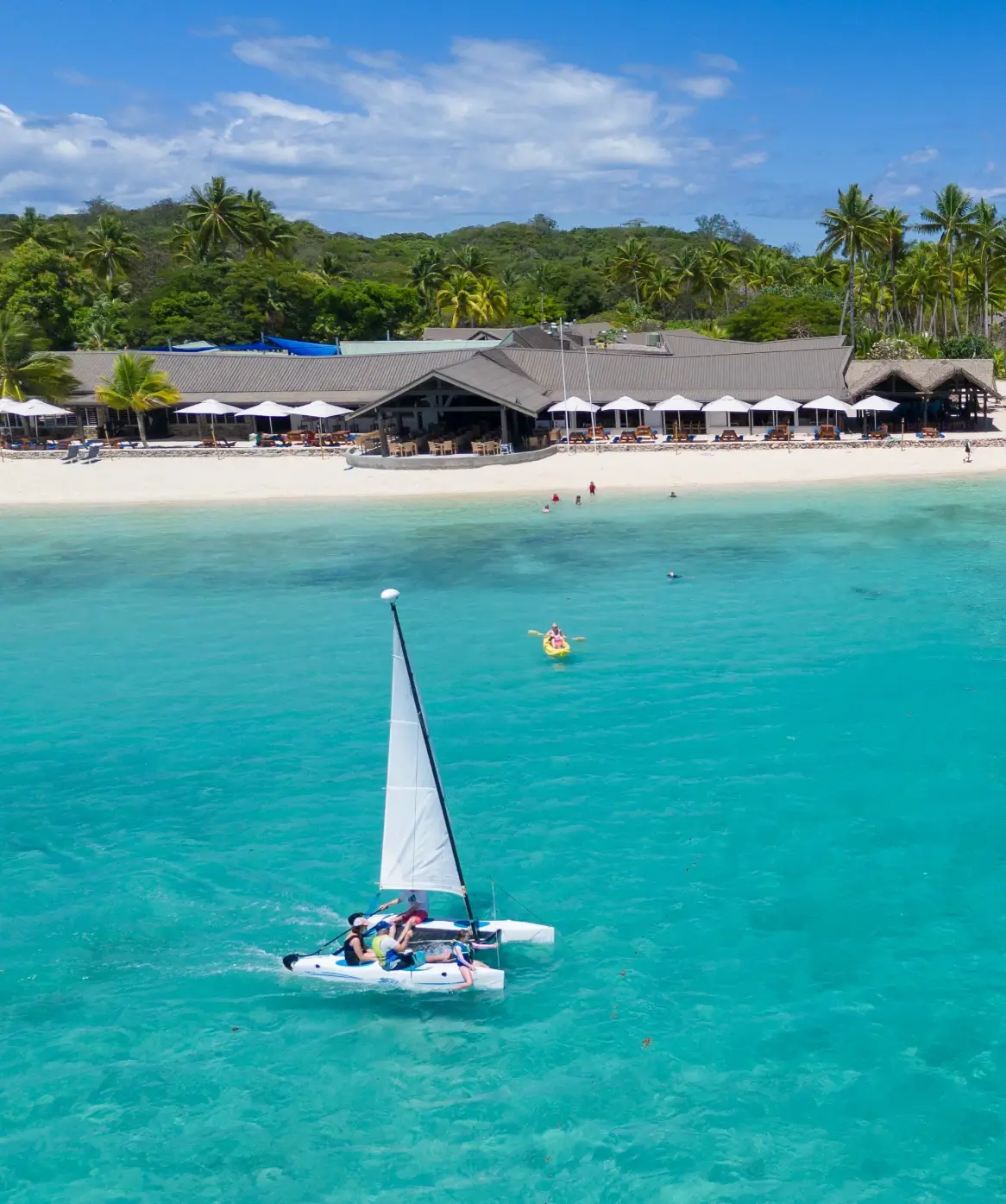
- On small islands, inventory is the constraint. A property such as Castaway Island Resort cannot absorb a late surge the way a 356-room Denarau resort like Hilton Fiji Beach Resort & Spa can. On the islands, block earlier and larger; on Denarau, block later and smaller.
The one-line version
For a wedding of under 30 guests on a large Viti Levu resort, insist on a courtesy hold with no attrition and an extendable cut-off, and you carry no room risk at all. For a bigger wedding, a peak date, or a small island, you will be offered a contracted block — so negotiate the attrition percentage down, measure it in room nights, and model your wash honestly before you sign.
Send your guests the costs they are actually facing from The Fiji Wedding Guest Cost Sheet You Can Forward, and work the rest of the guest logistics from the Fiji Wedding Guest Guide or by venue at wedding venues on Denarau Island.