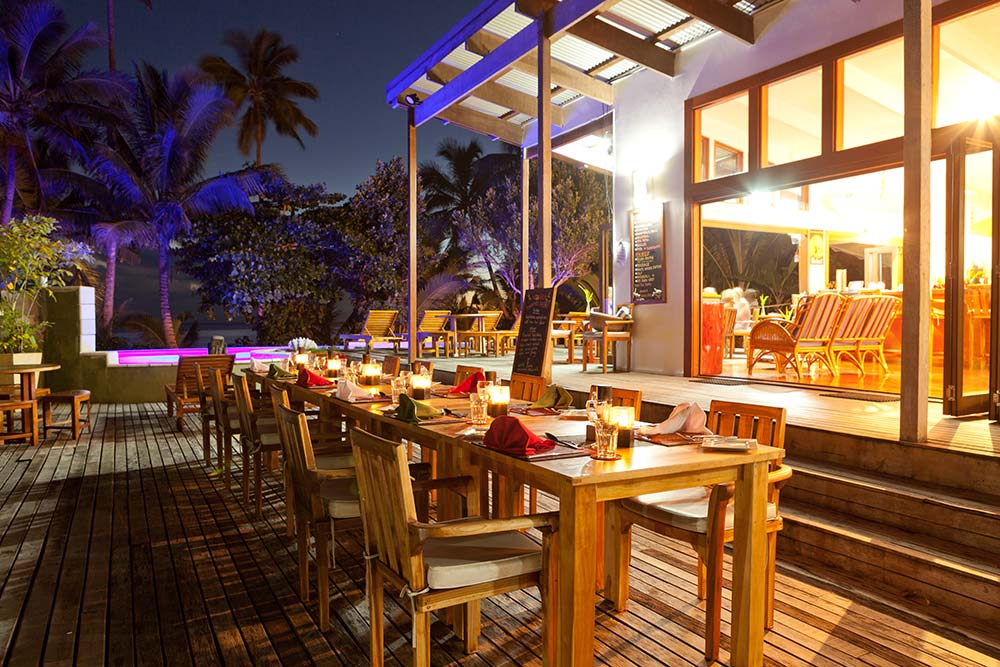
A commitment ceremony in Fiji is a full wedding ceremony with no legal effect. No Notice of Intention to Marry, no 21-day waiting period, no registry appointment and no certificate. You choose the setting, the celebrant and the words, and nothing is registered anywhere. For a growing share of couples that is not a compromise — it is the better route.
What is a commitment ceremony, exactly?
It is the ceremony stripped of the paperwork. Vows, rings, readings, a celebrant, your guests, the setting — all of it stays. What goes is the legal machinery underneath.
The practical difference shows up in your itinerary. A legal Fijian wedding requires both parties to appear in person at a Births, Deaths and Marriages registry, with the notice posted for 21 consecutive days, or a Special Licence granted at the Registrar General's discretion for short-stay visitors. A commitment ceremony requires none of that, so your first day in Fiji is not spent in an office.
Who actually chooses a commitment ceremony?
Three groups, for quite different reasons.
Couples who marry legally at home first. By some distance the largest group. The signing happens in a registry office at home a few weeks before departure, often with two witnesses and no fuss, and the Fiji ceremony is the real one as far as the guests are concerned. This route is set out in detail in legal ceremony at home, vows in Fiji.
Couples for whom Fijian law does not provide. Most significantly, same-sex couples. Fiji's Marriage Act was amended in 2002 to define marriage as the voluntary union of one man to one woman, and same-sex marriages and civil unions are not legally recognised. The 2013 Constitution separately prohibits unfair discrimination on the ground of sexual orientation under Article 26(3), a tension that commentators including a former Fiji Human Rights Commission director have publicly raised. A commitment ceremony is not a marriage and does not engage the Marriage Act, but it also confers nothing. Our honest legal position for same-sex couples covers the practical ground, including which properties have hosted these ceremonies.
Couples who simply do not want to be married on paper. Long-term partners with existing property or estate arrangements, couples who have been together for decades, people who want the ritual without the registration. No explanation required to anyone, including the resort.
What does a commitment ceremony cost in Fiji?
Most properties quote symbolic ceremonies on request rather than publishing them, which makes the ones that do publish useful reference points. Likuliku Lagoon Resort is the clearest published example:
| Package | Type | Published price (FJD) | Approx. NZD | Approx. AUD |
|---|---|---|---|---|
| Renewal of vows | Symbolic — no licence required | 1,950 | 1,520 | 1,240 |
| "Marau" | Legal | 2,850 | 2,220 | 1,820 |
| "Dodomo" | Legal, with choir and warrior escort | 6,580 | 5,130 | 4,190 |
Prices as published by the resort for 2026-27 and stated to include taxes. Conversions at an indicative mid-market rate of 1 FJD = 0.78 NZD / 0.64 AUD, taken 20 October 2026, and will move.
The pattern holds more broadly: the symbolic version typically costs less than the legal one at the same property, because the registry escort, documentation fee and registration are stripped out. Ask for the symbolic rate explicitly. A resort quoting from its standard wedding sheet will often quote you the legal package by default.
What is not removed is everything that actually makes the day: the setting fee, the flowers, the celebrant's time and travel, the photography, the dinner. Budget those exactly as you would for a legal wedding — our cost breakdown by line item applies unchanged.
What paperwork do you need?
None, in the legal sense. There is no document list, no certified translations, no certificate of no impediment, no witnesses who must be over 21 and able to sign.
What the resort will still want is the ordinary commercial paperwork — a signed contract, a deposit, final numbers, dietary requirements and a run sheet. Some properties also ask you to acknowledge in writing that the ceremony is non-legal, which protects both sides and is worth welcoming rather than resisting.
This is guideline only. Confirm the legal position for your circumstances with Fiji's Registrar General's Office and, where a same-sex ceremony or an existing marriage is involved, with your own legal adviser. Last reviewed 20 October 2026.
Who officiates?
Anybody. That is the quiet advantage.
For a legal Fijian marriage the officiant must be a registered civil marriage officer or a minister of religion whose registration is published in the Fiji Republic Gazette each year. For a commitment ceremony no such requirement exists, so your options widen:
- The resort's usual celebrant, who knows the setting, the timings and the wet-weather call. Most couples take this route. The celebrant and minister directory lists who works where.
- A friend or family member, which is difficult to arrange legally and trivial to arrange symbolically.
- A Fijian minister or village elder, where the couple has a genuine connection and the invitation is extended and paid for properly rather than treated as atmosphere. Fijian wedding traditions sets out how to do that respectfully.
Where can you hold one?
Anywhere a legal ceremony can be held, plus a few places one cannot. Without a registry link in the chain, remote properties become easier rather than harder.
- Matanivusi Beach Eco Resort on the Coral Coast — small, beach and deck settings, well suited to a group under 30.
- Crusoe's Retreat on the Coral Coast — beach, garden and hilltop options at a 28-room property.
- The Pearl Resort in Pacific Harbour — beach and chapel, with the Beqa Lagoon activity base around it.
- Outrigger Fiji Beach Resort on the Coral Coast — the largest of the four, with a chapel for a wind or rain alternative.
For smaller groups, the settings catalogued in where to elope in Fiji all work symbolically.
What actually changes on the day?
Almost nothing a guest would notice. The celebrant does not read the statutory declarations, nobody signs a register, and there is no certificate photograph afterwards. Some couples replace that moment with something of their own — a signed vow card, a sevusevu, a planted tree.
The one thing to brief your celebrant on is wording. Phrases like "by the power vested in me" and "lawfully wedded" are inaccurate here, and a good celebrant will have alternatives ready. Ask to see the script.
The verdict
Choose a commitment ceremony if Fijian law does not provide for your marriage, you have already married or will marry at home, or you want the day without the registration.
Choose a legal Fijian wedding if you want the certificate issued in Fiji and you can absorb the 21-day notice or secure a Special Licence — compared side by side in symbolic vs legal ceremonies.
Next step
Shortlist two or three properties, then ask each the same question in writing: what is your symbolic ceremony rate, and what is included that the legal package includes. The gap between those two numbers is the clearest signal of how a resort treats this. Start from the elopement and micro-wedding guide or compare settings across the full venue list.