Nobody publishes a per-head price for a Fiji incentive, and anyone who quotes you one before seeing your dates is guessing. What can be published is the part with sources attached: roughly FJ$250 to FJ$550 per head of programme content on three nights, FJ$400 to FJ$800 on four, and FJ$1,000 to FJ$1,400 on five — before rooms, the gala and the coaches.
That last clause is most of the money. This page sets out what the costable portion actually is, at three tiers and three lengths, then names the five variables that move the total more than anything you will negotiate.
Why can't anyone quote a per-head figure?
Because five of the biggest lines in a Fiji incentive are negotiated individually, every time: guest rooms, the gala dinner, coach transport, the complimentary-room ratio, and boat charters. No Fiji property publishes a group rate, and none should be expected to — the number moves with season, room-night commitment, food and beverage spend and how much of the property you take.
What is published, and published well, is the content: day trips, activities, cultural dinners, park entries and scheduled transfers. Activity operators in Fiji publish rate cards; resorts do not. So the honest structure of an incentive budget is a costable spine you can build from sources, plus a quoted block you have to go and get.
What does the costable spine cost per head?
Every figure below is a published operator or resort rate. Nothing is estimated.
| Element | Published rate | What it is |
|---|---|---|
| Sigatoka Sand Dunes National Park entry | FJ$10 adult | National Trust of Fiji; 8am–4.30pm, closed 1–2pm |
| Outrigger firewalking show | FJ$30 adult | Resort activities page; Tuesdays 5.30pm |
| Garden of the Sleeping Giant | FJ$35 adult | Own site; 9am–5pm daily |
| Shangri-La Sacred Flame Show and Lovo Dinner | FJD 151 adult | Resort offer page; Mondays and Fridays, 6pm |
| Malamala Beach Club, half day | FJ$185 pp | Operator day-trip page |
| Malamala Beach Club, full day | FJ$215 pp | Return coach and catamaran from Port Denarau included |
| Cloud 9 | FJ$239 return | Includes FJ$60 of on-board credit |
| Ecotrax rail-bike, Coral Coast | FJ$239 adult | Morning or afternoon session; minimum 2 pedalling guests |
| ZIP Fiji | FJ$245 pp | Operator rate |
| South Sea Island, half day | FJ$245 adult | 12.15pm departure |
| South Sea Island, full day | FJ$285 adult | BBQ buffet lunch, local beer, house wine and soft drinks included |
Build a spine from those and the bands fall out.
| Programme | Content days | Lean spine | Standard spine | Premium spine |
|---|---|---|---|---|
| 3 nights | 2 | FJ$75–200 | FJ$250–420 | FJ$450–550 |
| 4 nights | 3 | FJ$150–300 | FJ$400–620 | FJ$650–800 |
| 5 nights, two-centre | 3 plus a transfer day | FJ$400–700 | FJ$800–1,100 | FJ$1,100–1,400 |
Read those as arithmetic on the rates above, not as market prices. A lean three-night spine is a park entry, a garden visit and a firewalking show. A standard spine is one island day at FJ$215 plus one activity around FJ$239. A premium spine adds a full-day island at FJ$285 and a cultural dinner at FJD 151, or substitutes a helicopter leg.
At the Reserve Bank of Fiji's indicative rates of 11 September 2026 — FJD to NZD 0.7752 and FJD to AUD 0.6278 — FJ$1,200 of content is about NZ$930 or A$753 per head.
Our fully built programmes sit alongside these bands: three nights, four nights and five nights, each costed line by line.
What are the five variables that actually move the number?
Ranked by how much they change the total, not by how much attention they usually get.
1. Whether you go to an island, and how. This is the biggest single swing in Fiji incentive budgeting, and it is a transfer decision rather than an accommodation one. Nadi to Likuliku is published from FJD$152 per person each way plus a FJD$10 fuel surcharge per adult one way by catamaran, F$256 per adult one way on a SeaFiji scheduled seat, and F$865 per person one way or F$1,570 return plus a F$25 fuel surcharge each way by helicopter. That is a spread of more than five times on the same journey, applied to every person, twice.
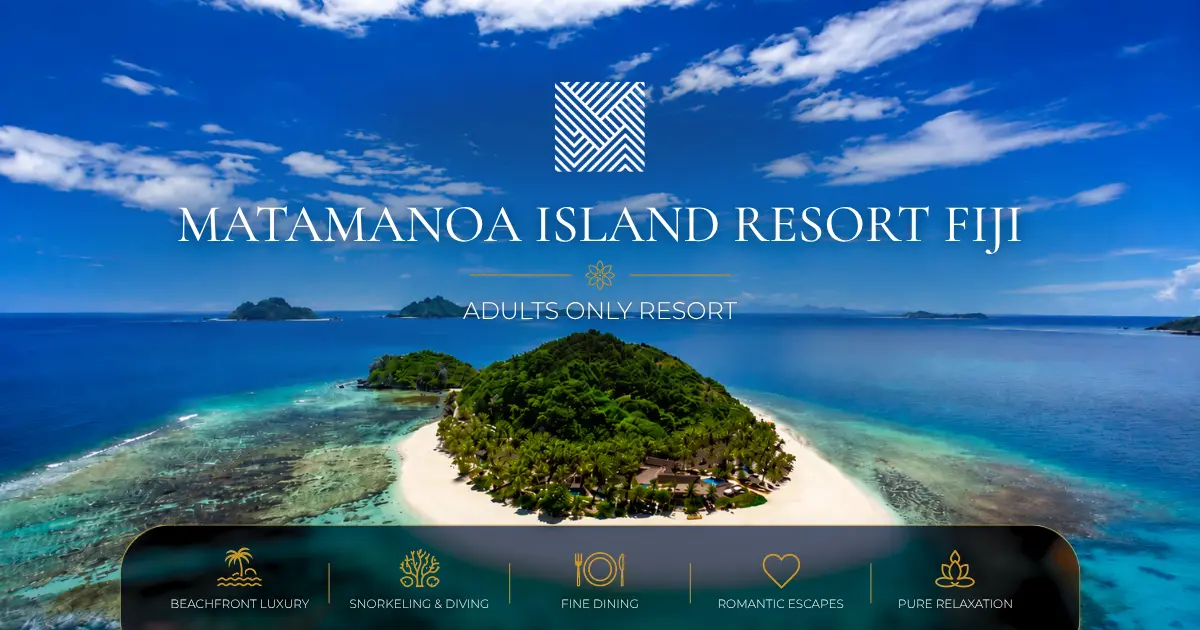
2. Group size against the property's inventory. Fiji's premium island resorts are small. Likuliku Lagoon Resort has 45 bures and is adults-only. Tokoriki Island Resort has 36 units. Matamanoa Island Resort has 47. A 70-person group in twin share needs 35 rooms — which at any of those is most of the resort. You are not negotiating a block; you are negotiating a near-buyout, and the price behaves accordingly. Plantation Island Resort and Musket Cove Island Resort & Marina are the Mamanuca properties with enough scale to take that group without the buyout conversation.
3. Season. Fiji had national room occupancy of 49.7% in the March quarter of 2026 and 56.6% in the December quarter of 2025, which means properties want group business and rates move. July and August do not behave like that. Shoulder-season value sets out where the slack is.
4. The tax treatment. VAT at 12.5%, the Tourism Services Tax at 5% from 1 September 2026 for operators above FJ$2 million turnover, and ECAL at 5% for larger providers. Whether those stack is unresolved in public sources, and the difference between 17.5% and 22.5% on a six-figure programme is real money. Bookings made before 1 September 2026 escape TST even where delivery is later. Detail in VAT, service charge and levies on a Fiji event invoice.
5. Content days versus free days. Every content day adds a per-head charge; every free day adds only the room. The temptation on a five-night programme is to fill all five, which is both the most expensive and the least popular option. One genuinely unscheduled day is the cheapest thing in the budget and frequently the best-reviewed.
Guideline only on the tax position. Confirm current treatment with the Fiji Revenue and Customs Service and your own adviser.
What about the lines you cannot cost?
Get them quoted as a structure rather than a rate, or they will come back larger than you modelled. Five questions, sent with the brief:
- Rooms — the rate, the room-night commitment it depends on, the attrition percentage and the block release dates.
- The gala — the per-head food and beverage minimum, whether venue hire is waived against it, and the outside-vendor and corkage policy.
- Coaches — cost per vehicle with the confirmed seat count with luggage, not per head. Nadi to Denarau is published at FJ$220 per 14–22 seat vehicle; Nadi to the Coral Coast at FJ$800.
- The complimentary-room ratio — one per 20 paying rooms, one per 25, or nothing. It is worth real money and it is never volunteered.
- Boats — the charter rate, the bags-per-sailing limit, and the last sailing time.
Those five are where the negotiation is, and where Fiji conference budgets blow out explains how each one goes wrong.
So what is a realistic total?
We are not going to publish one, and here is the reason in plain terms: on a 70-person programme, the costable content spine is somewhere between FJ$250 and FJ$1,400 per head depending on length and tier. The rooms, the gala and the ground transport are typically the larger share and are quote-only. Any "Fiji incentive costs FJ$X per head" figure you read has invented that larger share.
What you can do instead is arrive at your own number in about a week. Build the spine from the published rates above. Send the five structural questions to three properties on identical terms. Add tax both ways. Convert once, at a rate you state and date. That gives you a defensible per-head figure with a source behind every line, which is a better thing to take to a client than a market average.
The verdict
- Three nights, one base. Content spine FJ$250–420 per head at a standard tier. The shortest programme that justifies the airfare.
- Four nights, one base. FJ$400–620. The best value-per-day shape in Fiji, and the one we recommend most often.
- Five nights, two centres. FJ$800–1,400, and a whole day consumed by the transfer. Worth it only if the second centre is the point rather than a bonus.
- The island question decides the budget. Helicopter versus catamaran on one route is a five-fold difference, per person, each way.
- Protect one free day. It costs a room night and buys the programme's reputation.
Next step
Design the programme before you price it: designing a Fiji incentive that people actually want to win, then Fiji incentive set-pieces for the content. Build the ground plan with building a transport plan for a Fiji conference. For content suppliers, Ecotrax Fiji, ZIP Fiji, Sigatoka River Safari, Captain Cook Cruises Fiji and Team Up Events Fiji all publish or quote properly; Malamala Beach Club is the most reliably costed island day in the country. Start from the incentive programme hub or browse activities.