Twenty-three international and regional organisations have representatives based in Fiji, on the Ministry of Foreign Affairs' own published list. No other conference sector in this country starts with that much of its audience already in the room — and that, not the beach, is the argument for holding a development or multilateral agency conference here.
Who is already here?
The Ministry of Foreign Affairs publishes a list of "Representatives of International & Regional Organisations Based In Fiji." In full, it names:
| Category | Organisations named |
|---|---|
| Development banks and finance | Asian Development Bank · World Bank · International Monetary Fund · Pacific Financial Technical Assistance Centre (PFTAC) |
| UN system | UNDP · UNICEF · UNFPA · WHO · UNESCO · ILO · UNESCAP Pacific Operations Centre (EPOC) · FAO for the Pacific (Apia, Samoa) |
| Pacific regional bodies | Pacific Islands Forum Secretariat · Secretariat of the Pacific Community (SPC) · South Pacific Applied GeoScience Commission (SOPAC) · South Pacific Tourism Organisation (SPTO) · South Pacific Board for Education Assessment · Oceania Fisheries Cooperation Foundation |
| Bilateral agencies | Japan International Cooperation Agency (JICA) · Korea International Cooperation Agency |
| Humanitarian and conservation | International Committee of the Red Cross · IFRC & Red Crescent Societies Regional Delegation – Pacific · International Union for Conservation of Nature |
Read that as a delegate list rather than a directory. If you are convening on climate finance, fisheries, health systems, disaster resilience, education assessment or Pacific economic policy, a meaningful share of the people you would invite already works in Suva and needs no flight, no visa and no per-diem for accommodation.
That is the deepest precedent any sector has in Fiji, and it is why this is the one conference category where the destination argument writes itself.
Suva or Nadi? The decision that shapes everything else
This sector is the clearest case in Fiji where the two cities genuinely compete, because the institutions and the aircraft are in different places.
| Suva | Nadi / Denarau | |
|---|---|---|
| The agencies' offices | Here | Not here |
| Government ministries | Here | Not here |
| The University of the South Pacific | Laucala campus | Not here |
| International air access | Limited — see can you fly directly into Suva | Nadi International, full long-haul lift |
| Largest published venue capacity | Vodafone Arena; hotel ballrooms; poolside pavilion to 350 | Convention centre cited to 1,600 delegates |
| Airport-to-venue transfer | Nausori, plus the Suva road — see the Suva access problem | 15 minutes, published, at Crowne Plaza Nadi Bay |
The practical answer most programmes land on: Suva if your delegates are the institutions; Nadi if your delegates are arriving from across the Pacific and beyond. A technical working group of thirty agency staff and ministry officials belongs in Suva. A 400-delegate regional ministerial with participants from fourteen countries belongs where the planes land. Our full comparison is in Suva or Nadi: choosing a Fiji conference city.
The hybrid answer — ministerial plenary in Nadi, technical sessions and site visits in Suva — costs you a 200-kilometre transfer day. Price it honestly against real transfer times before you commit to it.
Where do these conferences actually sit?
In Suva, the realistic shortlist is institutional rather than resort-shaped:
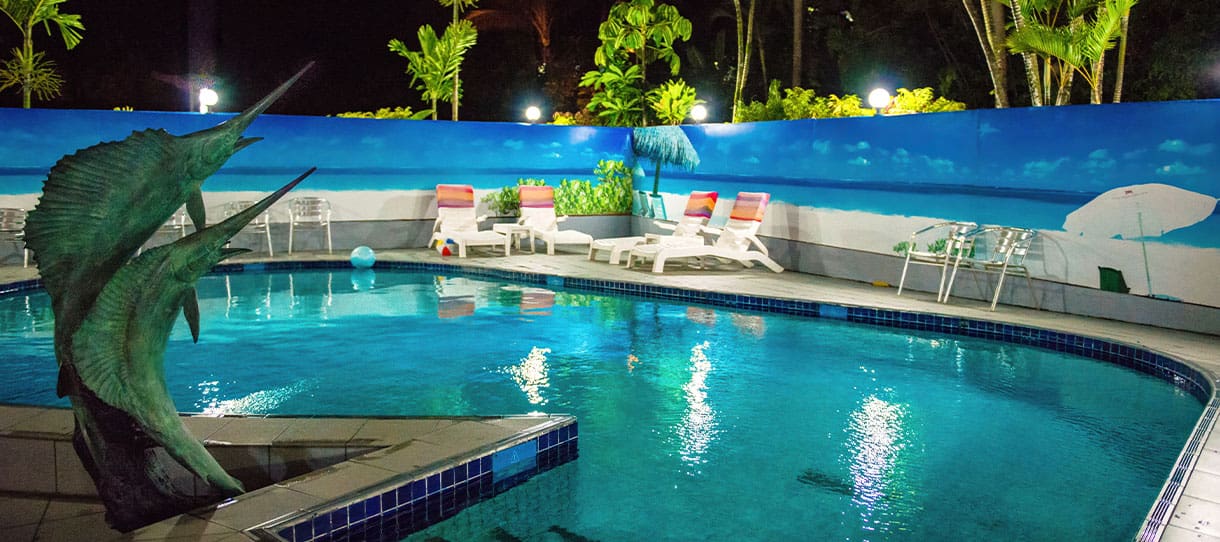
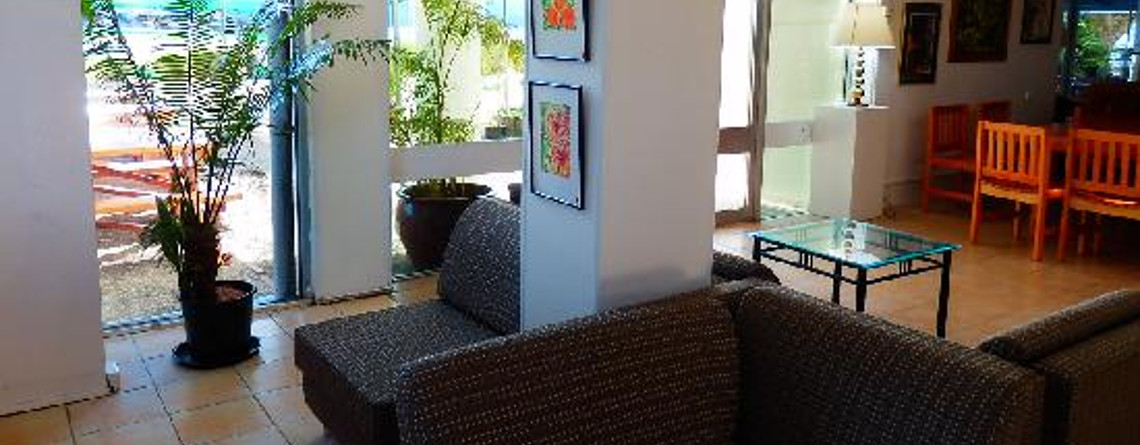
- Holiday Inn Suva — waterfront on Victoria Parade, 130 rooms, three glass-walled meeting rooms and a poolside pavilion published to 350 delegates. Central, walkable to ministries, and the most conference-ready hotel in the capital on published figures.
- Japan-Pacific ICT Centre — the multipurpose theatre at USP's Laucala campus. A donor-funded facility on a regional university campus is, for this sector, close to a natural home.
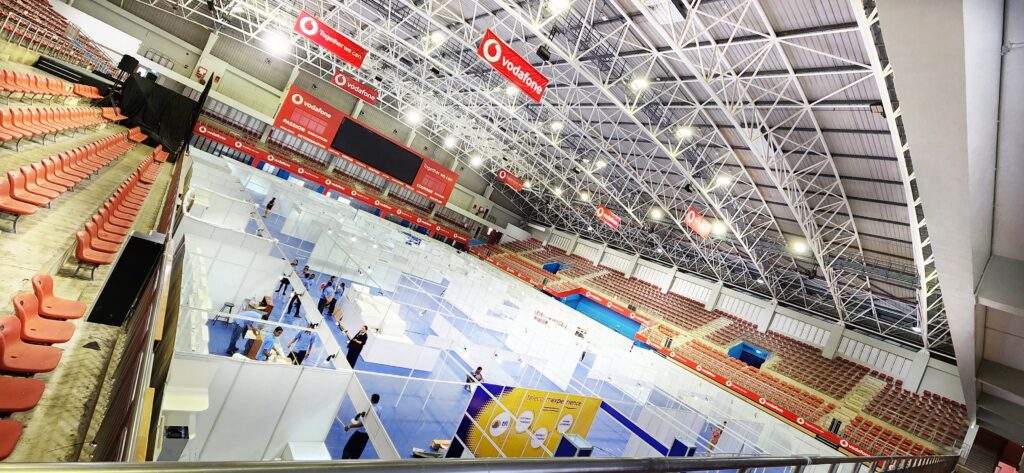
- Vodafone Arena — a Fiji Sports Council facility, the capital's answer when a hotel ballroom is not big enough.
- New Town Hall — Suva City Council, for civic and public-facing sessions.
- Novotel Suva Lami Bay, Tanoa Plaza Hotel, Peninsula International Hotel and De Vos on the Park for accommodation and smaller meeting space, with Studio 6 Apartments (89 rooms) useful for longer missions.
The full field is in conference venues in Suva.
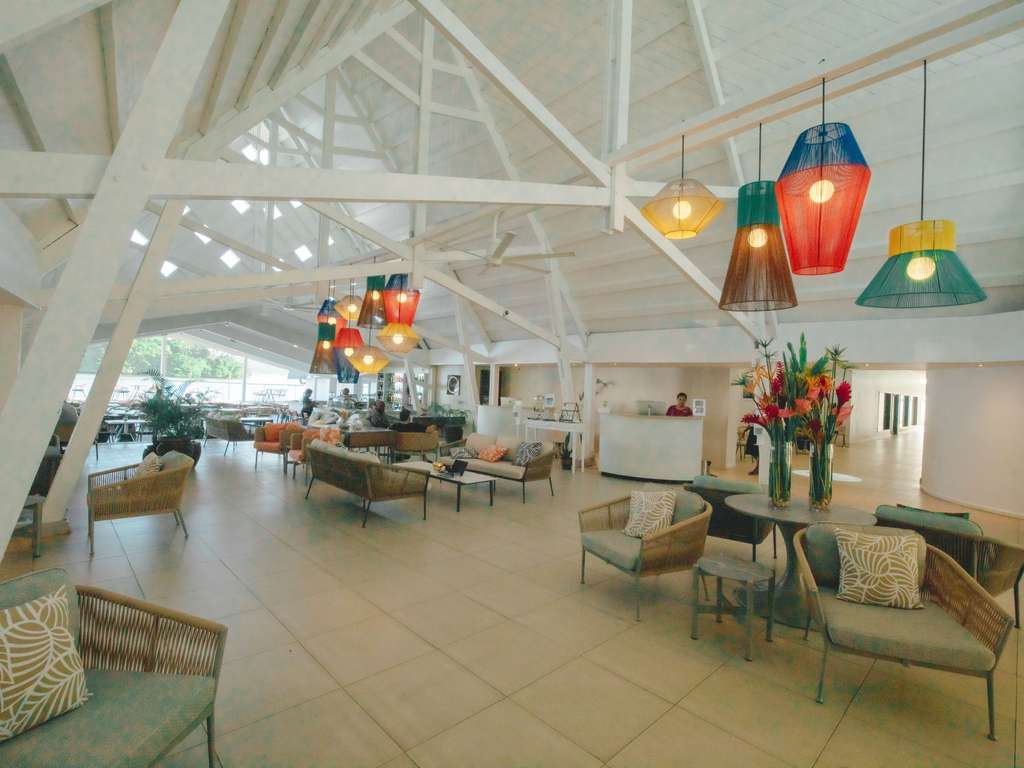
In Nadi and on Denarau, the capacity exists at a different order of magnitude — Sheraton Fiji Golf & Beach Resort and the Denarau Island Convention Centre at around 1,755 m² and up to 1,600 delegates, and Crowne Plaza Fiji Nadi Bay with 324 rooms, 1,540 m² across seven venues and a published 15-minute airport transfer. See conference facilities at Crowne Plaza Fiji Nadi Bay for why its capacity figures need checking, and does Fiji have a convention centre for the national picture.
What this sector needs that others do not
Six requirements that will decide your venue, and that most Fijian quotes do not address unless you force them to.
1. Auditable, itemised pricing. Multilateral bodies run competitive processes and their finance teams need to see room rental, catering per head, beverages, AV, transfers and VAT with service charge as separate lines. Fijian venues frequently quote bundled. Put the required format in the RFP — ours is at the Fiji conference RFP template — and read VAT, service charge and levies on a Fiji event invoice before you compare anything.
2. Per-diem compatibility. Your organisation's own subsistence and accommodation ceilings will determine which hotels are eligible, and those ceilings are set by your rules, not ours. Check them before you shortlist, because a five-star Denarau rate may be ineligible regardless of how good the ballroom is.
3. Hybrid delivery that actually works. Many Pacific participants cannot travel for a two-day meeting, which makes streaming a core requirement rather than a courtesy. Bandwidth is the constraint, almost no Fijian venue publishes a figure, and "high-speed Wi-Fi" is not an answer. Make it a scored RFP item and ask for a committed uncontended figure — see internet and bandwidth at Fiji venues and live streaming and hybrid delivery from Fiji.
4. Accessibility and inclusion as a specification. For this sector it is a mandate, not a preference, and it needs to appear in the venue requirements rather than in the aspirations. See accessibility and inclusion at Fiji events.
5. Interpretation, where the delegate list requires it. A Pacific-wide meeting may include participants from New Caledonia, French Polynesia and Wallis and Futuna, which can make French and English provision necessary. Booths, receivers and interpreters all need lead time and are not standard inventory — raise it with AV and production in Fiji early.
6. Compliance for visiting speakers and crew. Delegate entry and work authorisation for people performing paid services are different questions. See visas and entry for conference delegates and do speakers, trainers and crew need a work permit in Fiji.
Guideline only. Immigration, work-permit and tax requirements change. Confirm current requirements with the Fiji Immigration Department and the Fiji Revenue and Customs Service before contracting. Last reviewed 12 October 2026.
Meeting the carbon question honestly
This sector will ask, and it should. The honest position has three parts, and none of them is that aviation does not count.
First, a meeting about the Pacific held in the Pacific puts a large share of participants on short regional flights rather than long-haul ones. Second, 23 organisations already have staff in Fiji who need no flight at all. Third, the alternative venue for a Pacific meeting is usually Geneva, Bangkok or Sydney, which moves the whole Pacific delegation instead of the whole donor delegation.
That is an argument worth making with numbers rather than adjectives — the carbon cost of a Fiji conference, calculated is the working, and Fiji sustainable events covers reporting and offsets. For programmes that need a demonstrable local benefit, CSR and legacy activities is the honest version, not the photo opportunity.
The playbook, in order
- Count who is already here. Build your participant list against the 23 organisations before you assume everyone flies in.
- Pick the city from the delegate list, not the venue photographs.
- Specify bandwidth, accessibility and interpretation in the RFP, with scores attached.
- Demand itemised pricing and check it against your per-diem ceilings.
- Resolve permits for paid speakers and crew before you contract them.
- Brief a local partner who has run an agency programme before — see how to brief a Fiji DMC and get comparable quotes and PCOs and conference organisers for Fiji events.
- Ask about support. See is there any funding or subvention for Fiji business events.
Start from the Fiji conference sectors hub and building the business case for Fiji to your board. For catering and production, the directory lists Encore Event Technologies Fiji and Microhire for AV, Paradiso and My Kai for catering in Suva, and Viti Events and Tents & Awnings Ltd for hire and marquees.