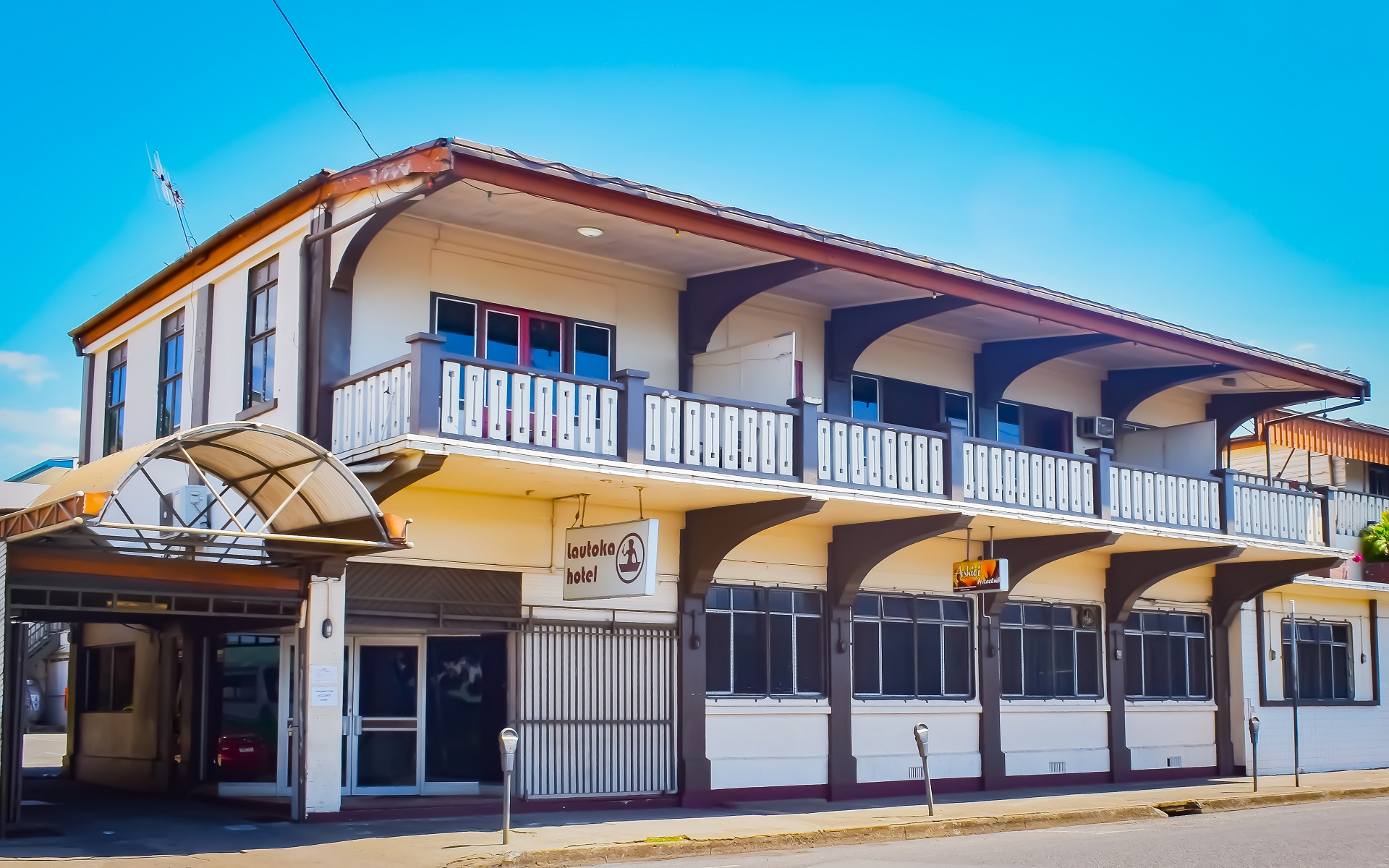
Lautoka is Fiji's second city, about 24 km north of Nadi and roughly 25 minutes from Nadi International Airport by road. It is a working port and sugar town rather than a resort strip, and for events that makes it Fiji's best-value western base — cheap rooms, real infrastructure, a 200-delegate ceiling, and no beach out the front.
Almost nothing written about Lautoka for visitors is written for planners. This is.
Where exactly is Lautoka, and how long does it take to get there?
North of Nadi on the west coast of Viti Levu, at the northern end of the Queens Road corridor.
The distances in circulation do not quite agree, and the difference matters if you are quoting transfer times. Lautoka Hotel states on its own site that it is "only 24 km away from Nadi International airport". Lautoka City Council's history page also gives 24 km, but measures from Nadi town rather than the airport. A 2019 UN-Habitat urban profile of Lautoka puts it "about 25 minutes drive from Nadi International Airport".
Use 25 to 35 minutes for a car and 40 minutes for a coach with luggage. Queens Road through Nadi town is the pinch point, and our guide to roads, traffic and realistic drive times explains why published figures run optimistic.
Lautoka has no airport of its own. Everyone arrives through Nadi International, which is the single most useful thing about it as a base — see Nadi International Airport: the planner's guide.
| Route | Mode | Notes |
|---|---|---|
| Nadi International → Lautoka | Private car or transfer | About 25–35 minutes; 24 km per Lautoka Hotel's own site |
| Nadi International → Lautoka | Express bus | Pacific Transport serves the Queens Road corridor and lists Nadi Airport among stops |
| Suva → Lautoka | Express bus | About 4 hours on Pacific Transport's published timetable |
| Nadi International → Vuda Point | Private car | First Landing describes Vuda Point as "15 minutes north of Nadi International Airport" |
| Lautoka → Denarau Island | Private car | Via Queens Road and the Denarau causeway |
For local ground movement, Classic Buses Ltd and Sugar Taxi and Tours are both Lautoka-based.
How big is Lautoka, and what does it do for a living?
Bigger than most visitors expect, and industrial rather than touristic.
The population figures conflict badly, and none of the sources states which boundary it is using. Lautoka City Council's own homepage says "120k+" residents with no census year attached. The UN-Habitat profile gives about 44,500 people in 2011, describing Lautoka as around 10 per cent of Fiji's urban population, with a land area of 1,600 hectares. Wikipedia cites 71,573 at the 2017 census across 32 km². We publish all three because we cannot reconcile them, and we would not use any of them in a bid document without checking the Fiji Bureau of Statistics directly.
What is not in dispute: Lautoka was established as a town in 1929, is Fiji's second largest city, and became the administrative capital of the Western Division in 2012.
The nickname is Sugar City, and it is earned. The main Lautoka sugar mill was built for the Colonial Sugar Refining Company between 1899 and 1903 and completed in 1903; the council states it employs some 1,300 people today. Fiji Sugar Corporation operates three mills, two of them on Viti Levu at Lautoka and Ba, together "capable of manufacturing more than 500,000 tonnes of sugar per season". The Lautoka mill's individual capacity is not published.
Beyond sugar, the city carries timber processing, a distillery, a brewery, garment manufacturing, steelworks and fishing. This is why Lautoka has a hospital, a Fiji Revenue and Customs office at 19 Tavewa Avenue, real banks and a functioning market — and why it does not have a resort strip.
Is the Port of Lautoka useful to an event?
Directly, rarely. Indirectly, it explains the whole city.
Fiji Ports Corporation calls Lautoka "Fiji's largest Port for handling bulk cargo, specializing in bulk sugar, molasses, woodchips, petroleum, and gas", with a maximum draft of 11 metres at chart datum and 40,000 TEU of terminal storage. Fiji Ports Terminal Limited separately describes a 295-metre Queens Wharf as the main berth, a minimum depth alongside the container berth of 11.5 m, a maximum permissible draft of 10.5 m on the cargo berth, and vessels up to about 2,800 TEU or handy-max size.
Those draft figures measure different things and should not be read as a contradiction, but they are worth quoting precisely rather than averaging.
The passenger question matters more. Fiji Ports lists cruise operations at Lautoka and names Blue Lagoon Cruises among them. But Blue Lagoon Cruises states in its own FAQ that its cruises depart from Port Denarau — 3-night and 7-night sailings on Friday at 3.00 pm, 4-night on Monday at 12.15 pm, with free coach transfers from Nadi airport. Captain Cook Cruises Fiji likewise publishes Denarau Marina, and the Yasawa Flyer departs Port Denarau each morning by 8.45 am.
So if your programme involves a Yasawa or Mamanuca sailing, your marine departure is Denarau, not Lautoka, whatever an older guidebook says. Plan the transfer accordingly.
What about Vuda Marina?
Genuinely useful, and often overlooked. Vuda Marina sits at Vuda Point, which its own site describes as "between Nadi International Airport and Lautoka city". It was established in 1996 and is one of four official Ports of Entry in Fiji.
For planners that means two things. First, if any part of your programme involves a private yacht or a chartered vessel arriving from overseas, Vuda is where it clears — Advance Notice via a C2C form at least 48 hours ahead, VHF channel 16 on approach, and customs clearance available 8 am to 4 pm Monday to Friday only. A Saturday arrival waits. Second, Vuda has the heaviest lifting gear in the country: the marina publishes a 63-tonne travel hoist, described as the largest in Fiji, plus a multihull trailer rated to 47 tonnes and 11 metres of beam, and cyclone storage. The Boatshed at Vuda Marina is a credible offsite dinner option for a small group.
Where do you actually put people in Lautoka?
Four properties carry most of it, and the ceiling is around 200 delegates.
| Property | Rooms | Largest published function space | Suits |
|---|---|---|---|
| Tanoa Waterfront Hotel | 92 rooms and suites | Old Mill Room 170 theatre; Sunset Lawn up to 200; weddings up to 200 | The default Lautoka conference hotel |
| Lautoka Hotel | 39 | Conference room described as "from 150 delegates" | Budget city-centre base, small meetings |
| First Landing Beach Resort & Villas, Vuda Point | Twelve accommodation types; total not published | Conferences 10–200 delegates; Foot Island outdoor functions up to 300 with a marquee | The beach option, closest to the airport |
| Anchorage Beach Resort, Vuda | Not published | Not published | Small boutique groups, hillside |
| Belo Vula Resort, Bekana Island | Not verified from the property's own site | Not verified | Island buyout for a small wedding — ask directly |
Tanoa Waterfront's meeting rooms scale down as well as up: Conference Room One at 40 theatre, Conference Room Two at 60, both useful as breakouts against the Old Mill Room. Fins Restaurant is its in-house F&B.
First Landing's Foot Island number is the interesting one. Three hundred guests outdoors with a marquee is the largest single function figure published anywhere in the Lautoka area, and it sits fifteen minutes from the airport. For a welcome function or a gala on the first night of a programme that then moves elsewhere, that is a strong play — with the usual wet-season caveat, covered in your wet-weather plan.
For marquees, chairs and staging, Clyde Equipment Marquee Hire is Lautoka-based; Firefly Flowers Fiji covers florals locally.
What is there to do around Lautoka?
More than the city itself suggests, because the good material is inland.
Koroyanitu National Heritage Park. Tourism Fiji places Abaca Village "15km or a 30-minute drive inland from Lautoka" and describes Mount Batilamu as Fiji's fourth highest mountain at 1,100 m, with a four-hour one-way summit walk graded challenging and steep, and a 4WD recommended for the access road. Published entry at the time of our check was FJD 20 for locals and FJD 30 for visitors. This is the best genuine hiking within an hour of Nadi airport and a serious incentive-programme asset.
The city. Lautoka Municipal Market, the Botanical Gardens, Churchill Park and Marine Drive. The market is the honest attraction — a working Fijian produce market, not a craft village.
Saweni Beach and Vuda Point, the latter described by Lautoka City Council as believed to be the landing site of the first Fijians — worth knowing before you build a cultural welcome around it.
Nearby but not Lautoka: the Garden of the Sleeping Giant states on its own site that it is at Wailoko Road, Sabeto, Nadi, about ten minutes north of the airport and about twenty minutes from Lautoka, open 9am to 5pm daily. It appears in a lot of "Lautoka" itineraries; it is on the Nadi side.
The Lautoka Sugar Festival runs annually and the city council's own calendar lists festival events for October 2026. If your dates land on it, accommodation tightens.
What does the weather do?
Lautoka has its own climate station — the Fiji Meteorological Service lists "FSC Lautoka Mill" among its climate-normals stations — but the monthly normals are published only inside downloadable reports, and we have not yet extracted them. Until we do, plan on Nadi data, which is the nearest long-run station and sits in the same dry-side rain shadow. Our month-by-month breakdown is in Fiji's weather, month by month, and the cyclone-season position is in cyclone season in Fiji.
Who is Lautoka actually right for?
Choose Lautoka if your delegates are domestic or regional, your budget is the binding constraint, you need to be close to Nadi airport without paying Denarau rates, your programme is under 200 people, or your event has an industrial, agricultural, education or public-sector reason to be in the west outside the resort strip.
Choose Denarau instead if the programme needs a beach out the front, a 300-plus plenary, several properties in one loop, or a marine departure — see Denarau Island: the complete guide and Denarau vs the Coral Coast.
Choose Vuda Point as the compromise: First Landing and Anchorage give you beach frontage and fifteen minutes to the airport, at a different price point from Denarau.
The honest summary is that Lautoka is Fiji's most useful second-tier base and nobody markets it that way. It has a hospital, a customs office, a working port, a marina that clears international yachts, a 200-delegate hotel, a 300-guest outdoor site and a mountain — twenty-five minutes from the international airport. What it does not have is a reason for an incentive group to spend four nights there.
Next step
Work out whether Lautoka or Denarau fits your programme using how long it really takes to get between Fiji's islands, then size the room against the capacity chart. Browse everything in Lautoka, or start from the Fiji islands and regions hub. If the answer is somewhere quieter still, Fiji's outer islands is the next stop. For a Lautoka dinner offsite, Tukuni Restaurant is worth a look.