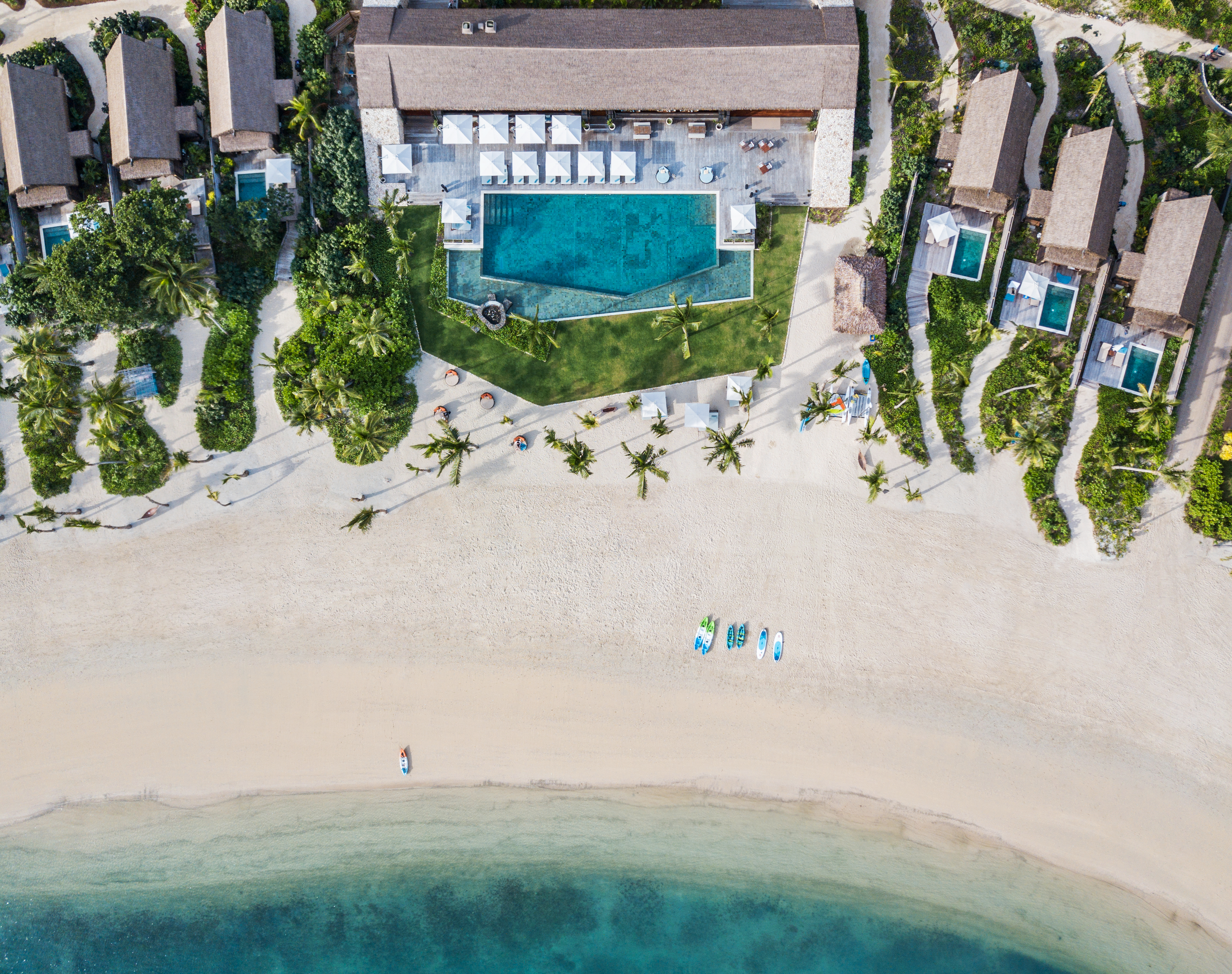
At the top of the Fiji market, price is not what separates one resort from another — access, scale, exclusivity and the inclusion model are. A resort reached by private King Air is a different proposition from one reached by a 25-kilometre boat transfer, and a property with three villas behaves nothing like one with fifty. Here is the top tier and what actually distinguishes each.
Which resorts does Tourism Fiji itself name as exclusive?
This is the useful starting list, because it is the destination's own marketing organisation rather than a paid placement.
| Resort | Where | What defines it | How you arrive |
|---|---|---|---|
| COMO Laucala Island | Northern Fiji | 25 residences with private pools and personal attendants | Private jet — a King Air B300 |
| Kokomo Private Island Fiji | Great Astrolabe Reef, Kadavu | In-house marine biologists managing coral gardens | Seaplane |
| Nanuku Resort | Beqa Lagoon, Pacific Harbour | Treetop dining in a 70-year-old dilo tree; food safaris | Road from Nadi |
| Six Senses Fiji | Mamanuca Islands | Solar powered by Fiji's largest microgrid; kids club and nannies | Boat or helicopter |
| Vomo Island Fiji | Mamanuca Islands | 255-acre island, with tiny Vomo Lailai to itself | Helicopter |
| The Wakaya Club and Spa | Marine protected area | All-inclusive; massages, diving and beach picnics included | Air transfer |
| Vatuvara Private Islands | Eastern Fiji | Adults-only; three villas on Kaibu | Twin Otter aircraft |
The last two are not currently listed in the MICE Fiji directory, so we name them without linking.
What does "luxury" actually mean in Fiji?
Four things, and they are worth separating because a brief usually needs only two or three of them.
1. Access. In Fiji this is the most expensive variable and the most overlooked. A helicopter or seaplane leg converts a five-hour travel day into a twenty-minute one and adds a cost per person, each way, that is often larger than a night's accommodation. Tokoriki Island Resort is described as fifteen minutes from Nadi airport by helicopter. Likuliku Lagoon Resort on Malolo Island is reached by a ten-minute helicopter flight or a 25-kilometre boat transfer. At the far end, COMO Laucala runs a King Air and Vatuvara a Twin Otter.
2. Scale. Small is the luxury. Vatuvara lists three villas on Kaibu; COMO Laucala 25 residences; Turtle Island in the Yasawas hosts a maximum of 28 guests. Contrast that with a Denarau resort of several hundred rooms. If a brief calls for a whole-property buyout, the villa count is the budget.
3. Exclusivity. Adults-only is the common lever. In the directory that includes Likuliku Lagoon Resort, Tokoriki Island Resort, Matangi Private Island Resort, Namale Resort and Spa and Navutu Stars Fiji. Others go the opposite way deliberately — Six Senses Fiji runs a kids club and nanny service, and Vomo has added two-bedroom family villas.
4. The inclusion model. Some of the top tier are genuinely all-inclusive — The Wakaya Club is described as including massages, diving and beach picnics, and Namale Resort and Spa and Turtle Island Fiji are listed in the directory as all-inclusive. Others charge for everything above the room. Two rates at the same headline number can differ by thousands of dollars a week once diving, transfers and drinks are counted. All-inclusive resorts in Fiji works through what the rate actually covers.
What about overwater bures?
Overwater accommodation is rarer in Fiji than the brochures imply, and the claims around it need care.
Likuliku Lagoon Resort describes itself on its own website as "the first adult only resort in Fiji with authentic over-water bures, in a natural ocean" — a carefully worded claim, and not the same as being the only overwater resort in the country. Gourmet Traveller reports Likuliku as having 10 overwater bungalows and 35 beachfront bures.
Separately, Koro Sun Resort and Rainforest Spa on Vanua Levu is also recorded as offering overwater accommodation. So: treat "Fiji's only overwater bures" as marketing shorthand. Ask any resort how many overwater units it has, whether they sit over open ocean or a lagoon, and whether the bures you are quoting are among them.
What does the top tier cost?
Honestly: almost none of them publish a rate, and we do not estimate. The one published datapoint worth recording is that the directory Fiji Wedding Venues lists Kokomo Private Island wedding packages from FJ$75,000 — against FJ$3,500 to FJ$20,000 for mainland resorts. That is the shape of the gap, but it describes a wedding package rather than a nightly rate.
What you can establish before you enquire is the four variables above. A property that flies you in on its own aircraft, has fewer than thirty keys, excludes children and includes diving is going to sit at the top of any quote you receive, and no amount of negotiating changes that arithmetic.
Which one for which brief?
- A small, high-value incentive that must feel unreachable: Vatuvara, COMO Laucala or Kokomo. Three villas or 25 residences means a genuine buyout is possible.
- A luxury programme with a mainland arrival and no air transfer: Nanuku Resort at Pacific Harbour, roughly 2 hours 20 minutes by road from Nadi.
- Adults-only, close to Nadi, overwater on the brief: Likuliku Lagoon Resort — ten minutes by helicopter, or a boat transfer if the budget prefers.
- Luxury with families in the group: Six Senses Fiji or Vomo Island Fiji, which build for children rather than tolerating them.
- A dive-led reward programme: Kokomo on the Great Astrolabe Reef, or Matangi Private Island Resort and Royal Davui Island Resort.
Next: compare precincts and price tiers in where to stay in Fiji, narrow by policy in adults-only resorts in Fiji, or work out which region the transfer budget supports in the Fiji islands and regions guide. Function-space numbers for the properties that publish them are on the capacity charts.