Suva is Fiji's capital and largest city, on the wet south-east coast of Viti Levu. It holds the government, the embassies, the regional organisations and the University of the South Pacific — and almost none of the resort tourism. For planners it is the protocol city; for visitors it is the one that feels like a real place.
This guide covers what Suva is, how to get there, what it can host, what the weather actually does, and which official numbers do and do not stand up.
Why is everything in Suva?
Because the institutions are. UN-Habitat's profile of the city puts it plainly: "Contained within the Suva City municipal boundaries are the National Government, the headquarters of government ministries, the banking and financial institutions, and the headquarters of a number of regional and global organizations. In this way, Suva is the economic centre of the Pacific region."
Parliament sits in the Government Buildings complex on Constitution Avenue, opposite Albert Park — the same building where Fiji's first Parliament sat after independence on 10 October 1970, and where it continued to meet until 1987. Fiji's Parliament is unicameral, with 55 members elected by open-list proportional representation across a single nationwide constituency.
The University of the South Pacific is the other anchor. USP has 12 member countries and 14 campuses, and its Laucala campus in Suva is the largest and the only one offering every programme. Agriculture sits at Alafua in Samoa and law in Vanuatu, but the centre of gravity is here.
Tourism Fiji describes Suva as "the economic, educational and diplomatic hub in the South Pacific region" and "one of the most cosmopolitan centres in the South Pacific". If your event needs a minister, a High Commissioner or a regional secretariat in the room, it happens in Suva. That argument is worked through in Suva or Nadi.
How many people live in Suva?
This is harder to answer than it should be, and the honest version is more useful than a confident one.
Fiji's most recent census is 2017, which enumerated 884,887 people nationally and an urban population of 494,252 — up 69,406, or 16.3%, on 2007. The Fiji Bureau of Statistics currently publishes a 2026 population projection of 902,623.
What is not published is a Suva City figure from the 2017 census. The last clear municipal number we can source is from UN-Habitat citing the 2007 census: Suva City 75,980. For the Greater Suva Urban Area, the same UN-Habitat document gives two different figures — "approximately 256,000 people", described as 29% of the national population, and elsewhere "244,000 people", described as 57% of the urban population. Those do not reconcile.
Tourism Fiji says Suva is home to "around a third of Fiji's population", which matches the greater-urban figure rather than the city proper.
One claim worth retiring: we could find no official source describing Suva as the largest city in the South Pacific. Tourism Fiji calls it "Fiji's capital and largest city" and "one of the most cosmopolitan centres in the South Pacific" — a different and more defensible statement.
What can Suva host?
Less than Nadi, and the published figures need care. Here is everything we could verify from the venues themselves or the Fiji Sports Council.
| Venue | Space | Capacity | Published by |
|---|---|---|---|
| Vodafone Arena | Main Arena | 5,000 seated; venue configurable 1–10,000 | Fiji Sports Council |
| HFC Bank Stadium | Whole ground | 1–15,000 | Fiji Sports Council |
| FMF Gymnasium | Whole venue | 1–3,000; grandstand 1,800 | Fiji Sports Council |
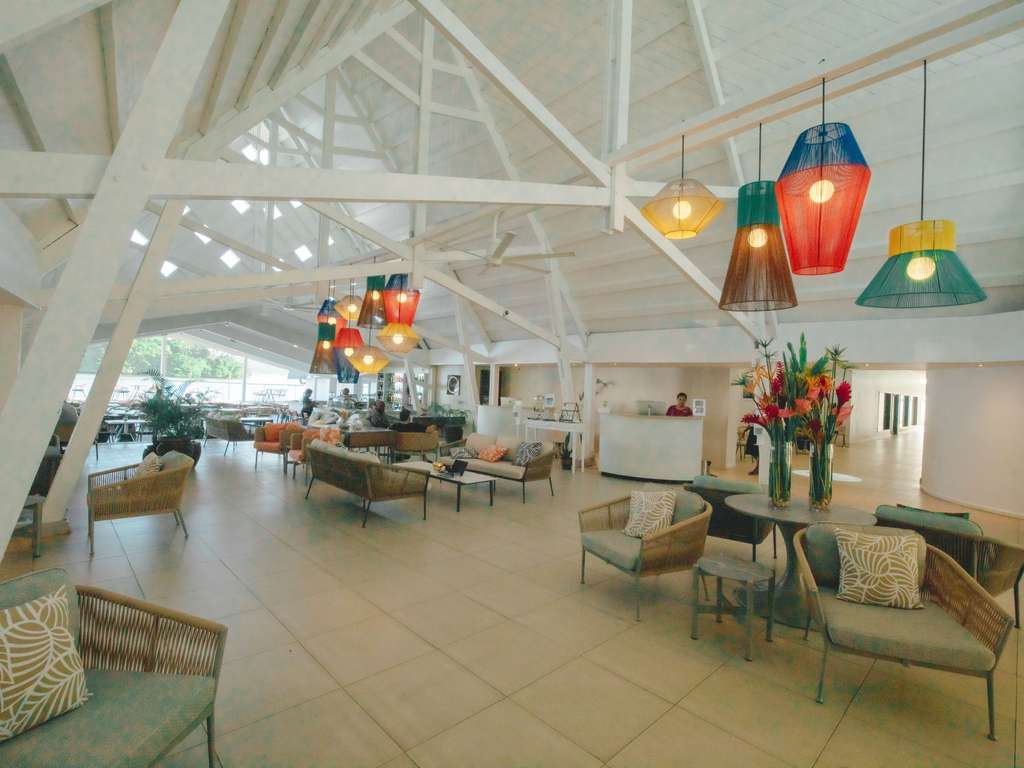
| Grand Pacific Hotel | Britannia Ballroom | 600 theatre / 400 banquet / 550 cocktail, 600 m² | The hotel |
| Novotel Suva Lami Bay | Convention space | 350 theatre (see conflict) | Accor |
| Holiday Inn Suva | Lali Room | 200; property claims 350 delegates across three rooms | IHG |
| Studio 6 Apartments | Conference Room | 300 theatre / 150 banquet / 300 cocktail, 307 m² | MICE Fiji verified |
| Japan-Pacific ICT Centre | Multipurpose Theatre | 307 fixed seats (303 on a second USP page) | USP |
| Grand Pacific Hotel | Matua Function Room | 200 theatre / 140 banquet / 200 cocktail, 291 m² | The hotel |
| Tanoa Plaza Hotel | Conference Room 3 | 150 theatre; cocktail functions to 250 | Tanoa Hotels |
| New Town Hall | Lower Hall | 500 reception | MICE Fiji verified |
| Novotel Suva Lami Bay | Novotel House | 300 theatre / 100 banquet, 246 m² | Accor |
The Novotel conflict is the one to watch. Accor's main hotel page gives a largest room of 1,248 m² and a maximum seated capacity of 800, with seven meeting rooms. Accor's own meetings platform lists the Novotel Convention Centre at 480 m² and 350 theatre, across six event rooms totalling 825 m². Both are Accor domains, and the 800-seat figure cannot be reconciled with any single room in the second table. If you are planning a Suva plenary above 600, get a dimensioned floor plan before you commit.
The practical ceiling for a conventional Suva conference is therefore the Grand Pacific Hotel's Britannia Ballroom at 600 theatre. Above that you are into sports facilities — Vodafone Arena publishes 5,000 seated but no hall-level capacities for Hall A, Hall B or its Events Lounge, and it is a wooden-sprung sports floor, not a ballroom. See conference venues in Suva and the national picture in how many delegates can Fiji host.
Where do you stay in Suva?
Room counts, where the hotels publish them: Holiday Inn Suva 130; Grand Pacific Hotel 113 including 10 suites; Novotel Suva Lami Bay 108; Studio 6 Apartments 89. Peninsula International Hotel contradicts itself on its own About page, saying both "With 100 rooms" and "The Hotel has 106 rooms". Tanoa Plaza Hotel, de Vos on the Park and Suva Motor Inn publish no totals at all.
That is a small inventory for a capital, and it is the real constraint on a Suva conference: not the plenary, the room block. A 400-delegate event is a multi-property exercise here. How room blocks work in Fiji covers the contracting.
The Grand Pacific Hotel deserves its own paragraph. It opened on 23 May 1914, built by Hall Hogg and Company of Dunedin for the Union Steamship Company of New Zealand, with 35 rooms and a 1960 expansion adding 45 more. It closed in 1992, sat derelict through two decades, and reopened in May 2014 on the hundredth anniversary of its original opening. It is the building Suva is photographed from.
How do you get to Suva?
Three ways, and we have to be straight about what we could not verify.
By road from Nadi. This is how most people arrive, and no credible primary source publishes a drive time or distance for the Queens Road or Kings Road routes. Tourism Fiji publishes only a generic bus statement — the trip "takes anywhere between 1- 4 hrs and costs up to approximately FJ$20 one-way" — which covers express coaches and all-stops services alike and is not route-specific. Pacific Transport Limited and Central Transport Company operate the corridor; Coastline Fiji and Coral Coast Transfers Tours & Rentals run private transfers along it. Our own realistic drive times piece is the better reference.
By air to Nausori. Nausori International Airport serves Suva, about 23 km east of the city. We could not verify its airline list, route list or whether international services currently operate from any primary source: Fiji Airports' websites fail TLS verification, the operator's alternative domain returns a database error, and every Fiji Airways page returns a 403 to automated requests. We are not going to publish a route list we could not read. Nausori airport and the Suva access problem covers what this means for groups.
Locally. Tourism Fiji publishes taxi fares "starting at FJ$7.00", with metered LT-registered taxis on a FJ$2.50 base rate and LH taxis working unmetered fixed-distance rates. Bus ticketing uses prepaid cards in FJ$2 to FJ$100 denominations with 30-day validity.
Does it really rain that much in Suva?
Suva's reputation is for rain, and the Fiji Meteorological Service data is more interesting than the reputation.
Fiji Met publishes monthly station figures against a 1991–2020 climatic normal. For January 2026: Laucala Bay in Suva recorded 262.5 mm across 18 rain days, which was 76% of its normal; Nadi Airport recorded 225.3 mm across 19 rain days, 62% of normal. For February 2026: Laucala Bay 189.1 mm at 68% of normal; Nadi Airport 199.9 mm at 60%.
Read those carefully. In absolute millimetres Suva was wetter in January and drier than Nadi in February. What the percentages imply is that Nadi's January and February normals are actually the higher ones — because January and February are the peak of Nadi's wet season, while Suva's rain is spread through the year.
What is not published is a per-station annual total or annual normal for either city, so we cannot give you the headline "Suva gets X mm a year against Nadi's Y". Fiji Met's annual summaries carry a national figure — 2,759 mm national average in 2022, 122% of the long-term average — and a percent-of-normal map, not a station table.
The useful planning conclusion stands regardless: Suva rain is year-round and often heavy, so an outdoor Suva function needs a covered alternative in every month, not just January to April. Suva recorded 255.0 mm in 24 hours on 7 October 2019 during a flooding event, and 118.7 mm at Laucala Bay on 15 January 2024. Read Fiji's weather month by month alongside this.
What is there to do in Suva?
More than the resort coast, and almost all of it indoors or under canopy, which suits the climate.
The Fiji Museum sits in Thurston Gardens on Cakobau Road and was founded on a collection presented to the Suva Town Board by William Allardyce in 1904. It holds archaeological material dating back 3,700 years. It opens 9:00am to 4:30pm, Monday to Sunday and public holidays, closing on Christmas Day, New Year's Day, Easter Sunday and Diwali. Admission is FJ$10 for local adults and FJ$20 for overseas adults, FJ$5 and FJ$10 for children aged 2 to 15.
Colo-i-Suva Forest Park, about 30 minutes out of the city, is 92 hectares — a quarter of the Colo-i-Suva Forest Reserve — with upper and lower swimming pools and walking trails, open daily 8am to 4.30pm including weekends and public holidays. The Ministry of Forestry records 16 endemic Fijian bird and animal species and 20 endemic plant species there, including the Masiratu, which appears on Fiji's $5 note. Colo-i-Suva Rainforest Eco Resort sits at the edge of it and takes small meetings — a 25-seat conference room, 80-seat restaurant and a poolside area for 50.
Parliament offers visits and tours. Talanoa Treks Fiji runs guided walking and highland trips out of Suva.
We should be honest that Albert Park, Thurston Gardens and the Suva Municipal Market — three of the city's best-known places — have no extractable official description. Suva City Council's website returns no readable content, so we are not going to invent detail about opening hours or size. Go and look; they are all within walking distance of the Government Buildings.
Eating is a real strength. Paradiso, Tiko's Floating Restaurant, Daikoku Suva, Ashiyana and Governors all take groups. See the best restaurants in Fiji.
Is Suva right for your event?
- Choose Suva if you need government, diplomatic or regional-organisation participation; if your delegates are regional rather than Australian and New Zealand leisure-extenders; or if the content matters more than the beach.
- Choose Nadi or Denarau if your plenary exceeds 600, if your room block exceeds about 300, if delegates are flying in on international services, or if partners and families are coming.
- Suva's hard constraints: the 600-theatre ceiling at the Grand Pacific, a total published hotel inventory of roughly 440 rooms across five properties, no verified international air service, and rain in every month.
- Suva's genuine advantages: the institutions, Fiji's best-preserved colonial architecture, a real restaurant scene, the museum, and a cost base below the resort coast.
Production and staging in Suva is well served — Stage Tech Fiji, Viti Events and Tents & Awnings are all Suva-based — and so is catering, through My Kai and others.
Read the other cities in Nadi and Lautoka, the archipelago in Fiji's islands and regions, and browse every listing in Suva.