A Fiji wedding is almost never one event. It is three or four, spread across a week, and the extra ones are what turn a ceremony into the holiday your guests flew for. The welcome party introduces everyone, the rehearsal dinner settles the wedding party, and the recovery brunch says goodbye properly. Each has a different job and a different cost shape.
Guests who fly four or more hours and book five nights are not attending a wedding; they are attending your week. Planning only the 4pm ceremony leaves them to improvise the other 100 hours.
What does each event actually do?
| Event | When | Who | What it is for | Main cost driver |
|---|---|---|---|---|
| Welcome party | First full day, late afternoon or evening | Everyone | Two families and three friendship groups meet before the ceremony | Per-person F&B × full guest list |
| Rehearsal dinner | Night before the wedding | Wedding party, immediate family, often out-of-town elders | Walk the running order, settle nerves, thank people | Smaller headcount, higher per-head spend |
| Wedding day | — | Everyone | The reason for the trip | Ceremony, reception, minimum spend |
| Recovery brunch | Morning after | Everyone still on the island | Goodbyes, photos, the stories from the night before | Low per-head, long duration, high no-show variance |
| Free day | Mid-week | Nobody — that is the point | Guests do Fiji on their own terms | Zero, and worth protecting |
The column that matters most is the last one. Welcome parties cost what they cost because the headcount is your whole list. Rehearsal dinners cost what they cost because the per-head spend is higher and the room is smaller. Brunches look cheap until you discover you have been charged for 60 covers and 38 people came.
When should the welcome party be — and why not arrival night?
Put it on the first full day, not the evening everyone lands.
Flights from Auckland, Sydney, Brisbane and Melbourne arrive across a wide window, and the transfer from Nadi International to a resort is anything from 20 minutes on Denarau to a boat timed to someone else's schedule. A 6pm welcome party on arrival day means a third of the room is still in transit, your parents are unpacking, and the guests who did make it have been awake since 4am.
The first full day fixes all of it. Everyone is checked in, everyone has slept, and nobody is watching the door.
What formats work in Fiji?
The formats that work are the ones where guests are doing something, not standing in a circle holding a drink.
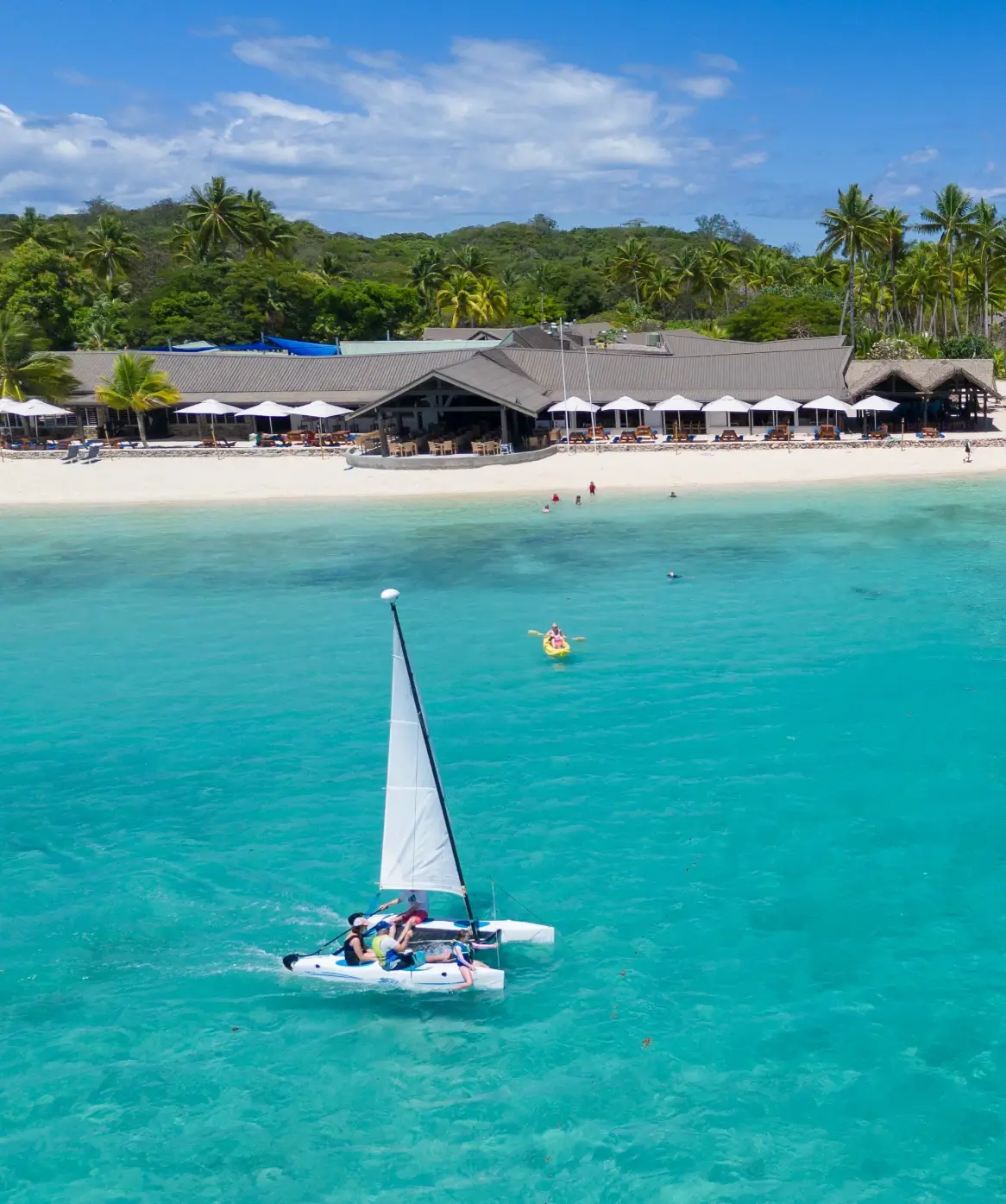
A beach club day. This is the strongest welcome-party format in western Fiji, and almost uniquely for a Fiji wedding cost you can check before you enquire. Malamala Beach Club, on its own island about 25 minutes off Port Denarau, publishes full-day passes at FJ$215 per person and half-day passes at FJ$185 for travel to 31 March 2027, with the full-day boat leaving Port Denarau at 9:30am and returning at 4:45pm or 6:00pm. Cabanas are published separately, from FJ$139 for a beachside cabana for one or two people up to FJ$549 for a grand deluxe cabana sleeping eight to twelve. Day passes include return coach transfers from most Nadi and Denarau hotels. (FJ$215 ≈ NZ$171 / A$136 at 1 FJD = 0.79 NZD / 0.63 AUD, 29 October 2026.)
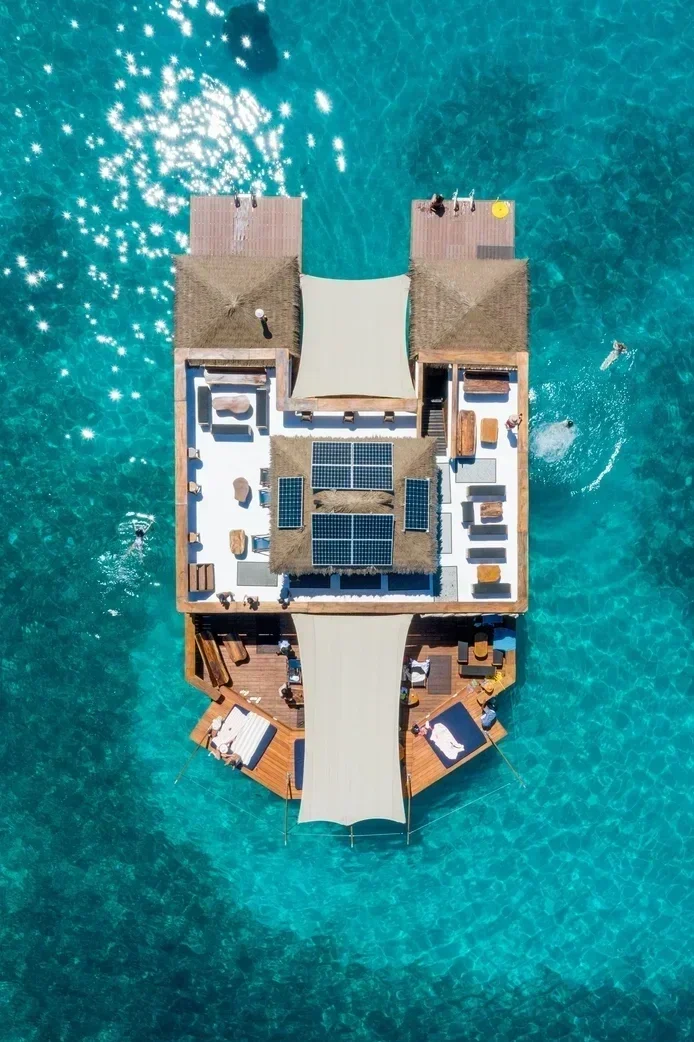
A floating bar. Cloud 9, the two-level platform moored in the Mamanucas, runs a wood-fired pizzeria and bar and takes private hire for parties and corporate functions. It does not publish pass prices or transfer times on its site — bookings go through book@cloud9.com.fj — so treat it as an enquiry rather than a budget line.
A marina sunset. If your wedding is at Musket Cove Island Resort & Marina on Malolo Lailai, the Island Bar is the welcome party, and has been for decades — a thatched gathering point for resort guests, families and visiting yachts. No set-up required.
A lovo. For a group staying put, a lovo feast with a meke is the version your guests will still be describing in two years. Done properly, it is also the most culturally substantial thing on the week's schedule — see a lovo feast at your wedding.
A restaurant takeover. Off-resort dinners work well for 20 to 60 people and break the monotony of eating in the same place five nights running. Capacity by restaurant is set out in group dining on Denarau.
What do these events cost?
We are not going to invent a per-head figure, because Fiji resorts overwhelmingly do not publish group food and beverage rates and the ones that quote do so against your specific date, headcount and menu. What we can tell you is exactly what the quote will be made of, so nothing in it surprises you.
- Food, per person, per menu tier — canapés, buffet, set menu, or a lovo priced per head.
- Beverage, either a per-person package for a fixed period (commonly two to four hours) or charged on consumption against a bar tab. On consumption is cheaper with a light-drinking group and considerably more expensive with a heavy-drinking one.
- Venue, set-up or relocation fees where the event moves outside a restaurant — beach, lawn, jetty, private deck.
- A minimum spend, which is the number that actually governs the event. It is common for a resort to grant you a private space only if the food and beverage spend clears a threshold.
- Staffing and equipment for off-site events: marquee, lighting, generator, furniture. Party & Events Fiji and Tents & Awnings Ltd are the two established hire businesses, and Chefs Catering Fiji and Bulaccino Catering are among the Nadi caterers who quote for off-resort functions.
- Transfers, if the event is not where the beds are.
The two taxes to check on every quote
Fiji's VAT rate is 12.5%, reduced from 15% effective 1 August 2025 (Fiji Revenue and Customs Service). Since 1 September 2026, a 5% Tourism Services Tax also applies at licensed hotels and tour operators with annual turnover above FJ$2 million, under the Tourism Services Tax Act 2026. Plantation Island Resort has published a clear guest-facing explanation of how it applies the new tax — bookings confirmed by 31 August 2026 were not re-charged, and on-site purchases from 1 September 2026 carry it.
The practical point for a 2027 wedding: ask whether the per-person figures you have been quoted are tax-inclusive. A FJ$95 per head canapé package exclusive of both taxes is nearer FJ$112. Across four events and 70 guests that gap is real money. The same question belongs in every venue proposal — how to read a Fiji venue proposal goes through the rest of the line items.
Tax rates are guideline only — confirm current VAT and Tourism Services Tax treatment with the Fiji Revenue and Customs Service and with the property quoting you. Last reviewed 29 October 2026.
How to tell guests what is hosted
This is the part couples skip, and it is the part guests most need. Someone budgeting a Fiji trip from Christchurch needs to know which meals they are paying for.
Put it on the wedding website in plain language: welcome party on Thursday, hosted; Friday night free, restaurants listed below; wedding Saturday, hosted; Sunday brunch, hosted until 11am. Then confirm numbers with the resort a week out, because the brunch will be over-ordered otherwise. There is wording you can copy in what to put on your Fiji wedding website and a forwardable cost sheet in the Fiji wedding guest cost sheet.
The verdict
If you add only one extra event, add the welcome party. It is the one that changes how the wedding day feels, because the room already knows each other.
If you add two, add the recovery brunch rather than the rehearsal dinner. A brunch catches everyone at once, costs least per head, and is where the photographs people actually keep get taken.
Keep one day completely free. Guests who have paid for flights and five nights want an afternoon that is theirs. Point them at the best day trips from Nadi and Denarau and leave them alone.
Next step: lay the week out day by day against real transfer times using a realistic Fiji wedding week, then check which venues can hold each event at your headcount on the capacities index.